-White.avif)
-Color.avif)
External network penetration testing services
Penti’s external network pentesting deploys AI-powered agents overseen by human cybersecurity experts in order to test the strength of your perimeter systems and expose vulnerabilities that can result in security breaches and a full network compromise.


AI-powered external penetration testing services
External penetration testing challenges the security of all of your perimeter systems, which are the systems that can be accessed directly from the internet. These systems are often the most easily and frequently attacked since they are easily accessed.
Penti’s autonomous agents and human external penetration testers replicate the actions malicious attackers employ, like chain attacks, OSINT techniques, phishing, exploiting weak passwords and default logins. Penti’s external network pentests will pinpoint your organization’s security weaknesses by combining AI-powered efficiency and human cybersecurity experience.
24/7 visibility of your external attack surface
Penti’s AI-powered platform helps your organization stay ahead of the latest network security threats by continuously scanning your perimeter systems for vulnerabilities.
Operationalize thorough security assessments

Stay compliance-ready with polished security reports
.avif)
Take immediate action based on real-time insights

Painless personalized scoping
AI-powered threat intelligence gathering
Expert-led pentesting
Detailed reporting and remediation plans
How Penti’s external network penetration testing works
Sample External Network Penetration Testing Report
Every service exposed to the internet is a potential entry point. Penti's external network report documents every open port, every exposed service, and every misconfiguration discovered across your perimeter — with the attack path confirmed and the fix specified.
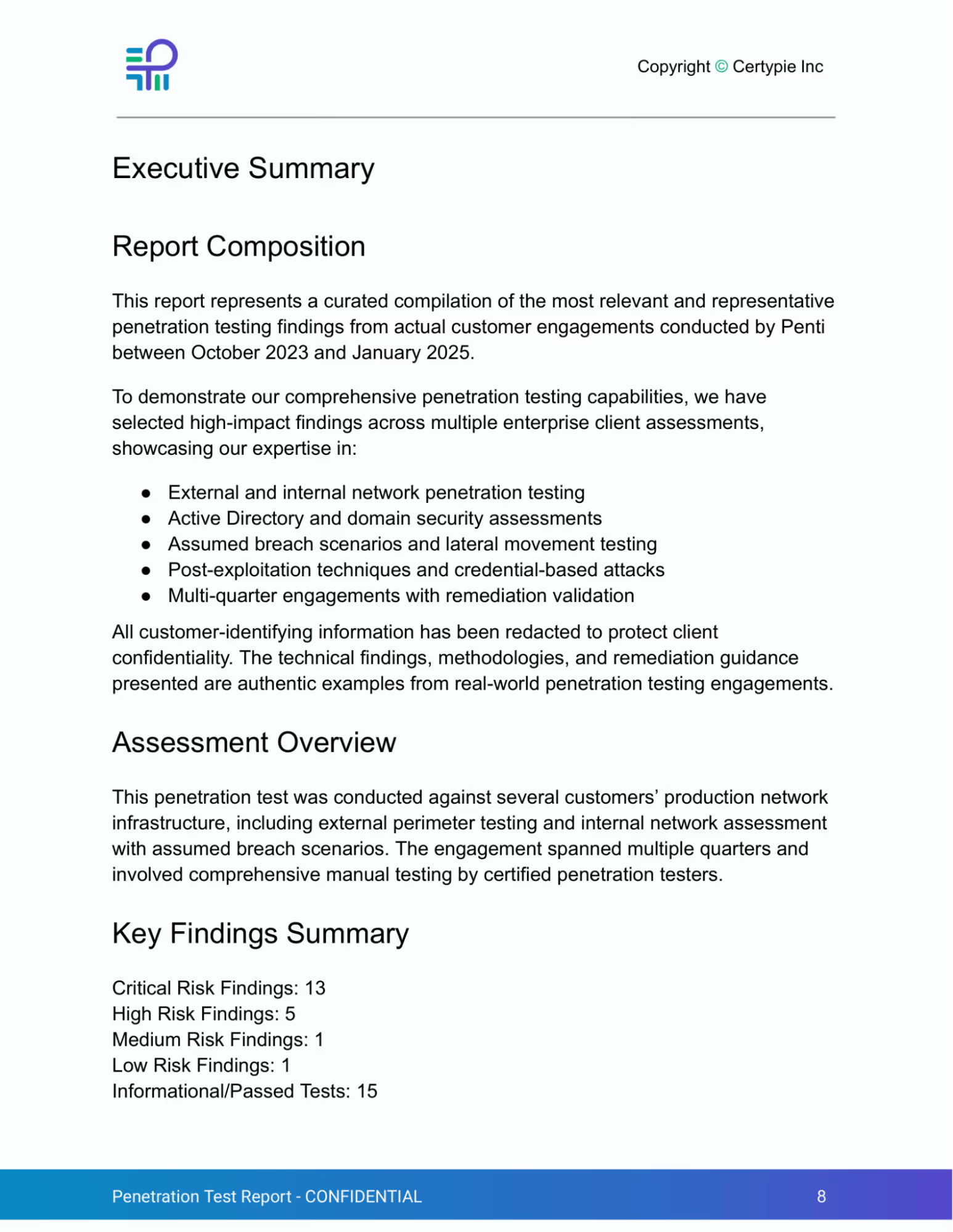
Executive Summary
Opens with a breakdown of the external perimeter testing scope and what the assessment covered — internet-facing infrastructure, VPN endpoints, cloud-hosted services, and any publicly accessible network services. The Key Findings Summary table shows total findings by severity. The Most Significant Findings section highlights the most directly exploitable external-facing vulnerabilities discovered — from unauthenticated access on perimeter services to segmentation failures on VPN infrastructure — each with a one-sentence impact description. Followed by an Impact Assessment and Recommendations Priority timeline.
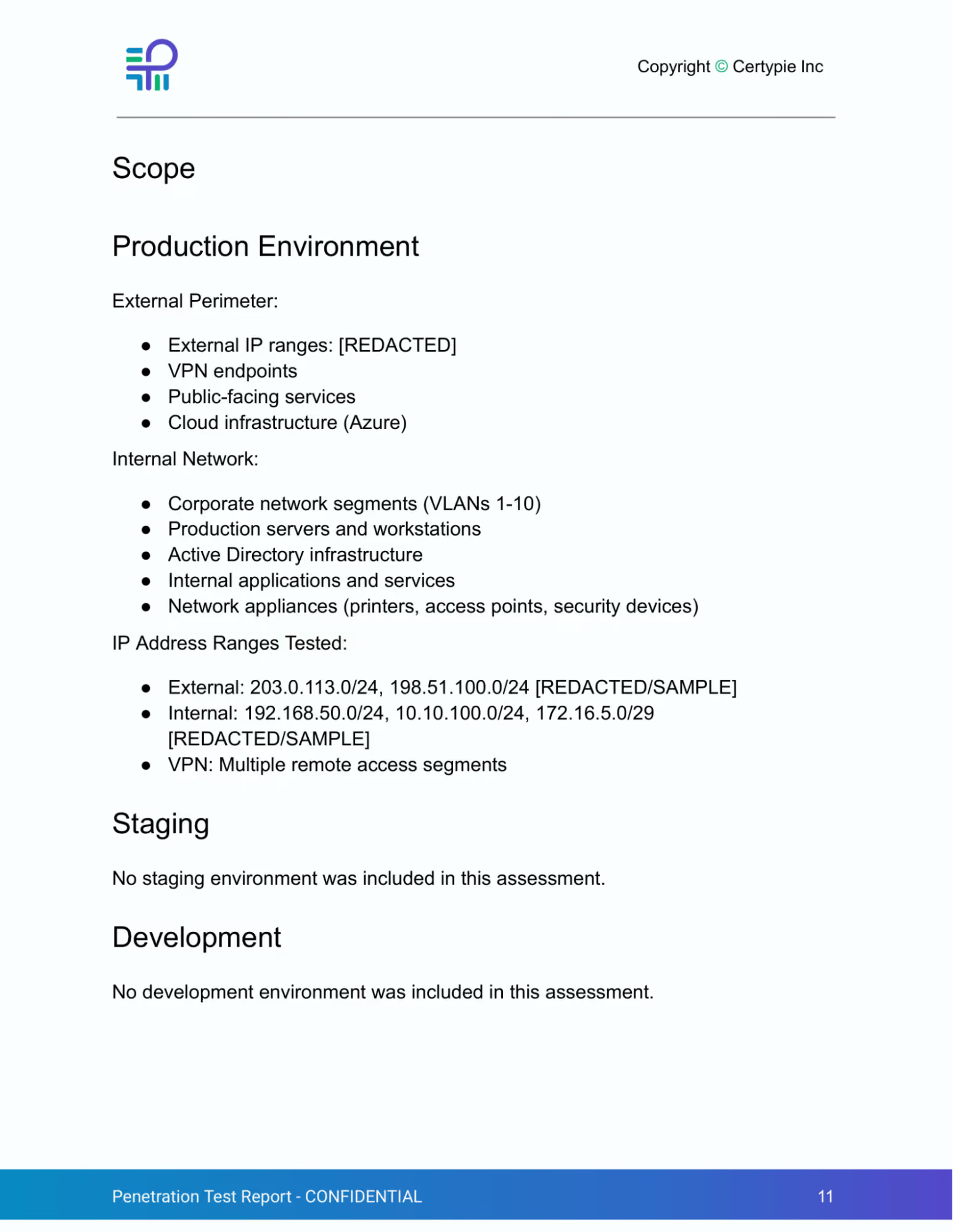
Scope & Our Tools
Scope covers the external attack surface tested: public IP ranges, VPN endpoints, public-facing services, and cloud infrastructure — with non-intrusive testing running across all hours. OSINT and internet-wide asset discovery tools: Google Dorking, Shodan, Censys, LinkedIn. Network scanning and perimeter testing tools: Nmap (port scanning and service enumeration), Masscan (high-speed scanning), IKE-Scan (VPN endpoint discovery), OpenVPN tools (VPN configuration analysis), wafw00f (WAF detection), and Netcat for manual service interaction.

Manual Assessment Results
A summary table of all findings from external perimeter testing — finding title, status (Active, Remediated, or Not Vulnerable), and risk level per row. Covers unauthenticated access on perimeter services, network device configuration issues, VPN segmentation failures, and any CVE-specific tests against publicly disclosed vulnerabilities in internet-facing infrastructure. Each high-priority finding includes a detailed card with affected systems, exploitation steps, and remediation guidance.

Prioritized Remediation
Tier 1 (24–48 hours) closes the most critical gaps in the external attack surface — hardening protocols on internet-facing services and enforcing signing requirements. Tier 2 (1–2 weeks) addresses network segmentation failures and privileged account exposure on perimeter systems. Tier 3 (1–3 months) covers architectural controls to enforce network-level boundaries between the perimeter and internal segments. Each item includes specific Group Policy settings or configuration changes to implement the fix.

Re-testing
Retests for external findings re-attempt the original attack from an external vantage point — reconnecting to the previously exposed service, retrying the authentication bypass, re-running the segmentation test — to confirm the perimeter is closed from the outside. Each confirmed closure is documented with updated status. Retest timeline: Tier 1 within 1 week, Tier 2 within 2 weeks, Tier 3 within 1 month.
More penetration testing services by Penti

API pentesting

Cloud pentesting

Network pentesting

Internal network pentesting

Mobile pentesting
.svg)
Web app pentesting

Penetration testing for IoT
More compliance-driven pentests by Penti




Other Industries we work with


Accurate external pentests without the wait
Our external network pentest service is grounded in industry best practices and designed to uncover vulnerabilities in your perimeter systems without disrupting business operations.

Expert-led pentests with AI-powered efficiency

Continuous external pentests

Get a top-down view of your external network assets

Strengthen your security program
Let Customers Know They Can Trust Your LLM
As LLMs and AI tools flood the market, new AI-fueled cybersecurity threats have multiplied and attackers continue to exploit the vulnerabilities unique to LLMs. Make sure your model is protected and give your customers peace of mind.


Penti's service is a game changer for our compliance needs. The insights we gained were invaluable for our team. Doing this well is crucial for our compliance targets and key in advancing our strategic initiatives.


The integration between Penti, our system, and third parties like Vanta is exceptional. I would also like to mention that their response times are extremely fast!

Penti has been like having an experienced and nimble Security Engineer on staff. They have outlined issues in our platform and guided us towards implementations and fixes that allow for us to ensure we are treating our users data with the utmost care.
Why test your external network with Penti?
Penti goes beyond basic perimeter scanning to help organizations understand how attackers see and target their internet-facing infrastructure. Built for accuracy and scale, it delivers validated findings that security teams can trust and act on.
Built for real-world network attacks

Penti simulates attacker reconnaissance and exploitation techniques to identify exposed services, misconfigurations, and exploitable entry points traditional scans overlook.
Comprehensive external attack surface coverage
The platform continuously maps public-facing IPs, domains, and services, adapting as cloud assets, third-party systems, and network changes occur.
Proof-backed, actionable findings
Every issue includes evidence and context to support remediation, risk prioritization, and clear communication with technical and executive stakeholders.
Fits seamlessly into security operations
Penti integrates with existing security tools and workflows, helping teams manage external risk without duplicate alerts or operational noise.










FAQ
What is Penti’s external network pentesting?
Penti’s external network pentesting is an AI-powered assessment that evaluates internet-facing infrastructure, or perimeter systems, to identify exposed services, misconfigurations, and exploitable weaknesses.
How is this different from traditional network vulnerability scans?
Unlike basic scans, Penti validates findings and focuses on attacker-relevant exposures rather than theoretical or low-impact issues.
What types of assets are tested?
Penti assesses public IP ranges, domains, network services, cloud-hosted systems, and externally accessible infrastructure.
Does this include exploitation testing?
Yes. Penti safely validates findings to confirm exploitability without disrupting production environments.
Is this suitable for cloud and hybrid environments?
Absolutely. Penti continuously adapts to dynamic cloud, hybrid, and multi-vendor environments where external exposure frequently changes.
Does this replace internal pentesting?
No. External network pentesting complements internal assessments by focusing on perimeter and internet-facing risk.
How does this support compliance requirements?
Findings provide defensible evidence for audits and help demonstrate proactive management of external attack vectors.