-White.avif)
-Color.avif)
Attack Surface Management for Modern Security Teams
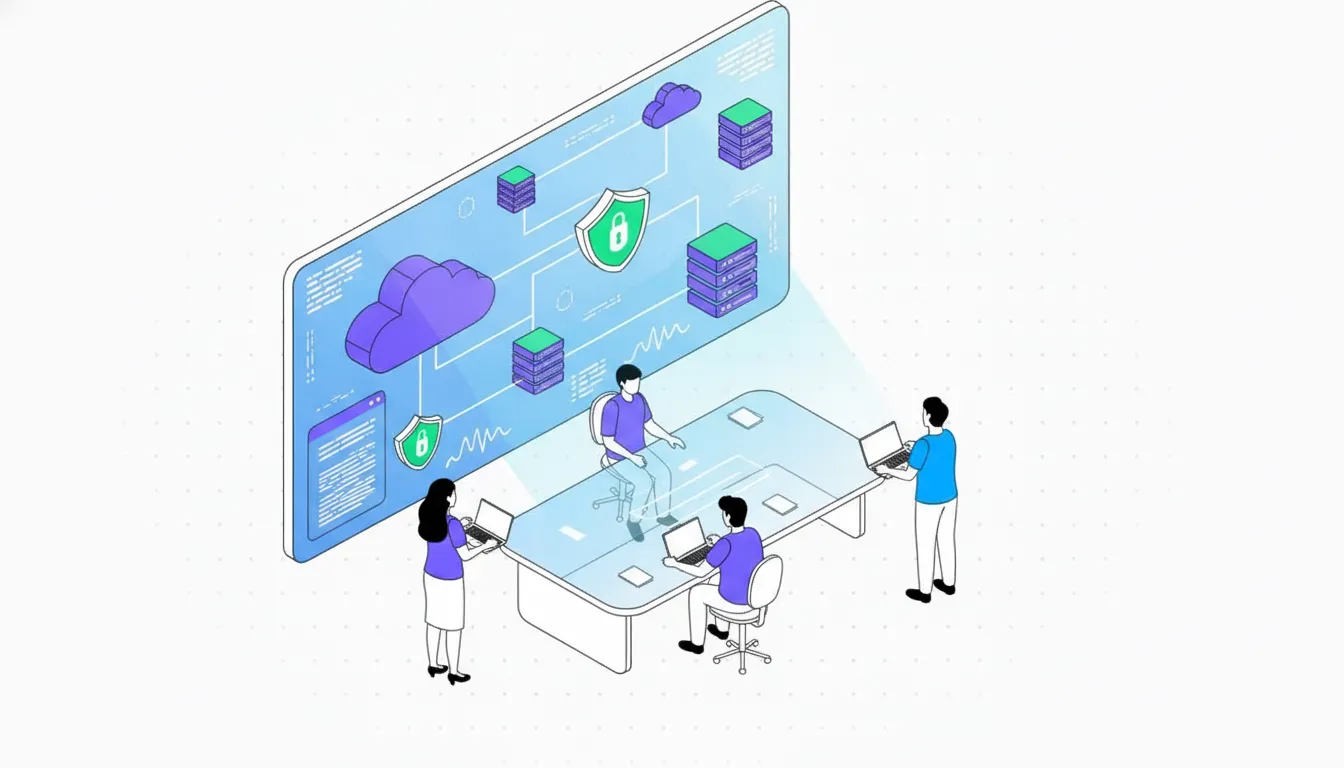
A new release can add an API, a cloud resource can become reachable, or a service can change owners. If security teams rely on an old asset list, their testing scope may no longer match the environment they need to protect. Keeping that scope current is the starting point for meaningful security assurance.
Explore Penti's attack surface management service
Attack surface management helps security teams discover and contextualize exposed digital assets. Teams use that current view to guide risk assessment and testing. CISA calls continuous, comprehensive asset visibility a basic precondition for managing cybersecurity risk (CISA asset visibility guidance).
That work is not simply a matter of counting hosts. Teams first need to define what belongs in scope and how applications, infrastructure, and access points fit together. A clear view of what an attack surface includes makes it easier to understand why it keeps changing.
What Is an Attack Surface and How Does It Change Over Time?
An attack surface is the set of points at a system boundary where an attacker could try to enter, affect the system, or extract data. In practical terms, that can include a public web application, an API endpoint, a cloud-hosted service, a network interface, or an internal component reachable through another system. The relevant boundary depends on what is in scope and how the parts of the environment connect. NIST's glossary definition captures the core idea: these are potential points of interaction with a system, not a list of confirmed vulnerabilities.
Attack surface management (ASM) is the ongoing work of discovering and organizing those assets, understanding their exposure and context, and keeping that view aligned with changes in the environment. A useful inventory gives a team a clearer picture of what exists and what should be assessed. It does not, by itself, establish whether an asset is vulnerable or whether an attacker can exploit it.
External attack surface management (EASM) is a narrower view focused on assets visible or reachable from outside the organization. It can help teams examine internet-facing domains, applications, services, and other exposed infrastructure. The UK National Cyber Security Centre's EASM buyers guide addresses this external-facing scope. Broader ASM can also account for internal and cloud environments, on-premise systems, and relationships between assets, when those are within the program's authorized scope. The distinction matters: an external discovery result is not a complete inventory of everything the organization operates.
For a SaaS company, the picture changes as applications are released, APIs evolve, cloud resources are added or retired, and system ownership shifts. A snapshot can therefore become incomplete even when it was accurate when collected. Regular discovery and inventory updates help identify assets that have appeared or changed; scanning can surface conditions that warrant investigation. Neither step is the same as validation. Confirming whether a weakness is reachable and exploitable requires appropriately scoped testing and evidence, followed by remediation and retesting where needed.
That is why ASM is best treated as a continuing input to security decisions, rather than a one-time scan or a guarantee of coverage. Teams can connect asset mapping to attack-path mapping and exploit validation to examine how discovered assets relate to meaningful security testing.
Why Static Snapshots Miss a Dynamic Attack Surface
An asset list is useful only while it reflects the environment it describes. A snapshot records what was visible at one moment. It cannot account for later releases, configuration changes, new cloud resources, API routes, or third-party connections. Ownership can shift too. Teams reorganize, services move, and an asset may remain without a clear person responsible for reviewing it.
That is why a snapshot should be treated as a dated baseline, not a permanent statement of scope. If a new endpoint or service appears after the list was assembled, an assessment based only on the earlier inventory may not include it. Conversely, a retired or reassigned asset may remain on the list and consume review effort. These are inventory and scope problems, not proof that an asset is vulnerable or exploitable.
CISA describes an asset inventory as an organized, regularly updated list of an organization's systems, hardware, and software. Its guidance also covers scope, asset identification, attributes, data management, and asset life cycles. Those details matter because a name or IP address alone may not tell a team what a resource does, who owns it, or whether it is still in use. CISA's asset inventory guidance is written for operational technology, but its inventory disciplines are useful more broadly.
A pragmatic model uses both snapshots and change-aware discovery:
- Keep a baseline. Record the approved scope, known assets, important attributes, and the date of collection. Use it to compare findings over time, not as a substitute for checking the current environment.
- Review changes. Revisit inventory when teams release products, add APIs or cloud resources, connect a vendor service, or change ownership. Where available, use recurring discovery to surface additions and changes between formal reviews.
- Validate before acting. Confirm that a newly discovered asset belongs to the organization, determine its owner and business role, and assess whether it is in authorized testing scope. Discovery informs decisions; it does not establish risk on its own.
Maintaining an inventory as assets change can help teams refresh security-testing scope instead of relying on an old list. For a related view of how mapping can inform testing, see attack-surface mapping and exploit validation.
What Are the Key Components of an Attack Surface Management Program?
A practical program turns asset visibility into a repeatable security workflow. It is not just a scanner or a list of internet-facing systems: teams need an authorized scope, useful asset context, risk decisions, and follow-through as environments change. CISA's asset inventory guidance similarly covers scoping, identification, attribute collection, taxonomy, data management, and asset life-cycle management.
- Define scope and authorization. Document which organizations, domains, cloud accounts, applications, APIs, networks, and environments are in scope, who can approve testing, and what limits apply. Include explicit ownership and authorization for third-party or shared systems. A discovery result is not permission to test it.
- Discover and maintain assets. Identify known assets and look for additions or changes across the agreed environment. Record when each asset was observed and how it relates to a domain, application, service, or environment. CISA describes an asset inventory as an organized, regularly updated list, rather than a one-time export.
- Classify assets and add context. Capture attributes that help explain what an asset does, where it sits, and who is responsible for it. Categorize by function and criticality, and connect relevant business sensitivity or exposure context. Assign an accountable owner, including for assets managed by another team; an unowned asset is difficult to assess or fix.
- Prioritize based on risk. Combine the finding with context such as reachability, asset importance, and the affected service. A scanner alert is a signal to investigate, not proof that a vulnerability is exploitable. Teams should distinguish a potentially relevant weakness from a validated exposure and avoid treating every alert as equally urgent.
- Validate important exposures. Confirm that the reported asset and condition are real, determine whether the issue is reachable under the authorized scope, and gather enough evidence to guide a decision. Vulnerability scanning can help identify candidates for review; continuous vulnerability assessment supports visibility into changes, but does not replace validation or human judgment.
- Assign and track remediation. Route confirmed issues to the asset owner with evidence, priority, and a clear next action. Record decisions such as fixing, reducing exposure, or accepting a risk through the organization's process. Track status to closure so findings do not disappear between security and engineering teams.
- Monitor, retest, and update the inventory. Revisit assets as they are added, changed, or retired, and repeat relevant checks after remediation. Update ownership and attributes when systems change. CISA's inventory lifecycle guidance includes data management and continuous improvement, reinforcing that an inventory must stay useful over time.
The goal is a loop: know what is in scope, understand its role, investigate meaningful signals, and verify that actions changed the exposure. That keeps scanning results in context and gives teams a defensible basis for deciding what to test or fix next.
How Attack Surface Management Connects to Continuous Security Testing
Asset discovery becomes more useful when teams use it to keep testing scope aligned with the environment. An asset record can show where a system sits, who owns it, and whether a change warrants a closer look. It does not tell the team, by itself, whether the change created an exploitable weakness.
A disciplined workflow connects visibility to validation:
- Refresh the scope. Compare newly discovered or changed assets with approved domains, applications, APIs, cloud accounts, and environments. Confirm ownership and authorization before testing.
- Select the right test. A vulnerability scan can identify known conditions or misconfigurations. A penetration test examines whether weaknesses can be combined or exploited within the approved scope. The goal and test depth should match the question and the allowed impact.
- Review evidence. Interpret results in context, confirm whether the asset is reachable, and separate suspected issues from validated exposure. Human security expertise remains useful for complex business logic, attack paths, and decisions about impact.
- Remediate and retest. Route confirmed findings to an accountable owner, record the action, and test again when appropriate to check whether the exposure changed.
This loop supports a more current view of security status. Discovery points to where the environment has changed. Testing supplies evidence about relevant weaknesses, while remediation and retesting record what happened next. It complements scheduled assessments, but does not guarantee that every risk is known or that compliance requirements are automatically met.
Penti describes agents that perform reconnaissance and attack-surface mapping, can test multi-step attack chains, and continuously retest surfaces, alongside certified penetration-tester review. The customer documentation also notes that complex business-logic flaws and creative attack strategies can require human expertise. Learn more about AI-powered penetration testing or how teams can test internet-facing assets as part of an authorized program.
What Should You Look for in an Attack Surface Management Tool?
Evaluate a tool by how well it supports your team's security workflow, not by the size of its dashboard or a vendor's unverified coverage claims. Start with a written scope: which environments and assets are authorized for discovery and testing, who owns them, and what actions the tool may take. Then ask vendors to demonstrate the evidence behind each answer using a representative, approved environment.
Questions to evaluate an attack surface management tool| Evaluation area | What to assess | Questions to ask |
|---|---|---|
| Authorized discovery breadth | Coverage should reflect your agreed scope. This may include internet-facing services and relevant cloud, on-premises, or hybrid assets. External-only discovery is not the same as a complete internal inventory. | Which asset types and environments are in scope? How do we verify ownership and exclude assets we are not authorized to assess? |
| Inventory freshness | A useful inventory makes new, changed, and retired assets visible, with a clear record of when each observation was made. Continuous visibility is a basic precondition for managing cybersecurity risk, according to CISA asset-visibility guidance. | How often is discovery repeated? Can we see last-seen time, change history, and the source of an asset record? |
| Business and exploitability context | Prioritization should help distinguish a technically detected issue from an exposure that matters to the organization, using factors such as asset criticality, reachability, and available validation evidence. | Can teams add business owner and criticality? What evidence supports a risk priority, and what remains an unverified finding? |
| Safe validation depth | Discovery and vulnerability enumeration are not equivalent to proving exploitability. Understand the difference between passive observation, scanning, and active tests, including their operational impact. | Which tests are enabled by default? How are authorization, rate limits, exclusions, and approval for higher-impact testing handled? |
| Ownership and workflow | Findings need an accountable owner, a remediation path, and a way to confirm whether the exposure changed after action. | Can teams assign owners, track disposition and exceptions, and record retest results in their existing process? |
| Evidence and governance | Reports should retain source, timestamps, scope, and supporting evidence. Human review and access controls matter when deciding how results are interpreted and shared. | Can reviewers inspect evidence and audit activity? What requires human confirmation, and how are access and data retention controlled? |
Use the answers to identify gaps between your actual needs and the proposed workflow. A tool can improve visibility, but it cannot establish that every asset is known or secure. If you are comparing discovery with the next step of security testing, review Penti's attack surface management overview in that context, and verify any capability against your own scope and requirements.
See how Penti connects attack surface visibility with security testing
Frequently Asked Questions
What are the three key components of attack surface monitoring?
A practical model has three parts: discover and maintain an asset inventory, then assess exposure and prioritize findings using context such as public reachability and business importance. Assign remediation and monitor changes or retest. CISA identifies asset discovery and vulnerability enumeration as core visibility activities. An inventory or scan alone does not confirm that a finding is exploitable. CISA's asset-visibility guidance describes those activities.
What is the difference between EASM and CAASM?
External attack surface management (EASM) focuses on discovering and assessing assets visible from outside the organization, such as public websites, domains, and exposed services. Cyber asset attack surface management (CAASM) generally consolidates asset and security data across internal environments and tools to help teams see coverage and ownership gaps. They address different visibility problems and can complement each other; confirm each tool's actual data sources and scope before comparing them. See the NCSC guide to external attack surface management for the external scope.
Does attack surface management replace penetration testing?
No. Discovery and scanning help identify assets and potential exposures, while penetration testing examines whether weaknesses can be exploited in a defined scope and context. Use current asset visibility to keep test scope aligned with changes, then use testing and human review where needed to validate risk. Findings still need an owner, remediation, and follow-up testing; neither an inventory nor a test is a guarantee that an environment is secure.
What should a team look for in an ASM tool?
Check whether discovery covers the environments you own, how often inventory is refreshed, and whether assets can be tied to owners and business context. Look for clear prioritization, evidence that helps distinguish suspected findings from validated risk, workflows for remediation and retesting, and reporting that fits your governance needs. Also verify authorization boundaries, data sources, and where human review is available. Judge the tool by fit with your operating process, not by a platform ranking.
Ready to Explore Penti's Attack Surface Management Service?
Connecting a changing asset view with ongoing security testing can help teams keep assessment scope aligned with the systems they operate. If you are considering how to make that connection part of your security process, learning about Penti's approach is a practical next step. Visit the service page to see how attack surface management fits within Penti's offering, or contact us through the service page to explore it with the team.
