-White.avif)
-Color.avif)
Best Penetration Testing Tools in 2026: 13 PTaaS & Automated Platforms Compared

Key Takeaways
- There is no single best pentesting platform for every team. The right fit depends on company stage, attack surface, audit timeline, and budget.
- Traditional manual penetration testing takes 3 to 4 months and costs $15,000 to $40,000 per test. Modern Pentest as a Service (PTaaS) platforms deliver pentest-grade results in hours at a fraction of the cost.
- Compliance frameworks like SOC 2 Type 2, ISO 27001, HIPAA, and PCI DSS now expect continuous security assessments, not annual snapshots.
- Vulnerability scanners produce CVE lists. The best penetration testing tools prove exploitability and chain security vulnerabilities into realistic attack paths.
- Autonomous AI pentesting tools close the gap between dev velocity and security validation, allowing teams to test after every major release.
- Pricing for the best penetration testing software ranges from $300/month for SaaS-friendly platforms to over $100,000/year for enterprise PTaaS engagements.
- Look for platforms that combine automation, methodology rigor (OWASP Top 10, PTES), and audit-ready reporting under one roof.
Introduction
Cybercrime cost the global economy an estimated $9.22 trillion in 2024, and that figure is on track to reach $13.82 trillion by 2028 (1). With clients, auditors, and procurement teams demanding evidence of active security testing, penetration testing has shifted from an annual checkbox to a continuous program.
The challenge is choosing the right platform. Hundreds of testing tools claim complete coverage, but most fall into three buckets: vulnerability scanners that flag known vulnerabilities captured as Common Vulnerabilities and Exposures (CVE) entries, manual pentest firms that take months to schedule, or breach simulation tools that test detection rather than exploitability.
We evaluated the best penetration testing tools in 2026 to help security teams, compliance leads, and engineering managers cut through the noise. Each tool below is ranked on pentest depth, compliance coverage, pricing transparency, and verified reviews from G2 and Capterra. No paid placements. No fluff.
What Is a Penetration Testing Tool?
A penetration testing tool is a platform or utility that simulates real-world malicious attacks against computer systems to uncover vulnerabilities before adversaries do. Unlike a vulnerability scanner that flags theoretical risks, a pentest tool validates exploitability, chains weaknesses across web applications, networks, and identity layers, and demonstrates the business impact of an attack.
Modern automated pentesting tools combine reconnaissance, exploitation, privilege escalation, and reporting into a single workflow. The output is not a CVE list. It is an attack-path map showing how an attacker could move from initial access to sensitive data exposure, paired with prioritized remediation guidance and evidence formatted for audit teams. An effective automated penetration testing tool also generates audit-ready output that maps to frameworks like SOC 2, ISO 27001, and the National Institute of Standards and Technology (NIST) SP 800-115 testing guide.
Why Pentesting Matters in 2026
Annual pentests are losing relevance fast. The numbers explain why.
- Breach economics keep climbing. The average cost of a data breach reached $4.88 million in 2024, an all-time high (2). Organizations that detect and contain breaches faster save an average of $1 million per incident.
- Most breaches still trace back to known weaknesses. The Verizon Data Breach Investigations Report 2024 found that the human element appears in 68% of breaches and that exploitation of vulnerabilities as an initial access vector grew by 180% year over year (3). Continuous security testing is the most direct counter.
- Audit cycles compress. SOC 2 Type 2 auditors increasingly expect evidence of continuous control validation, not annual snapshots. Compliance teams scrambling for fresh pentest evidence in the final weeks before an audit lose deals and budget cycles.
- Sales cycles depend on security evidence. Enterprise procurement teams now ask for recent pentest results during the buying process. Teams that cannot deliver evidence in days lose deals to competitors that can.
- Dev velocity outpaces annual cadence. Modern teams ship code daily or weekly. Annual pentests validate a snapshot that is months out of date by the time the report arrives.
The takeaway. Platforms that compress penetration testing from months into hours turn security from a cost center into a growth lever. Test after every major release. Generate audit evidence on demand. Unblock procurement-driven deals in days, not quarters.
Why You Can Trust Our Top Pentesting Tools Picks
Most "best of" articles in this space are paid placements with no real evaluation behind them. This list applies six criteria to every tool included.
1. Verified user ratings. Minimum 4.4 rating with at least 12 reviews on G2 or Capterra. Tools with higher review volumes and recency were weighted more heavily.
2. Pentest depth, not just scanning. Each platform was evaluated on whether it executes real exploit chains or stops at vulnerability identification.
3. Compliance alignment. SOC 2, ISO 27001, HIPAA, PCI DSS, NIST, and Cybersecurity Maturity Model Certification (CMMC) mappings were verified against vendor documentation.
4. Transparent pricing. Tools that hide pricing entirely behind enterprise NDAs were noted but not ranked above platforms with published or discoverable rates.
5. SaaS-relevant scope. We focused on platforms that test cloud environments, web apps, APIs, and modern infrastructure, not legacy network appliances.
6. Workflow integrations. Native connections to Jira, Slack, GitHub, GitLab, CI/CD pipelines, and compliance platforms (Vanta, Drata) signal a tool built for modern teams.
Yes, Penti is first on this list. It is also our platform. Every other tool here earned its place by the same criteria.
TL;DR: Best Pentesting Tools at a Glance
For teams short on time, here is the unified comparison of the top pentesting tools covered in this guide.
The Best Penetration Testing Tools of 2026 — Detailed Reviews
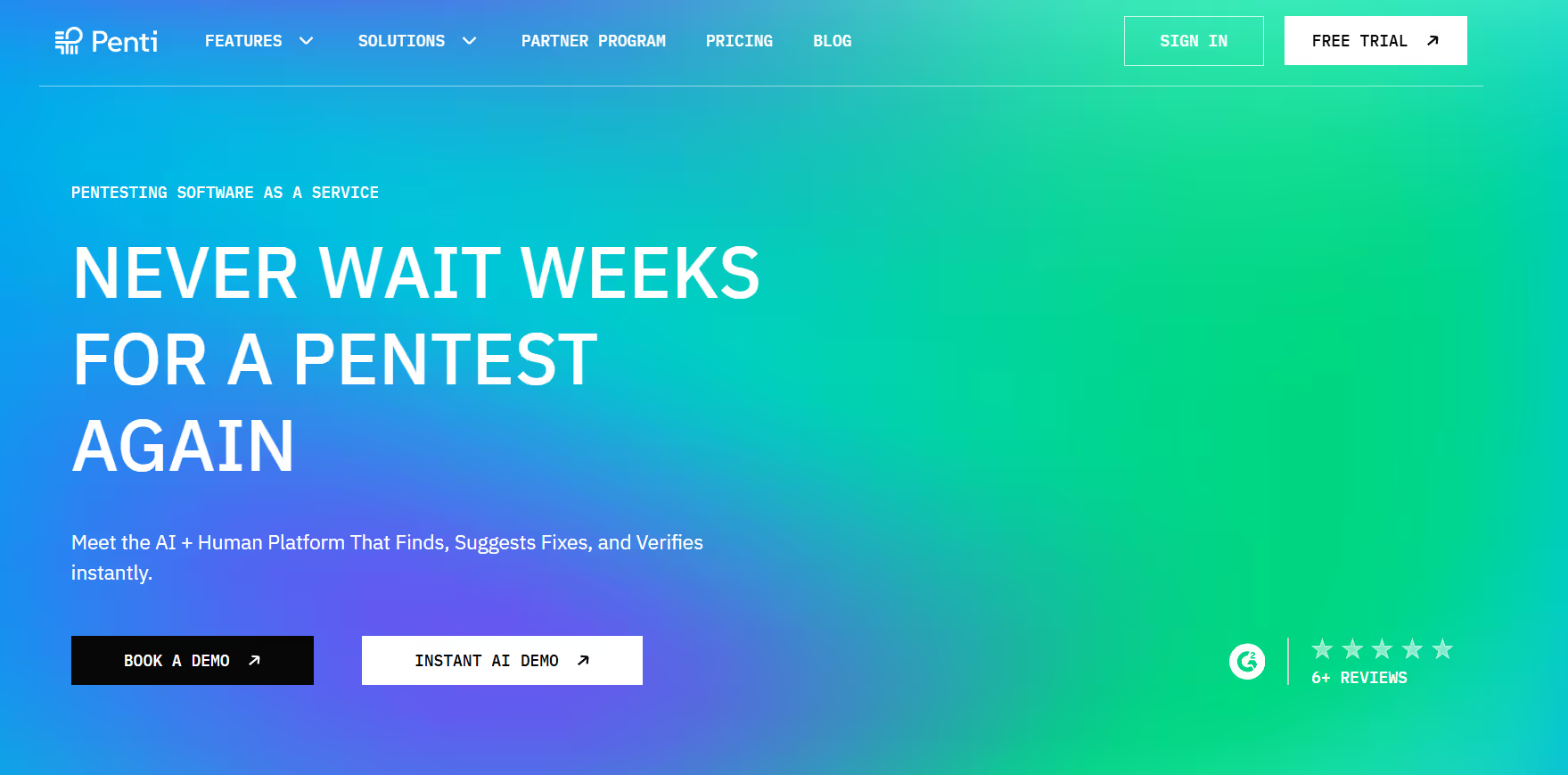
1. Penti — Autonomous Pentesting Platform
Quick Facts
- Founded: 2022 (originally Securily; rebranded to Penti)
- HQ: Boca Raton, Florida, USA
- Team size: ~20 employees
- Founders / CEO: Orit Benzaquen Cohen (Founder & CEO); Cariel Cohen (Co-Founder & CTO)
- Funding: Backed by Endeavor Miami, Tampa Bay Wave, Google Accelerator, Research Park at FAU
- Deployment: SaaS (cloud platform)
- Free trial: Yes — instant AI demo, free Security Headers Scan, free pentest registration
- Notable customers: Fortune 500 references on homepage; named case studies available on request
Overview
Penti delivers pentest-grade results in hours instead of months. Autonomous AI agents executing Open Web Application Security Project (OWASP) Top 10 and Penetration Testing Execution Standard (PTES) methodologies run real penetration testing workflows — reconnaissance, exploitation, validation, reporting — without waiting weeks for human availability. Onboard in minutes. Get audit-ready evidence the same day.
Standout Feature
Agentic AI penetration testing with human expert validation, video-evidence exploit replays, and unlimited retests — production-safe and same-day.
Key Features
- Autonomous AI agents executing real exploit chains, not simulated attack patterns
- Same-day pentest results with launch in minutes
- Continuous testing on your schedule: once, weekly, monthly, or after every deployment
- Audit-ready reports mapped to SOC 2, ISO 27001, HIPAA, PCI DSS, GDPR, NIST, CMMC
- Coverage across web applications, mobile, internal and external networks, cloud, API, and IoT
- Integrations with Vanta, Drata, Jira, Slack, GitHub, GitLab, and CI/CD pipelines
- Manual pentesting credits available on Enterprise plan for specialized validation
- Unlimited retests at no additional cost until clean bill of health
Awards & Recognition
- G2 rating 5.0/5 (early reviews)
- Backed by Google for Startups Accelerator and Endeavor Miami
Pentest Specifics
- Test types: web app pentesting, mobile, API, cloud, internal/external network, IoT, critical infrastructure
- Methodology: OWASP Top 10 explicitly cited; SOC 2, ISO 27001, PCI DSS, HIPAA, NIST, GDPR, CMMC compliance support
- Retest inclusion: unlimited, no time limit
- Setup time: launch in minutes
- Customer support: dedicated success team, Slack/Teams/WhatsApp on-demand
Why Penti Is a Strong Alternative to Traditional Pentest Firms
Manual pentest vendors take 3 to 4 months from scoping to results. Penti onboards new targets in minutes and delivers full reports the same day. Where annual pentests cost $30,000 to $80,000 for two engagements, Penti starts at $300/month for unlimited runs. Teams move from scan results to validated, prioritized remediation plans without blocking sprints or releases.
Best For
Teams with active SOC 2 audits, sales cycles blocked by security questionnaires, and engineering velocity that outpaces what annual pentests can validate. Especially strong for resource-constrained security teams that need to standardize testing across many assets.
Pricing
- Launch: $300/month ($3,240/year, 10% annual discount) — up to 3 targets
- Plus: $1,000/month ($10,800/year) — up to 10 targets, scheduled testing, compliance integrations
- Advanced: $2,000/month ($21,600/year) — up to 20 targets, multi-environment support, dedicated CSM
- Enterprise: custom — unlimited targets, manual pentesting credits from $4,000 per credit, dedicated security engineer
Review Summary
5.0/5 on G2 across 6 verified reviews. Reviewers consistently highlight Penti's onboarding speed, the depth of its attack-chain reporting, and the clarity of its audit evidence. Customers note that Penti reduces manual pentesting overhead and makes risk easier to communicate to non-technical stakeholders.
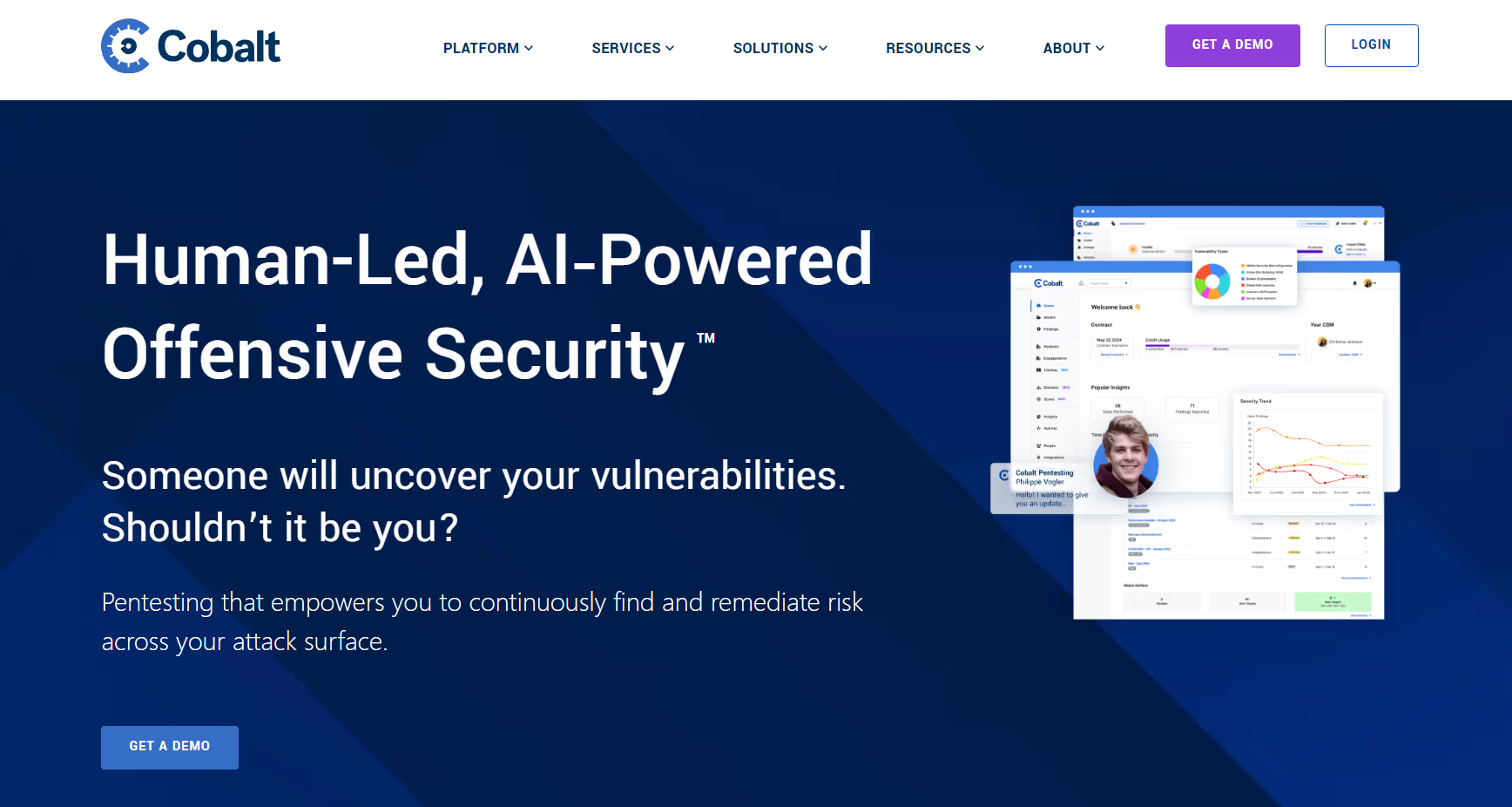
2. Cobalt — Hybrid Pentest as a Service
Quick Facts
- Founded: 2013
- HQ: San Francisco, California, USA (fully remote workforce; Scandinavian roots)
- Team size: 201–500 employees
- Founders / CEO: Founders — Jacob Hansen, Esben Friis-Jensen, Jakob Storm, Christian Hansen. CEO — Sonali Shah
- Funding: $29M Series B (Aug 2020, led by Highland Europe); total raised across all rounds undisclosed
- Deployment: SaaS (app.cobalt.io)
- Free trial: No — credit-based purchase model, sales-led
- Notable customers: Aircall, Toast, Algolia, Credit Karma, Dropbox, MuleSoft, Pendo, Vonage, Flexport (1,500+ customers total)
Overview
Cobalt pioneered the PTaaS category, pairing a curated network of vetted manual pen testers (the Cobalt Core) with a platform that handles scoping, scheduling, and delivery. It is one of the most established players for teams that want third-party human attestation alongside continuous workflow.
Standout Feature
Pioneer of credit-based PTaaS — "Human-Led, AI-Powered Offensive Security" with on-demand pentester pool and DevOps/SDLC integration.
Key Features
- Vetted pentester community with deep specialization
- Dynamic Application Security Testing (DAST) and manual pentest combined
- Real-time collaboration and findings tracking
- Retest workflow tied to credit consumption
- Integrations with Jira, Slack, GitHub, ServiceNow
Awards & Recognition
- G2 Grid Leader for Penetration Testing — #1 of 42 vendors, four consecutive quarters
- 88 G2 badges in 2025
- G2 Leader, Mid-Market (Winter 2026)
Pentest Specifics
- Test types: black box, grey box, white box across web apps, APIs, mobile, cloud, networks, IoT
- Methodology: references OWASP, PTES, NIST, OSSTMM in public methodology docs
- Retest inclusion: tied to credit consumption — confirm with sales
- Setup time: 1 business day (Enterprise), 2 days (Premium), 3 days (Standard)
- Customer support: named CSM on Premium and Enterprise tiers
Why Penti Is a Strong Cobalt Alternative
Cobalt depends on human tester availability and credit-based scoping, which adds a 1- to 3-week startup window. Penti runs autonomously with no scheduling overhead and delivers comparable depth at a fraction of the cost for teams that need to validate releases continuously.
Best For
Mid-market companies that want vetted human pentesters layered onto a platform and can absorb a 1- to 3-week scoping window per engagement.
Pricing
Custom credit-based model. Per third-party reporting (Vendr): platform fee approximately $15,000 to $30,000/year; credit packages from approximately $50,000/year; one Cobalt Credit equals 8 pentest hours. Entry usage-based pricing reportedly around $12,000/year.
Review Summary
4.7/5 on G2 across approximately 867 reviews. Cobalt earns strong marks for tester quality and platform clarity. Some reviewers note slower start-up time on smaller engagements and pricing that scales steeply with scope.
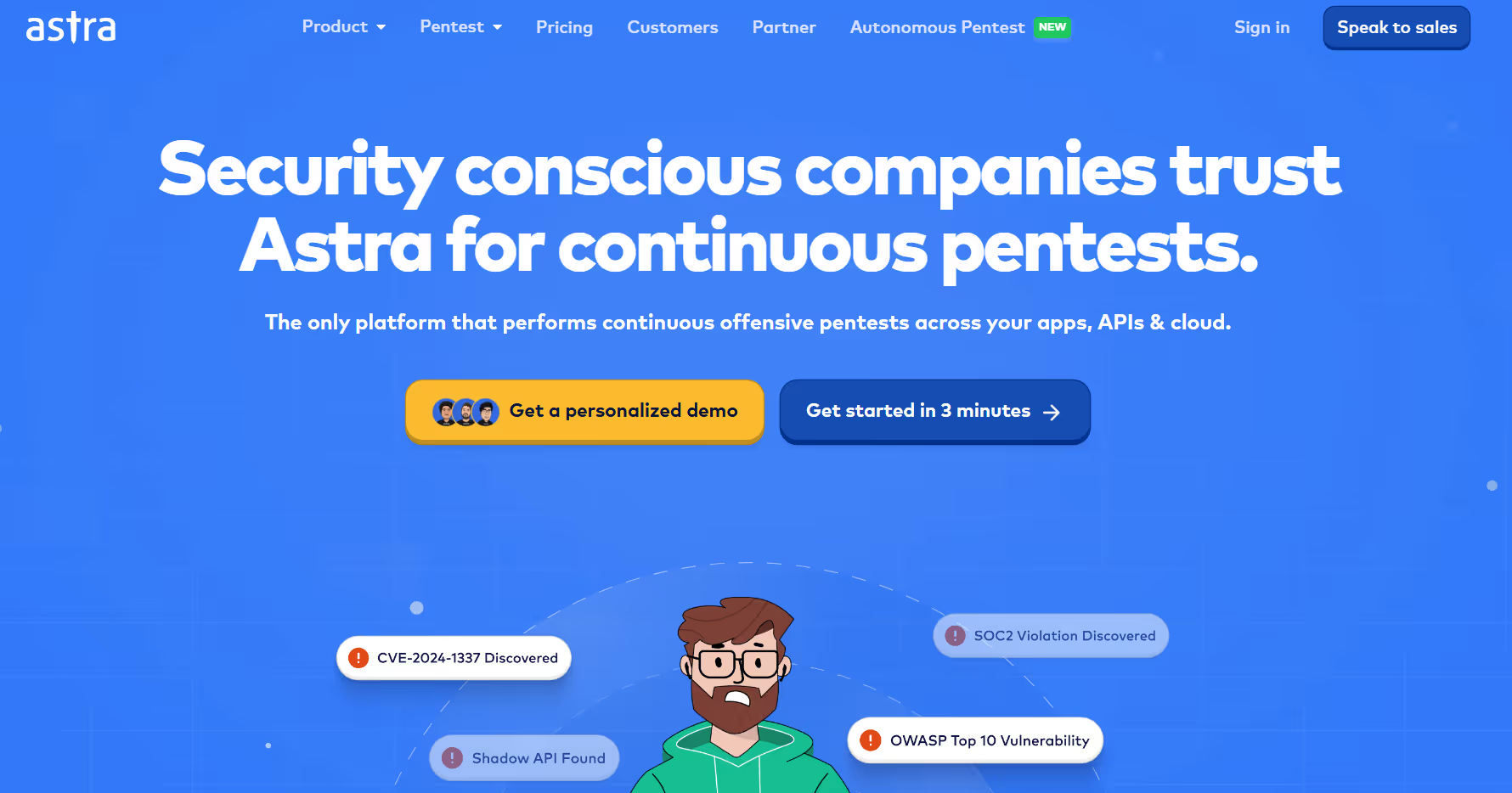
3. Astra Pentest — Hybrid SaaS Pentest Platform
Quick Facts
- Founded: 2018
- HQ: New Delhi, India + Claymont, Delaware, USA (dual HQ)
- Team size: Mid-stage, growing
- Founders / CEO: Shikhil Sharma (CEO) and Ananda Krishna (CTO)
- Funding: $10M Series A (Oct 2022); $2.7M Venture Round (Feb 2025); investors include Better Capital and Neon Fund
- Deployment: SaaS
- Free trial: Yes — $7/week trial available
- Notable customers: Ford, Gillette, GoDaddy, ICICI, UN, Dream11, CompTIA, SpiceJet, HackerRank (8,000+ companies total)
Overview
Astra Pentest combines an automated vulnerability scanning engine with a manual pentest layer, mapped against OWASP Top 10 and SANS 25. Its plug-and-play model includes a Chrome extension for authenticated scans behind login pages, a useful differentiator for teams testing web application security in logged-in user flows.
Standout Feature
AI-powered continuous pentest platform combining 9,300+ automated tests with manual pentesting under one dashboard, with CI/CD-integrated continuous scanning.
Key Features
- 9,300+ automated test cases plus manual hacker-style pentest
- Authenticated scanning via Chrome extension covering hidden form fields
- Compliance dashboards for PCI DSS, HIPAA, ISO 27001, SOC 2, GDPR
- Expert remediation support and developer-friendly reports
- CI/CD integrations: Jira, GitHub, GitLab, Slack, Jenkins
Awards & Recognition
- Capterra "Emerging Favorite"
- Listed on Gartner Peer Insights and G2
Pentest Specifics
- Test types: combined automated scanning + manual hacker-style pentest
- Methodology: OWASP explicitly cited; vendor blog covers OWASP, PTES, OSSTMM, NIST SP 800-115
- Retest inclusion: included for findings within scope (typical 1-year window)
- Setup time: smooth onboarding per reviews
- Customer support: Slack-based support widely cited
Why Penti Is a Strong Astra Pentest Alternative
Astra blends scanner output with periodic manual review, which creates dependency on human reviewer availability. Penti executes autonomous attack chains end-to-end and produces structured evidence in hours, with manual pentest credits available on Enterprise plans when deeper expert review is needed.
Best For
Small and mid-sized companies that want a managed pentest experience with expert remediation, especially those running web apps with authentication-gated content.
Pricing
- Trial: $7/week
- Scanner: $199/month or $1,999/year per target (unlimited scans, 9,300+ tests)
- Pentest: $5,999/year per target
- Enterprise: from $9,999/year
- Mobile app pentest: from $2,200/app
Review Summary
4.6/5 on G2 across 177 reviews; 4.8/5 on Capterra. Reviewers consistently praise dashboard clarity and CI/CD integration. Some note scope expansion can be slower than expected.
4. Intruder — Continuous Vulnerability and Attack Surface Scanning
Quick Facts
- Founded: 2015
- HQ: London, United Kingdom
- Team size: ~82 employees
- Founders / CEO: Founder & CEO — Chris Wallis
- Funding: Backed by Wayra UK, BT Group, NCSC Cyber Accelerator, TechHub (totals across sources conflict; figure unconfirmed)
- Deployment: SaaS only
- Free trial: Yes — 14 days
- Notable customers: Drata, NHS, PostHog, Fujifilm, Virgin Active (3,000+ customers globally)
Overview
Intruder runs continuous vulnerability scanning across external attack surfaces, with 140,000+ checks for OWASP Top 10, CVE coverage, and emerging threats. It also offers continuous penetration testing on premium tiers for teams needing deeper validation of critical assets.
Standout Feature
GregAI — virtual security analyst that verifies findings and auto-suppresses false positives across 140,000+ web checks.
Key Features
- Continuous external and internal scanning
- CloudBot for hourly checks across AWS, Google Cloud, Azure
- Emerging threat scans triggered by new CVE disclosures
- Smart prioritization that surfaces high-impact issues
- Integrations with Slack, Jira, Microsoft Teams
Awards & Recognition
- 2026 G2 Best UK Software Company
- Deloitte Tech Fast 50 2023 — fastest-growing UK cybersecurity company
- GCHQ Cyber Accelerator (2017)
Pentest Specifics
- Test types: automated scanning + AI-assisted pentest analysis (explicit black/grey/white-box labeling not published)
- Methodology: SOC 2, ISO 27001, PCI DSS, HIPAA, DORA compliance support
- Retest inclusion: not publicly disclosed
- Setup time: self-serve trial signup
- Customer support: Help Center + Developer Hub
Why Penti Is a Strong Intruder Alternative
Intruder excels at continuous scanning but operates primarily at the vulnerability scanning layer. Penti adds attack-path execution and real exploit chaining, transforming scanner output into validated business risk.
Best For
Lean security teams that need always-on external monitoring with low operational overhead.
Pricing
- Essential — 1 scheduled scan/month, unlimited ad-hoc, 14-day trial
- Cloud — adds up to 3 cloud accounts, 5 pentest credits/month
- Pro — up to 10 cloud accounts, 10 pentest credits/month, internal scanning
- Enterprise — custom; unlimited cloud accounts, 50 pentest credits/month, ASM
- Exact $ amounts: vendor does not publish on /pricing — request a quote
Review Summary
4.8/5 on G2 across approximately 202 reviews. Reviewers receive high marks for setup speed and clarity of prioritization. Some wish for deeper exploitation depth.
5. Horizon3.ai NodeZero — Autonomous Pentesting
Quick Facts
- Founded: 2019
- HQ: San Francisco, California, USA
- Team size: ~390 employees (rapid growth)
- Founders / CEO: Co-founder & CEO — Snehal Antani; co-founders include Anthony Pillitiere, Naveen Sunkavally, Rob Alderman
- Funding: $186M total over 6 rounds; latest $100M Series D in June 2025
- Deployment: Hybrid — SaaS architecture; internal tests via on-prem Docker host or OVA; external tests run from cloud
- Free trial: No formal free trial; demo only
- Notable customers: NSA Cybersecurity Collaboration Center (CAPT program); 4 Fortune Top 10 companies (unnamed); 5,200+ organizations globally
Overview
NodeZero is one of the most direct autonomous penetration testing platforms in the market. It runs zero-knowledge attacks against internal, external, and hybrid environments, chaining weaknesses into provable impact paths that match what a skilled adversary would discover.
Standout Feature
Autonomous, production-safe pentesting at scale — 225,000+ pentests with zero downtime; achieved domain compromise in as little as 77 seconds in vendor demos.
Key Features
- Fully autonomous, agentless deployment
- Attack path graphing with proof-of-impact evidence
- Coverage for on-prem, cloud (AWS, Azure, GCP), Kubernetes, Active Directory, hybrid
- Detailed remediation guidance keyed to fix priority
- One-click "fix and retest" verification
Awards & Recognition
- #1 in Security — Inc. 5000 Fastest Growing Companies
- #3 in Software — Deloitte Technology Fast 500
- #4 in Security — Fast Company Most Innovative
Pentest Specifics
- Test types: internal, external, cloud (AWS/Azure/GCP), Kubernetes, Active Directory pentesting
- Methodology: MITRE ATT&CK explicitly mapped; PCI, NIS 2, CMMC, FedRAMP High compliance
- Retest inclusion: yes — unlimited pentests with one-click verification
- Setup time: minutes via Docker host or OVA; same-day pentest results
- Customer support: prompt, technical responses within minutes per reviews
Why Penti Is a Strong NodeZero Alternative
NodeZero is engineered for enterprise security teams running internal red-team programs and does not yet cover web applications. Penti delivers comparable autonomous depth tuned for attack surfaces — web apps, APIs, cloud — at friendly pricing that fits earlier-stage teams.
Best For
Enterprises with mature security programs, internal red teams, and broad hybrid attack surfaces.
Pricing
Custom quote only — NodeZero does not publish prices. No free plan. Available via AWS Marketplace (private offer).
Review Summary
4.8/5 on G2 across 24 reviews. Reviewers praise the realism of attack chains and the depth of post-exploit evidence. Some cite pricing that puts it out of reach for SMBs.
6. Pentera — Automated Security Validation
Quick Facts
- Founded: 2015
- HQ: Petah Tikva, Israel + Burlington, Massachusetts, USA
- Team size: ~400 employees; offices in 20 countries
- Founders / CEO: Founder — Dr. Arik Liberzon; CEO — Amitai Ratzon
- Funding: $250M total across 5 rounds; latest $60M Series D (Mar 2025) led by Insight Partners and Farallon Capital; unicorn since Jan 2022
- Deployment: SaaS and on-premises; supports cloud, on-prem, and hybrid environments
- Free trial: Demo-by-request only
- Notable customers: Casey's General Stores, DTCC, Merlin Entertainments, EDEKA, ALDO Group, Telefonica, Azul Airlines, City National Bank, Blackstone (1,000+ enterprise customers)
Overview
Pentera delivers automated security validation across the cyber kill chain, executing real exploits without persistent agents. It is sometimes confused with Breach and Attack Simulation (BAS) tools, but Pentera leans toward genuine exploitation rather than simulated automated attacks.
Standout Feature
Production-safe autonomous adversarial validation with real exploits and ransomware emulation; Pentera Resolve closes the loop with automated remediation.
Key Features
- Agentless real-exploit execution
- Continuous validation on user-defined schedules
- MITRE ATT&CK alignment and detection-coverage mapping
- Active Directory and identity-layer attack paths
- Cloud, network, and endpoint coverage
Awards & Recognition
- Representative Vendor in Gartner Market Guide for Adversarial Exposure Validation (2026)
- AWS Qualified Software
- ISO 9001, ISO/IEC 27001, 27002, 42001, AICPA SOC 2
Pentest Specifics
- Test types: internal (Pentera Core), external (Pentera Surface), cloud/hybrid (Pentera Cloud), automated remediation (Pentera Resolve)
- Methodology: MITRE ATT&CK explicit mapping; OWASP Top 10 with fuzzing and exploitation; CVE, NIST, CISA threat intelligence
- Retest inclusion: automated retests are core to the platform
- Setup time: vendor-claimed quick implementation per reviews
- Customer support: tier details not publicly disclosed
Why Penti Is a Strong Pentera Alternative
Pentera focuses heavily on validating defensive security controls — Endpoint Detection and Response (EDR), SIEM, SOC tooling — at enterprise scale. Penti is purpose-built for finding ways an attacker could exploit vulnerabilities in modern attack surfaces and delivering audit-ready evidence in hours, at pricing that scales from startup to enterprise.
Best For
Large enterprises with mature SOCs that need to validate detection and response coverage continuously.
Pricing
Custom quote only — subscription-based, varies by endpoints and domains. Indicative scale from reviews: enterprise deals commonly $100,000+/year.
Review Summary
Approximately 144 reviews on G2 (cross-platform aggregate of 316 reviews / 91% satisfaction across review sites); 5.0/5 on Capterra (small sample of 2). Reviewers note the platform is engineered for large organizations and is not a fit for smaller teams.
7. BreachLock — Hybrid AI + Human PTaaS
Quick Facts
- Founded: 2018
- HQ: New York, NY, USA (offices in Amsterdam and London)
- Team size: ~122 employees
- Founders / CEO: Founder & CEO — Seemant Sehgal
- Funding: $3M seed (Mar 2022, led by TIIN Capital); later rounds undisclosed
- Deployment: SaaS PTaaS platform
- Free trial: 30-day product trial (qualification-based)
- Notable customers: Vendor cites 1,000+ clients; specific named logos not publicly disclosed
Overview
BreachLock pairs human-led penetration testing with AI-driven triage to deliver third-party attestation reports across web apps, networks, mobile, and cloud. It is positioned for teams that want documented human pentest output with cloud-based delivery and faster turnaround than legacy firms.
Standout Feature
Unified PTaaS + Continuous Attack Surface Management + Adversarial Exposure Validation in one platform — only vendor offering all three per Gartner positioning.
Key Features
- Human-led pentest with AI triage layer
- Retesting included
- Third-party attestation reports
- Integrations with Jira, Slack, ServiceNow
Awards & Recognition
- 2026 Gartner Market Guide for Adversarial Exposure Validation — Representative Vendor
- 2025 Gartner Hype Cycle for Application Security — Sample Vendor for PTaaS
- 2025 Gartner Emerging Tech Impact Radar — Sample Vendor for Threat Exposure Management
Pentest Specifics
- Test types: black box, grey box, white box
- Methodology: references OWASP, PTES, OSSTMM, NIST SP 800-115
- Retest inclusion: included; specific terms request from sales
- Setup time: marketed as fast launch; specific SLA not published
- Customer support: tier structure not publicly disclosed
Why Penti Is a Strong BreachLock Alternative
BreachLock retains the dependency on human pentester scheduling, which constrains how often teams can validate. Penti runs autonomously with no scheduling friction and delivers same-day results, with optional human validation on Enterprise plans.
Best For
Companies needing third-party human pentest attestation for compliance or customer assurance.
Pricing
Custom enterprise pricing — not publicly listed.
Review Summary
4.6/5 on G2 across 37 reviews (86% 5-star). BreachLock is recognized for the quality of its human pentest reports and the ease of its platform.
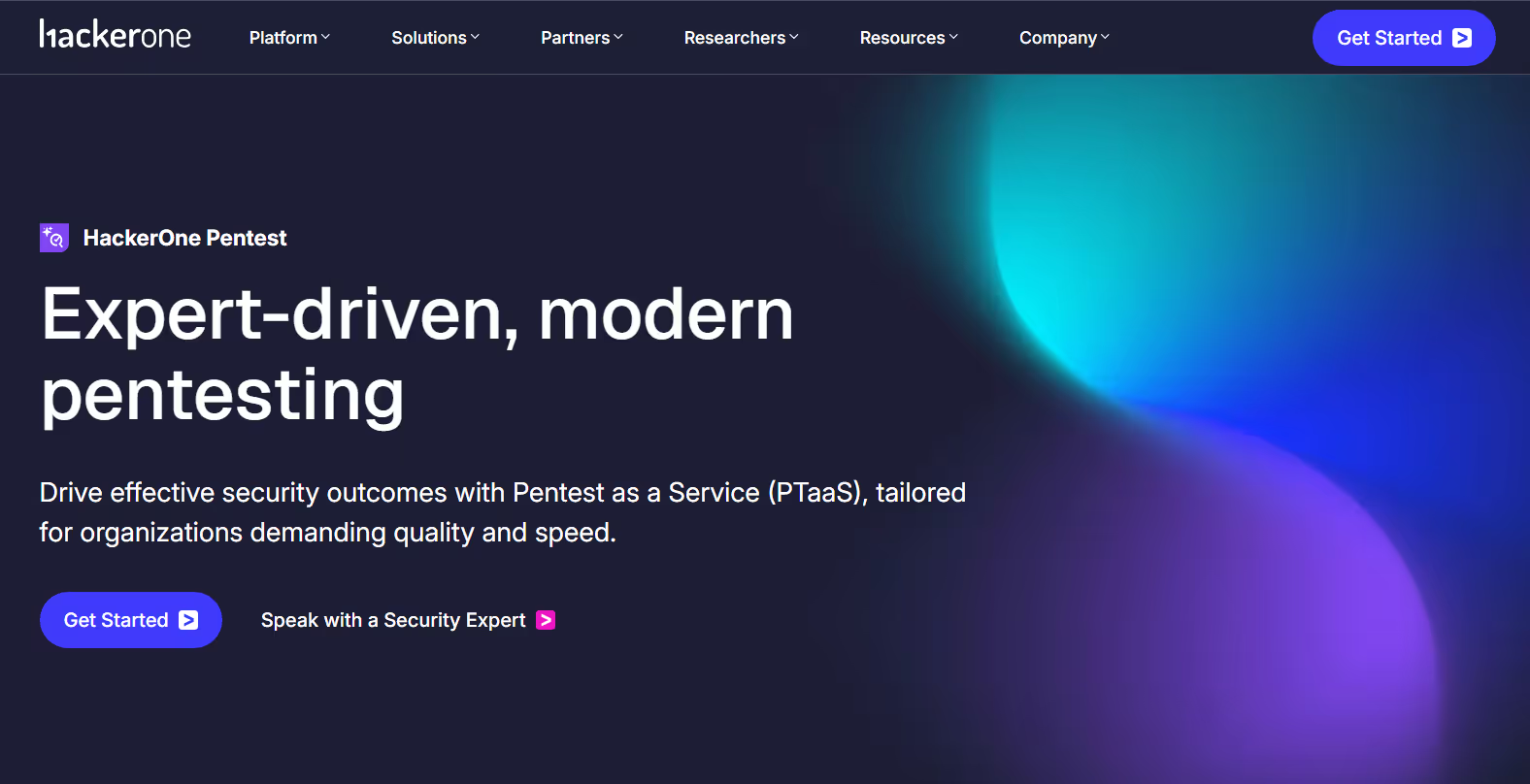
8. HackerOne Pentest — PTaaS via Curated Researchers
Quick Facts
- Founded: 2012
- HQ: San Francisco, California, USA (development office in Groningen, Netherlands)
- Team size: ~400 corporate employees (broader hacker community far larger)
- Founders / CEO: Founders — Michiel Prins, Jobert Abma, Alex Rice, Merijn Terheggen; CEO — Kara Sprague (Nov 2024)
- Funding: ~$160M+ total across Series A through E
- Deployment: SaaS
- Free trial: Demo available on request; no public free pentest
- Notable customers: Adobe, Shopify, Snap Inc., Grammarly, Zebra Technologies, LoveHolidays, Greenhouse (1,300+ companies; 600,000+ bugs found)
Overview
HackerOne Pentest applies the company's bug-bounty researcher network to structured pentest engagements. The result is a methodology-driven pentest delivered through a familiar PTaaS workflow, often layered on top of an existing HackerOne bounty program.
Standout Feature
Combined human-led and agentic AI pentesting with access to the world's largest ethical hacker community; Hai AI agent (90% of customers enabled).
Key Features
- Curated researcher matching by skill set
- Structured methodology and scope control
- Integrated retest workflow
- Compliance-ready report formats
Awards & Recognition
- G2 Leader badges in penetration testing category
- Recognized in Gartner Application Crowd Testing Services category
Pentest Specifics
- Test types: black box, grey box, white box (web apps, cloud, AI/LLM, mobile, API, network, desktop, source code audits)
- Methodology: OWASP Top 10 explicitly referenced; SOC 2, ISO 27001, CREST, NIST CSF 2.0, FISMA, NIST 800-53, GDPR, DORA support
- Retest inclusion: included as part of engagement workflow
- Setup time: Pentest Scoping Assistant facilitates kickoff
- Customer support: triage support included
Why Penti Is a Strong HackerOne Pentest Alternative
HackerOne Pentest engagements typically run 1 to 3 weeks from scoping to results — fast for the manual pentest category, slow next to autonomous platforms. Penti delivers same-day output for teams that need pentest cadence to match release cadence.
Best For
Enterprises already running HackerOne bug bounty programs that want structured pentest output from the same researcher pool.
Pricing
Custom enterprise pricing — engagements typically start at approximately $10,000 per pentest, depending on scope.
Review Summary
HackerOne platform — 4.5/5 on G2 across 63 reviews. Reviewers praise researcher quality and platform polish. Reviewers note it is best suited to organizations with existing bug bounty operations.
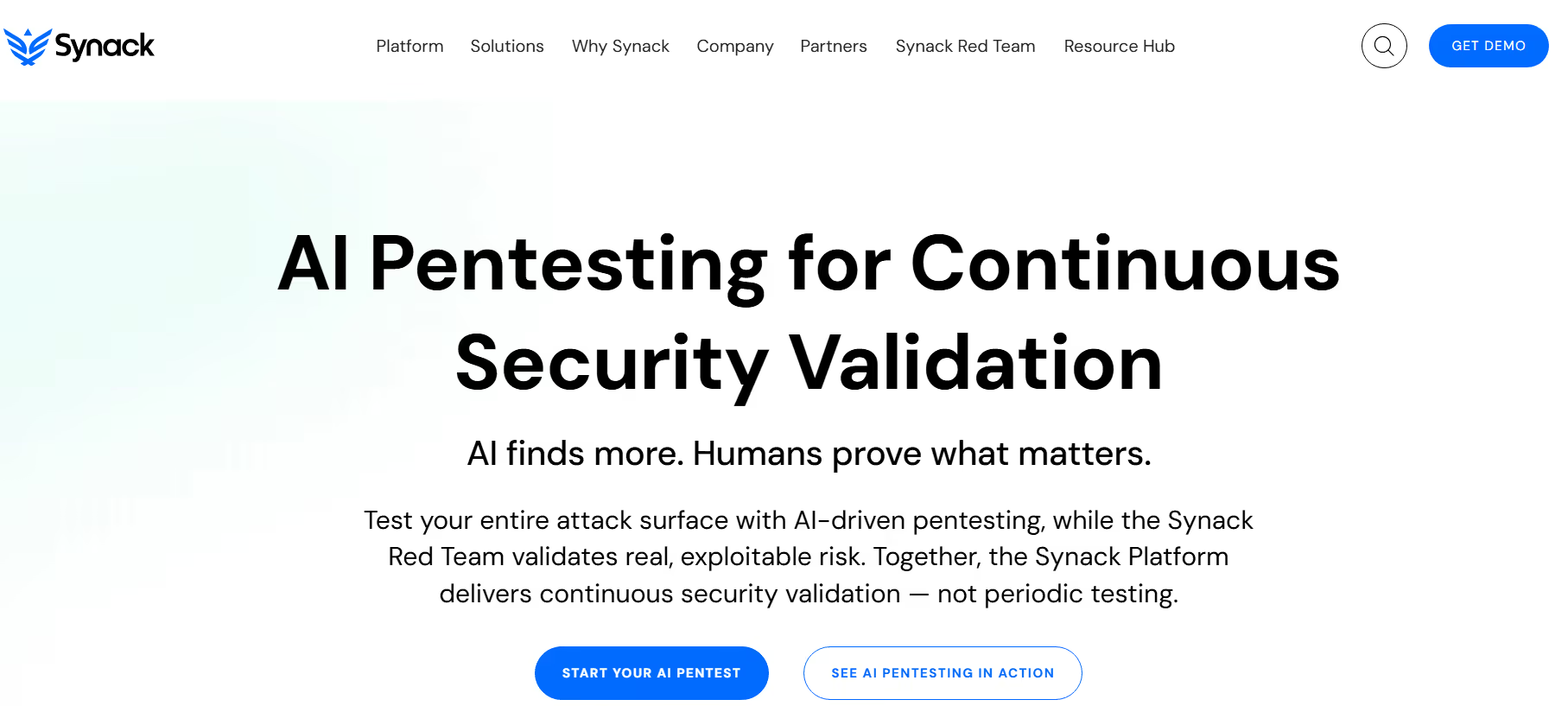
9. Synack — Crowdsourced On-Demand Pentesting
Quick Facts
- Founded: 2013
- HQ: Redwood City, California, USA
- Team size: ~250 direct employees + 1,500+ Synack Red Team researchers
- Founders / CEO: Co-founders Jay Kaplan (CEO) and Dr. Mark Kuhr (CTO) — both former NSA
- Funding: ~$112.1M total disclosed through Series D ($52M Series D May 2020, led by B Capital Group)
- Deployment: SaaS; available via AWS, Azure, GCP Marketplaces
- Free trial: "Start Your AI Pentest" trial referenced for the Sara AI tier
- Notable customers: U.S. Department of Defense, U.S. Department of Transportation, IRS, Federal Reserve, HHS, Fannie Mae, Allianz, Navy Federal Credit Union
Overview
Synack delivers crowdsourced penetration testing via the Synack Red Team, a vetted network of researchers operating under strict identity verification. It is FedRAMP Moderate Authorized, which makes it a strong fit for regulated industries and public-sector environments.
Standout Feature
FedRAMP Moderate Authorized status + Synack Red Team (1,500+ vetted researchers) + Sara AI pentesting agent — uniquely positioned for U.S. federal/public sector and regulated enterprise.
Key Features
- 24/7 testing window with crowdsourced testers
- Attacker-perspective findings
- FedRAMP Moderate Authorization (achieved 2024; 325 security controls)
- Evidence-based reporting with patch verification
Awards & Recognition
- FedRAMP Moderate Authorized (2024)
- GigaOm 2025 PTaaS Radar — Leader and Fast Mover
- Global InfoSec Awards — Market Leader in AI-Powered Cybersecurity; Trailblazer in PTaaS
Pentest Specifics
- Test types: grey box and white box primarily (credentialed/authenticated emphasis); black box also offered. Covers web app, host, cloud, API, attack surface management, social engineering, AI/LLM
- Methodology: NIST, PCI, OWASP (WSTG, MSTG, ASVS); FISMA, CMMC, SOC 2, PCI DSS support; NIST 800-53 controls for FedRAMP
- Retest inclusion: yes — patch verification built into platform workflow
- Setup time: launched in days (Sara AI 2-3 days; SynackST 5 days; Synack14 14 days)
- Customer support: tier details not detailed publicly
Why Penti Is a Strong Synack Alternative
Synack remains dependent on human researcher availability and engagement scoping. Penti delivers consistent autonomous output without waiting on researcher schedules, with audit-ready compliance mapping for SOC 2, ISO 27001, HIPAA, and PCI DSS workflows that don't require FedRAMP.
Best For
Federal agencies, regulated industries, and organizations specifically requiring crowdsourced human attestation with FedRAMP authorization.
Pricing
- Sara AI Pentest from $4,070 (1 pentest, 2-3 day window, up to 25 web apps or 100 hosts)
- SynackST from $10,010 (compliance, 5-day window)
- Synack14/365 from $26,400 (continuous testing, 14-day or 365-day)
- Standard Platform fee required: $16,000
- Enterprise: custom
Review Summary
4.9/5 cited on G2 (small visible review sample; verify directly). Recognized for researcher quality and the rigor of identity vetting. Pricing and procurement timelines are oriented toward enterprise.
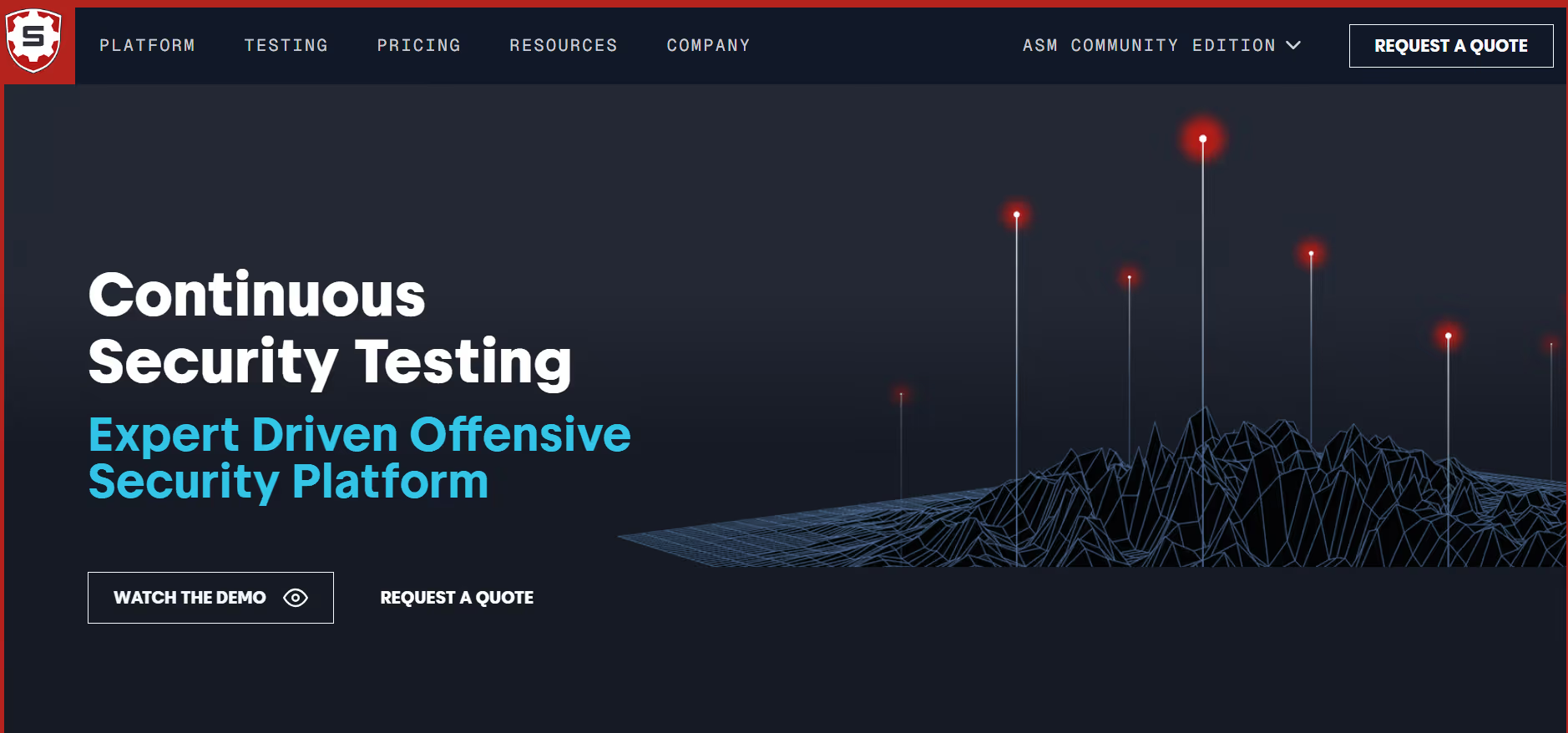
10. Sprocket Security — Continuous Pentesting
Quick Facts
- Founded: 2017
- HQ: Madison, Wisconsin, USA
- Team size: ~42 employees
- Founders / CEO: Founder & CEO — Casey Cammilleri
- Funding: $8M Series A (Mar 2024, led by Blueprint Equity with Capital Midwest Fund)
- Deployment: SaaS continuous pentest platform
- Free trial: ASM Community Edition (free tier); full platform quote-based
- Notable customers: Citizens Bank, Ascendium, Westinghouse, UW Credit Union, Swimlane, One Community Bank, Gordon Flesch Company
Overview
Sprocket Security blends human pentesters with automated reconnaissance and continuous monitoring, alerting customers in real time when new exposures appear on their attack surface. It is one of the more accessible continuous-pentest options for mid-market teams.
Standout Feature
Continuous (year-round) expert-driven pentesting with persistent threat monitoring rather than point-in-time engagements.
Key Features
- Continuous pentest with human validation
- Real-time alerts on new exposures
- Unlimited retests included
- Direct access to assigned pentesters
Awards & Recognition
- 2025 GigaOm PTaaS Radar
- Global InfoSec Awards Winner 2026
- SOC 2 certified
Pentest Specifics
- Test types: external pentest, internal pentest, web app, social engineering (black-box and grey-box)
- Methodology: not explicitly stated on vendor site (request from sales)
- Retest inclusion: unlimited retests included in continuous pentesting service
- Setup time: not publicly disclosed
- Customer support: dedicated tester team described as "extension of customer's team"
Why Penti Is a Strong Sprocket Security Alternative
Sprocket prices per asset and bills against human pentester hours. Penti scales unlimited automated runs at flat-tier pricing, which makes ongoing validation predictable for fast-shipping teams.
Best For
Mid-market companies that value continuous human validation alongside automation.
Pricing
Custom quote only — exact tiers not published.
Review Summary
4.7/5 on G2 across 12 reviews (91% 5-star). Sprocket earns high marks for pentester accessibility and the freshness of its findings. Pricing transparency could be improved per reviewers.
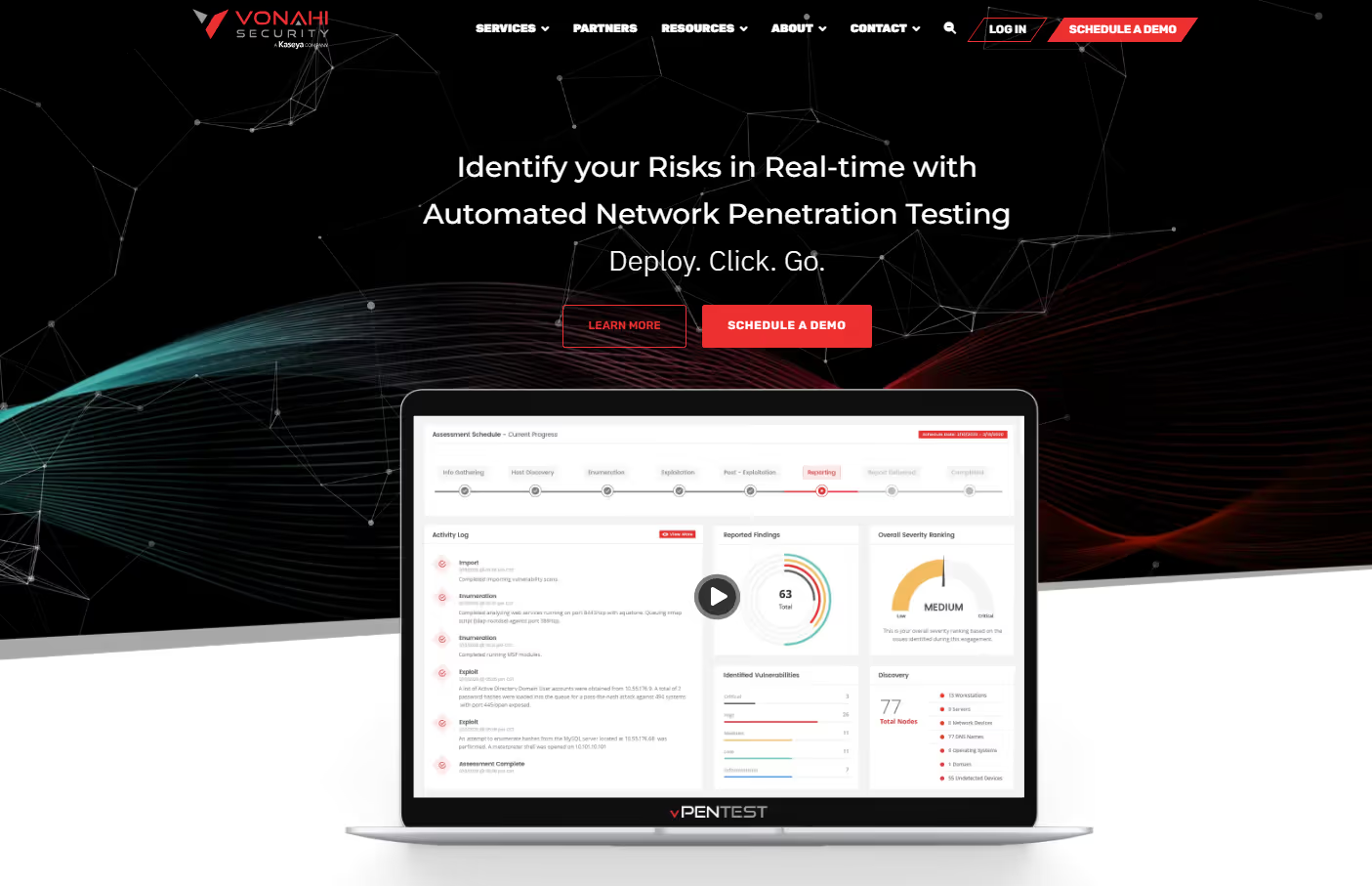
11. vPenTest by Vonahi — Automated Network Pentesting
Quick Facts
- Founded: 2018 (Vonahi); vPenTest MVP launched September 2019
- HQ: Atlanta, Georgia, USA
- Team size: Not publicly disclosed
- Founders / CEO: Founder — Alton Johnson (OSCP, OSCE); now part of Kaseya leadership
- Funding: Acquired by Kaseya, April 2023 (terms undisclosed)
- Deployment: SaaS (with EMEA data region option)
- Free trial: Trial referenced in testimonials; duration not publicly listed
- Notable customers: Dark Rhino Security, Insurwave, DP Tech Group, ETTE, Kishmish, Greene County Hospital, Port53, AvTek Solutions
Overview
vPenTest delivers automated internal and external network penetration testing at a price point that makes monthly testing realistic for SMBs and managed service providers (MSPs). It is highly focused on network security and audit reporting rather than web app or cloud testing.
Standout Feature
Fully-automated network pentesting designed for MSPs — monthly cadence with executive AI-enhanced reporting and Autotask/Dark Web ID integrations.
Key Features
- Cloud-based automated scans for internal and external networks
- Monthly scheduled tests covering common network protocols
- Privilege escalation, MITM, password cracking, user impersonation, MITRE ATT&CK alignment
- Audit-ready PDF reports for PCI DSS, HIPAA, SOC 2
Awards & Recognition
- CREST Accreditation
- G2 recognition (MSP category)
- IT Nation #1 Smoking Hot Tech
Pentest Specifics
- Test types: internal and external network pentesting; black-box and grey-box
- Methodology: not explicitly stated — request from sales
- Retest inclusion: monthly or continuous testing supported; reports in approximately 48 hours
- Setup time: schedulable within 30 minutes
- Customer support: tier structure not published
Why Penti Is a Strong vPenTest Alternative
vPenTest is network-focused and does not extend deeply into modern web app or API attack surfaces. Penti unifies network, web app, API, and cloud pentest into one platform, while still producing the network-level evidence MSPs need for compliance work.
Best For
MSPs and SMBs running monthly network pentest cycles, particularly in PCI DSS-regulated environments.
Pricing
Quote-based with package model based on IP blocks; reports cite starting "as low as $2,999" per engagement.
Review Summary
4.6/5 on G2 across 229 reviews (75% 5-star, 20% 4-star). vPenTest is widely praised for ease of use and consistent output. Reviewers note the scope is intentionally narrow.
12. Burp Suite Professional — Manual Web App Toolkit
Quick Facts
- Founded: 2008 (PortSwigger Ltd); Burp v1.0 first released June 2003
- HQ: Knutsford, Cheshire, UK (offices in London and Atlanta, USA)
- Team size: ~270 employees
- Founders / CEO: Founder & CEO ("Chief Swig") — Dafydd Stuttard
- Funding: Self-funded historically; growth investment from Brighton Park Capital
- Deployment: Desktop application (primary); Burp Suite Enterprise has separate self-hosted/cloud options
- Free trial: Yes — free trial available at portswigger.net/burp/pro/trial
- Notable customers: Microsoft, NBA, Autotrader, Amazon, Emirates, FedEx, NASA (70,000+ customers including 16,000 enterprises)
Overview
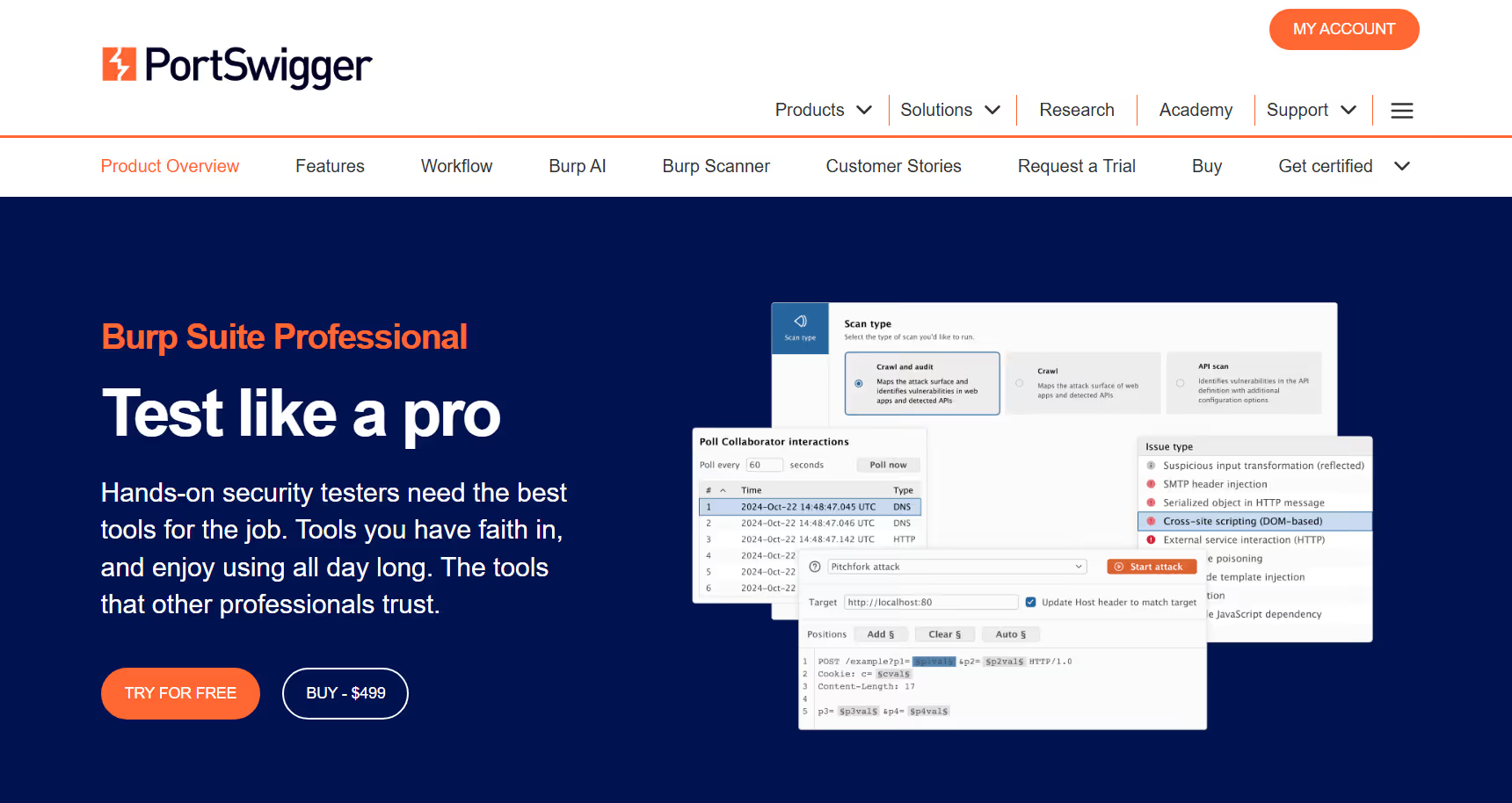
Burp Suite Professional from PortSwigger is the de facto standard manual pentest toolkit for web applications. It pairs intercepting web proxies with a powerful scanner, intruder, repeater, and a vast extension ecosystem developed by the security community.
Standout Feature
Industry-standard manual web testing toolkit with AI-powered assistance (Burp AI) and deep extensibility through the BApp Store.
Key Features
- Intercepting web proxies with full request manipulation across web browsers
- Active and passive scanner with checks for sql injection flaws, cross site scripting, cross site request forgery, and IDOR
- Intruder for fuzzing and brute force attacks
- 300+ BApp Store extensions (Logger++, AuthMatrix, Turbo Intruder)
- Burp AI for AI-assisted manual testing
Awards & Recognition
- Gartner Peer Insights Customers' Choice 2024
- Queen's Award for Enterprise
Pentest Specifics
- Test types: manual web application & API security testing; designed for grey-box / white-box manual testing by humans
- Methodology: aligned with OWASP Top 10 vulnerability classes
- Retest inclusion: N/A — toolkit, not a service
- Setup time: desktop install in minutes; effective use requires training
- Customer support: Support Center, documentation, user forum, expert assistance
Why Penti Is a Strong Burp Suite Alternative
Burp Suite requires an experienced pen tester to drive results — it is a toolkit, not a platform. Penti automates the full testing process from reconnaissance through exploitation, generating audit-ready output without expert operator dependency.
Best For
Penetration testers and security professionals running deep manual web application testing.
Pricing
Burp Suite Professional: $499 per user/year, billed annually (effective Jan 6, 2026 price adjustment from $449). Volume discounts reportedly $380-$420 (5-10 users), $320-$380 (20+ users). Burp Suite Enterprise: separate quote-based pricing.
Review Summary
4.8/5 on G2 across approximately 97 reviews; 4.8/5 on Capterra across 29 reviews. Burp Suite is widely recognized as the industry standard for manual web testing.
13. Acunetix — Web Application DAST + IAST Scanner
Quick Facts
- Founded: 2005 (Malta)
- HQ: Austin, Texas, USA (parent company Invicti Security; offices in US, UK, Malta, Turkey)
- Team size: Not separately disclosed (part of Invicti)
- Founders / CEO: Founder — Kevin Vella (Acunetix); Invicti CEO — Neil Roseman; President — Kevin Gallagher
- Funding: Invicti acquired by Summit Partners in 2022 for $625M (majority stake); Acunetix merged with Netsparker to form Invicti in 2018
- Deployment: On-premises and cloud (SaaS) — both deployment options offered
- Free trial: Yes — vendor offers demo + trial
- Notable customers: Cisco, NASA, American Express, US Army, US Air Force, Barclays Bank, Nike, EPAM Systems, Accenture
Overview
Acunetix is a Dynamic Application Security Testing (DAST) vulnerability scanner with broad coverage for web apps and APIs, plus IAST coverage via the AcuSensor agent. It is built around automated scans with high scheduling flexibility and integrations into developer workflows.
Standout Feature
High-accuracy DAST with proof-of-exploit + AcuSensor IAST hybrid for deep modern web app crawling and API testing.
Key Features
- 7,000+ checks for known vulnerabilities including sql injection vulnerabilities and cross site scripting flaws
- Automated and scheduled scanning across organization's web servers
- Authentication-aware scanning for protected areas
- AcuSensor IAST agent for supported languages
- CI/CD and issue tracker integrations
Awards & Recognition
- 2020 Gartner Peer Insights Customers' Choice for Application Security Testing
- Recognized in Gartner Magic Quadrant for AST (via Invicti)
Pentest Specifics
- Test types: DAST (black-box) web application + API scanning; IAST (grey-box) via AcuSensor agent
- Methodology: OWASP Top 10 coverage explicit; PCI DSS, HIPAA, ISO 27001 reporting
- Retest inclusion: on-demand rescans included; scheduled scans supported
- Setup time: quick install but initial scan configuration can feel complex for first-time users
- Customer support: Standard support included; Premium support tiers offered
Why Penti Is a Strong Acunetix Alternative
Acunetix is a DAST scanner — it identifies potential security weaknesses but does not chain them into validated attack paths. Penti executes real exploit chains across web, API, and infrastructure layers, transforming scanner-style output into proof-of-impact evidence.
Best For
Application security teams needing broad DAST coverage layered into development workflows.
Pricing
Quote-based on official site. Historical published tiers (verify current 2026 pricing with vendor):
- Standard 5 targets: ~$4,495/yr
- Enterprise 5 targets: ~$6,995/yr
- Standard 10 targets: ~$6,995/yr
- Enterprise 10 targets: ~$10,995/yr
- Standard 20 targets: ~$10,995/yr
- Enterprise 20 targets: ~$15,995/yr
- AWS Marketplace cites starting ~$7,000/year
Review Summary
4.1/5 on G2 (review count not directly verified); 4.4/5 on Capterra across approximately 34 reviews. Acunetix is known for scan breadth and developer-workflow fit.
Which Tools From the Penetration Testing Tools List Do You Need?
The choice depends on what you are trying to achieve. Two patterns dominate.
The first pattern is teams seeking continuous coverage with little or no in-house expertise. They benefit from autonomous platforms like Penti, NodeZero, or Pentera that automate the full cycle and surface validated, prioritized findings with strong automation capabilities.
The second pattern is security professionals running targeted manual work — bug hunting, audit prep, specialist engagements. They lean on command line tool utilities and a manual web toolkit, often paired with a password cracker for credential testing and external tools for niche use cases. Some prefer a graphical user interface for visualization; others stick to a command line interface for speed and scriptability.
Most mature programs run both, layering autonomous platforms for breadth and continuous validation alongside specialist tools for deep manual work and offensive security research. The best tools for pentesting tend to be the ones that match your team's actual workflow, not the ones with the loudest marketing.
What to Consider When Choosing the Best Penetration Testing Software
Picking the right platform is less about feature checklists and more about how the tool fits your security program.
- Methodology and certifications. Verify the platform aligns with recognized frameworks: OWASP Top 10, PTES, NIST SP 800-115. For human-led services, look for OSCP, OSCE, GPEN, or CREST-certified testers.
- Automation paired with expert validation. Automated testing scales coverage across multiple operating systems, web apps, and cloud environments. Expert review catches business-logic flaws, complex vulnerabilities, and chained exploits that automation can miss. The strongest platforms combine both.
- Compliance mapping. Confirm output maps to your audit framework — SOC 2, ISO 27001, HIPAA, PCI DSS, NIST, CMMC. Audit-ready reports are the difference between hours of evidence collection and weeks of manual mapping.
- Reporting quality. Raw CVE lists do not move remediation. Look for prioritized findings, exploitability context, and business-impact summaries that highlight critical vulnerabilities for both security experts and executives. The output should help every reader identify potential security threats without translation.
- Retesting and continuous validation. The strongest platforms make retesting fast, automated, and repeatable, which matters for compliance frameworks that require proof of remediation.
- Workflow integrations. Native connections to Jira, Slack, GitHub, GitLab, CI/CD pipelines, development tools, and compliance platforms turn pentest output into developer-ready tickets without manual handoffs.
- Documentation and support. Extensive documentation and an active security community reduce time-to-value during onboarding and ongoing vulnerability management operations. Strong security research behind a vendor signals that the platform stays current as new attack techniques surface.
Pentesting Trends 2026
- PTaaS replaces annual pentest engagements. Subscription pentesting decouples from per-day human billing, making continuous validation predictable and budget-friendly.
- Autonomous AI agents replace single-shot annual pentests. Platforms now execute full-kill-chain attacks in hours, with output indistinguishable from manual pentest reports for most modern attack surfaces.
- Continuous validation becomes the SOC 2 Type 2 default. Auditors expect evidence streams, not point-in-time snapshots. Teams running monthly or weekly pentests demonstrate active controls more credibly.
- Compliance evidence on demand. Pentest output is becoming a sales-cycle asset, generated fresh during enterprise procurement reviews rather than pulled from a dusty annual PDF.
- Attack-path reporting beats CVE lists. Buyers and auditors expect proof of impact — how a security vulnerability chains to actual data exposure — not just a CVSS score.
- Autonomous pentest meets BAS. The line between autonomous penetration testing and Breach and Attack Simulation is blurring, with leading platforms covering both validation of defensive controls and identification of vulnerabilities in the same workflow.
- Pentest pricing decouples from human-hour billing. Flat-tier subscriptions replace per-test or per-day pricing, making continuous validation accessible for fast-shipping teams.
Conclusion
The best penetration testing tools in 2026 keep pace with rising compliance expectations, expanding attack surfaces, and the pressure to validate security continuously rather than annually. From DAST scanners to autonomous PTaaS platforms, each tool plays a distinct role in strengthening security posture. What stands out across this best penetration testing tools list is that modern programs benefit most from platforms combining automation, methodology rigor, and audit-ready reporting in one place. Penti unifies these capabilities — autonomous pentests in hours, broad coverage across modern infrastructure, and compliance evidence on demand — so teams can move from quarterly anxiety to continuous confidence.
Launch Your Continuous Pentest Today
Strengthen your security posture with autonomous, continuous penetration testing backed by audit-ready reporting. Penti delivers pentest-grade results in hours, not months — across web apps, APIs, networks, and cloud — at pricing that scales from startup to enterprise. Start a free pentest or talk to our team to see what modern PTaaS looks like.
FAQ
What are the best penetration testing tools in cyber security?
The top penetration testing tools in cyber security combine real exploitation depth, compliance-ready reporting, and integration with modern development workflows. Top picks for 2026 include Penti for autonomous pentesting, Cobalt and Astra for hybrid PTaaS, Horizon3.ai NodeZero and Pentera for enterprise autonomous validation, and Burp Suite Professional for manual web application testing.
Are penetration testing tools free?
Some tools are available as a free tool or open source tool distribution — Nmap for network scanning, OpenVAS as an open source vulnerability scanner, and ZAP as an open-source proxy for testing web application security. Commercial best pentesting software like Penti, Cobalt, and Pentera offer broader coverage, automation, and compliance support that free options cannot match.
Do I need technical skills to use penetration testing tools?
It depends on the tool. Manual frameworks built around a command line interface require strong technical expertise. Autonomous platforms like Penti are designed to reduce complexity, handling reconnaissance, exploitation, and reporting on your behalf. Most mature programs combine both: automation for breadth, experts for depth.
What is the difference between automated and manual pentesting?
Automated testing quickly identifies common security weaknesses across large environments using automation that scales beyond what human testers can cover. Manual testing, performed by certified ethical hackers, uncovers business-logic flaws and chained exploits that automation can miss. The strongest security auditing programs use both.
How often should penetration testing be performed?
Most compliance frameworks require annual testing at minimum, but modern environments change too quickly for yearly cycles to be useful. Teams using autonomous platforms like Penti now run continuous, monthly, or post-deployment tests to keep evidence fresh, unblock procurement-driven deals, and maintain SOC 2 Type 2 control validation.
How much does the best pentesting software cost?
Pricing varies widely. Open-source penetration tools are free. Self-serve pentest platforms like Penti start at $300/month. Hybrid PTaaS platforms like Cobalt and Astra typically run $2,000 to $50,000/year. Enterprise platforms like NodeZero and Pentera run six figures annually. Manual pentest engagements with traditional firms cost $15,000 to $40,000 per test.
What is PTaaS?
PTaaS (Pentest as a Service) is a delivery model that combines a software platform with on-demand pentest capacity — automated agents, human testers, or both. Output is delivered through a continuous workflow rather than as a one-off PDF report, with retesting, integrations, and audit-ready evidence built in.
References
- Statista. Cybercrime Expected To Skyrocket in Coming Years. https://www.statista.com/chart/28878/expected-cost-of-cybercrime-until-2027/
- IBM Security, Cost of a Data Breach Report 2024, https://www.ibm.com/reports/data-breach
- Verizon. 2024 Data Breach Investigations Report: Vulnerability exploitation boom threatens cybersecurity https://www.verizon.com/about/news/2024-data-breach-investigations-report-vulnerability-exploitation-boom
.avif)