-White.avif)
-Color.avif)
Manual vs. Agentic Penetration Testing: What Each Finds
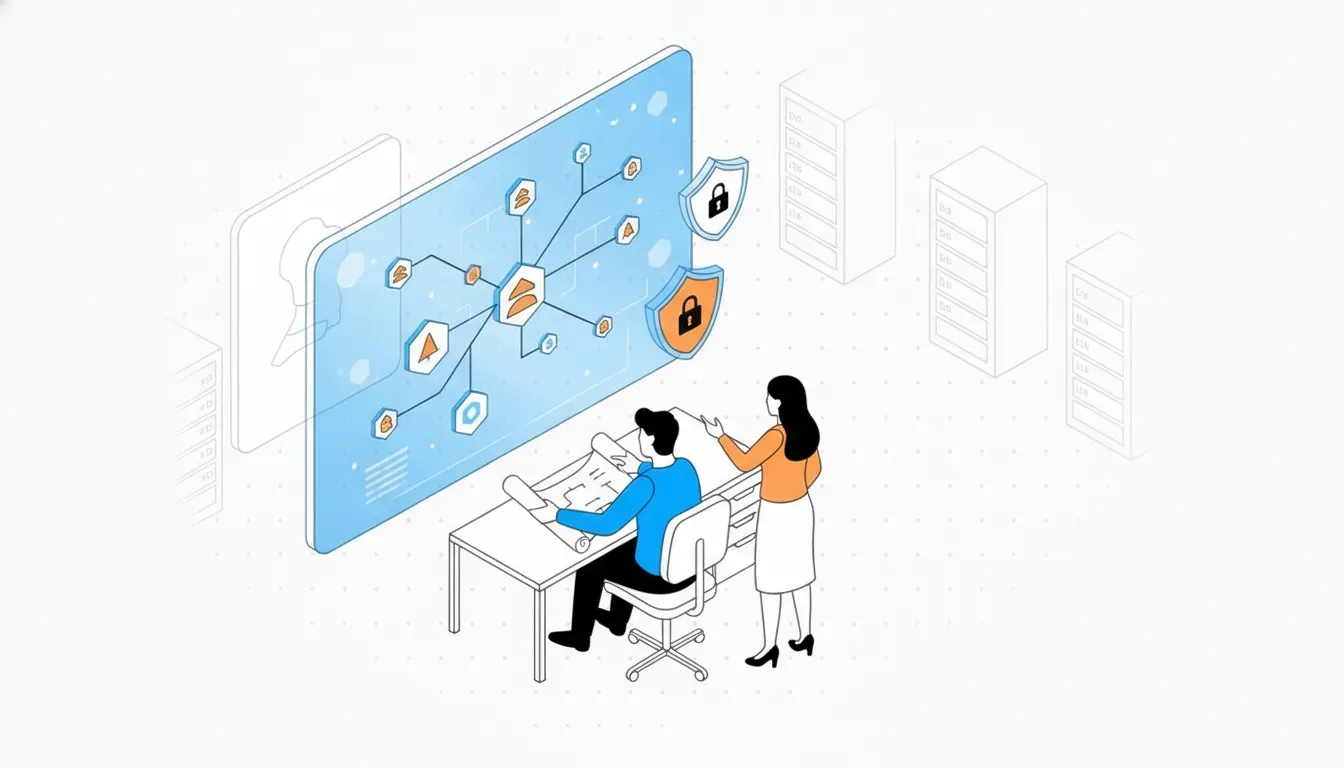
Manual vs. agentic penetration testing is best understood as a question of coverage and judgment, not a contest between people and software. Manual testers bring context, creativity, and business-logic reasoning. Agentic testing can map changing attack surfaces, pursue multi-step paths, and repeat testing at machine scale. The right choice depends on what you need to learn, how often the environment changes, and where expert validation is required. For a broader explanation of the two methodologies, see Penti's manual vs. agentic penetration testing methodology guide.
Explore AI-powered penetration testing with Penti to see how machine-scale testing and expert-led security work can fit together.
Short answer: Manual penetration testing is strongest for nuanced business logic, unusual attack paths, and high-context decisions. Agentic penetration testing is strongest for broad, repeatable exploration, attack-surface changes, and multi-step testing at scale. A combined program uses agentic coverage to find and retest more paths, then uses qualified human testers to validate complex or high-impact findings.
What manual and agentic penetration testing each finds
The practical difference is the way each approach forms and tests hypotheses. A manual tester interprets how a system is supposed to work, looks for assumptions that can be abused, and adapts the assessment around evidence. An agentic system can observe a target, select subsequent actions, chain related weaknesses, and continue exploring without waiting for a person to direct every step.
| Testing approach | Usually strongest at finding | Typical limitation |
|---|---|---|
| Manual penetration testing | Business-logic flaws, authorization edge cases, context-specific abuse, and creative hypotheses | Coverage and cadence are constrained by available expert time and scope |
| Agentic penetration testing | Broad attack-surface exploration, repeatable workflows, attack chaining, and continuous retesting | Complex business context and high-stakes interpretation still benefit from human review |
| Vulnerability scanning | Known exposures, misconfigurations, versions, and rule-based indicators | An alert alone may not demonstrate exploitability or business impact |
This distinction matters because a vulnerability list is not the same as an attack narrative. A useful penetration test explains what an attacker can reach, which controls fail, how weaknesses combine, and what evidence supports the conclusion.
What manual penetration testers look for that automated tools miss
Manual testing begins with interpretation. Testers learn how an application, API, identity model, or internal network is intended to support real users. They then challenge those assumptions. The most valuable findings often arise where the system behaves correctly in isolation but becomes unsafe when several workflows interact.
Business-logic and workflow abuse
Business-logic testing asks whether a user can make the system perform an action that the product owner did not intend. Examples include skipping an approval step, changing the owner of an object, reusing a one-time action, manipulating a transaction sequence, or accessing a workflow through an unexpected role. These cases are difficult to reduce to a fixed signature because the tester must understand the application's purpose and the difference between an unusual action and a harmful one.
Authorization edge cases
A manual tester can compare multiple roles, tenants, object states, and request sequences to determine whether access controls hold in context. The question is not simply whether an endpoint returns a response. It is whether the right principal can perform the right action on the right object at the right point in the workflow.
Creative attack hypotheses
Human testers can follow a weak signal that does not look important at first. They may recognize that a help page, error response, integration behavior, or unusual state transition changes the likely attack path. They can also decide when to stop testing a harmless behavior and focus on a route with greater consequence.
Interpretation of impact
Manual work is valuable when severity depends on business context. A technically valid behavior may be low risk for one product and material for another. A human reviewer can connect the observed behavior to data sensitivity, privilege boundaries, operational workflows, and the organization's actual threat model.
What agentic AI testing discovers at scale
Agentic penetration testing is more than a conventional scanner that checks a larger list of signatures. An agentic workflow can use observations from one step to guide the next step, test an objective through multiple actions, and revisit a surface as it changes. Penti describes its agentic engine as simulating attacker behavior, mapping assets, chaining vulnerabilities across services, and adapting to changing application and infrastructure environments.
Attack-surface drift
Cloud resources, APIs, subdomains, integrations, and application releases change frequently. An agentic workflow can repeatedly assess the defined scope and identify changes that deserve attention. This is especially useful for teams that cannot wait for an annual or quarterly assessment to discover that a new exposure has appeared.
Multi-step attack paths
Agentic testing can explore whether an initial weakness leads to another service, a broader identity, a sensitive resource, or a higher-privilege action. A single finding may be low impact, while a chain of findings creates a meaningful path. Testing the sequence helps security teams prioritize relationships between weaknesses instead of reviewing every alert as an isolated item.
Repeatable breadth
Machine-scale testing is useful when an organization has many applications, APIs, environments, or frequent deployments. The value is not simply speed. Repeatability makes it possible to compare results over time, retest after remediation, and surface regressions without rebuilding the entire assessment from scratch.
Consistent evidence collection
An agentic workflow can preserve steps, observations, and supporting evidence across repeated tests. That record helps a security team investigate a finding, reproduce the path, and determine whether a remediation changed the result. Human review remains important when the result requires contextual judgment or customer-facing assurance.
See Penti's agentic penetration testing approach for more detail on autonomous testing and continuous attack-path evaluation.
How the findings differ across web applications, APIs, and networks
The best testing mix depends on the surface. Manual and agentic methods can both contribute across environments, but they tend to reveal different layers of risk.
Web applications
Manual testers are well suited to complex workflows, authorization boundaries, account recovery, privilege transitions, and product-specific business rules. Agentic testing can explore large numbers of routes, inputs, roles, and state changes, then follow promising results through additional actions. A combined workflow can use broad exploration to identify candidates and human analysis to determine whether a sequence violates the product's security model.
The web application penetration testing approach should distinguish a reflected error or suspicious response from a confirmed path to meaningful impact. That distinction helps avoid treating every scanner signal as a verified vulnerability.
APIs
APIs expose authorization, object-level access, authentication, rate-limit, input-validation, and workflow risks. Manual testers can reason across roles, tenants, object ownership, and sequences that reflect how the product is used. Agentic testing can exercise many endpoints and link observations across an API estate, which is valuable when specifications and deployed behavior drift apart.
For a useful API assessment, ask whether the testing process checks both individual requests and the relationships between requests. An endpoint can be secure in isolation while a sequence allows an unauthorized action.
Cloud and internal networks
Manual specialists can interpret trust relationships, identity paths, segmentation, and the operational meaning of a discovered route. Agentic testing can map assets, test exposure across connected services, and explore potential lateral movement or privilege escalation paths repeatedly. The result should explain the path and evidence, not simply list open ports or configuration states.
Penti's cloud penetration testing offering describes AI-driven testing that can chain vulnerabilities across cloud services. Teams should still confirm the defined authorization boundaries, safe testing limits, and human review model before a test begins.
When manual testing is the better fit
Choose a manual-led assessment when the primary question depends on context, judgment, or an unusual threat scenario. Common examples include:
- A major product workflow has changed, especially around authorization, payments, approvals, or account recovery.
- The organization needs a specialist to investigate a suspected business-logic flaw.
- The assessment involves a novel architecture or a small, high-value scope where depth matters more than breadth.
- A security leader needs an expert opinion on exploitability, impact, or remediation priority.
- The test requires a human-led explanation of how the observed behavior affects the business.
Manual testing does not mean testing only once. It means placing human reasoning at the center of the assessment. Teams can still use automation to prepare scope, accelerate repetitive checks, and support retesting.
When agentic testing is the better fit
Choose an agentic-led assessment when the primary question depends on scale, frequency, or changing exposure. It is often a strong fit when:
- The attack surface changes faster than periodic testing can keep up.
- There are many applications, APIs, cloud assets, or environments to assess.
- The team wants repeatable testing after releases, configuration changes, or remediation.
- Security staff need to prioritize attack paths rather than review disconnected alerts.
- The organization wants machine-scale coverage with a defined path to human validation for important findings.
Agentic testing should not be described as a universal replacement for human expertise. Its value is highest when the scope, objectives, safety controls, evidence requirements, and review process are explicit.
When compliance or assurance requires human involvement
Compliance expectations vary by framework, scope, assessor, and organization. A tool output should not automatically be treated as equivalent to a human-led penetration test or an assessor's attestation. Before selecting an approach for an audit or customer assurance request, confirm the applicable language and evidence expectations with the responsible compliance owner, assessor, or auditor.
In practice, human involvement can matter for defining scope, validating exploitability, interpreting impact, documenting methodology, reviewing exceptions, and explaining remediation. Agentic testing can strengthen the evidence set by adding repeatable coverage and retesting, but the organization should be clear about who reviewed the findings and what the resulting report represents.
This is why a hybrid model is often practical for compliance-conscious teams. Frequent agentic testing can help identify change-driven risk, while qualified human testers can perform or validate the work needed for a specific assurance objective.
How to combine manual and agentic penetration testing
A combined program works best when each method has a defined job. Do not run two disconnected assessments and expect the overlap to create a strategy. Instead, connect the outputs. The manual vs. agentic penetration testing methodology guide provides the broader framework; this article focuses on the findings and decision points that help teams assign each method a role.
- Define the attack surface and objective. Record the applications, APIs, cloud accounts, network ranges, identities, and test boundaries. State whether the goal is discovery, exploit validation, remediation retesting, audit evidence, or a combination.
- Use agentic testing for broad and repeatable exploration. Run the defined workflows across the authorized scope and preserve evidence for findings and attack paths.
- Route meaningful or ambiguous findings to human review. Have qualified testers examine business impact, exploitability, chain logic, false positives, and remediation priorities.
- Use manual testing for high-context hypotheses. Test workflows, trust assumptions, unusual privilege paths, and scenarios that require product or threat-model understanding.
- Retest after remediation and change. Confirm that fixes work and that a change did not create a new path. Keep the result tied to the original evidence.
- Report the limits of each method. A credible report states what was tested, what was not tested, how findings were validated, and what additional review is recommended.
Talk with Penti about a testing program that combines continuous machine-scale assessment with human validation where the risk warrants it.
Questions to ask a vendor that offers both
- What does the vendor mean by agentic testing, and how is it different from vulnerability scanning?
- Can the system pursue multi-step attack paths, or does it only report individual indicators?
- What surfaces can it test, and how does it handle scope changes?
- Which findings receive human validation, and what does that validation include?
- Can the vendor show the evidence and steps behind a finding?
- How does retesting work after a fix or deployment?
- Who owns the final interpretation of exploitability, impact, and severity?
- What report formats and review records are available for the stated assurance objective?
- How are testing permissions, safety limits, and production safeguards managed?
FAQ: manual vs. agentic penetration testing
Is agentic penetration testing the same as automated vulnerability scanning?
No. Vulnerability scanning generally checks for known conditions, signatures, or configuration indicators. Agentic testing can use observations to choose subsequent actions, pursue multi-step paths, and test an objective. The exact capabilities depend on the platform and scope, so ask the vendor to demonstrate the workflow and evidence.
Can agentic testing find business-logic vulnerabilities?
It may identify signals or sequences related to business logic, but complex business-logic findings often require product context and human judgment. A strong program defines how ambiguous or high-impact findings are reviewed by qualified testers.
Should a startup choose manual or agentic penetration testing?
Start with the risk question, not the label. A focused manual assessment may fit a small, high-value workflow, while agentic testing may fit a startup that changes its applications and cloud environment frequently. Many growing teams benefit from combining repeatable agentic testing with targeted expert review.
Does a compliance report always require manual testing?
Not always, and there is no universal answer. Requirements depend on the applicable framework, scope, assessor, and evidence request. Confirm the specific expectation with the responsible auditor or compliance owner before treating any automated or agentic output as sufficient.
What is the main advantage of using both approaches?
The combination connects breadth and depth. Agentic testing can help teams explore and retest more of a changing environment, while manual testers can investigate context, creative paths, and high-impact findings. Together, they can produce a more useful picture of exploitable risk than either method used without a defined review strategy.
Manual and agentic penetration testing answer related but different questions. Manual testing asks what a skilled person can infer, abuse, and explain in context. Agentic testing asks how broadly and repeatedly an authorized system can explore attack paths as the environment changes. For organizations building a durable testing program, the strongest choice is usually the one that assigns each method a clear role and connects discovery, validation, remediation, and retesting.
