-White.avif)
-Color.avif)
Cloud Security Posture Management: An Operational Guide
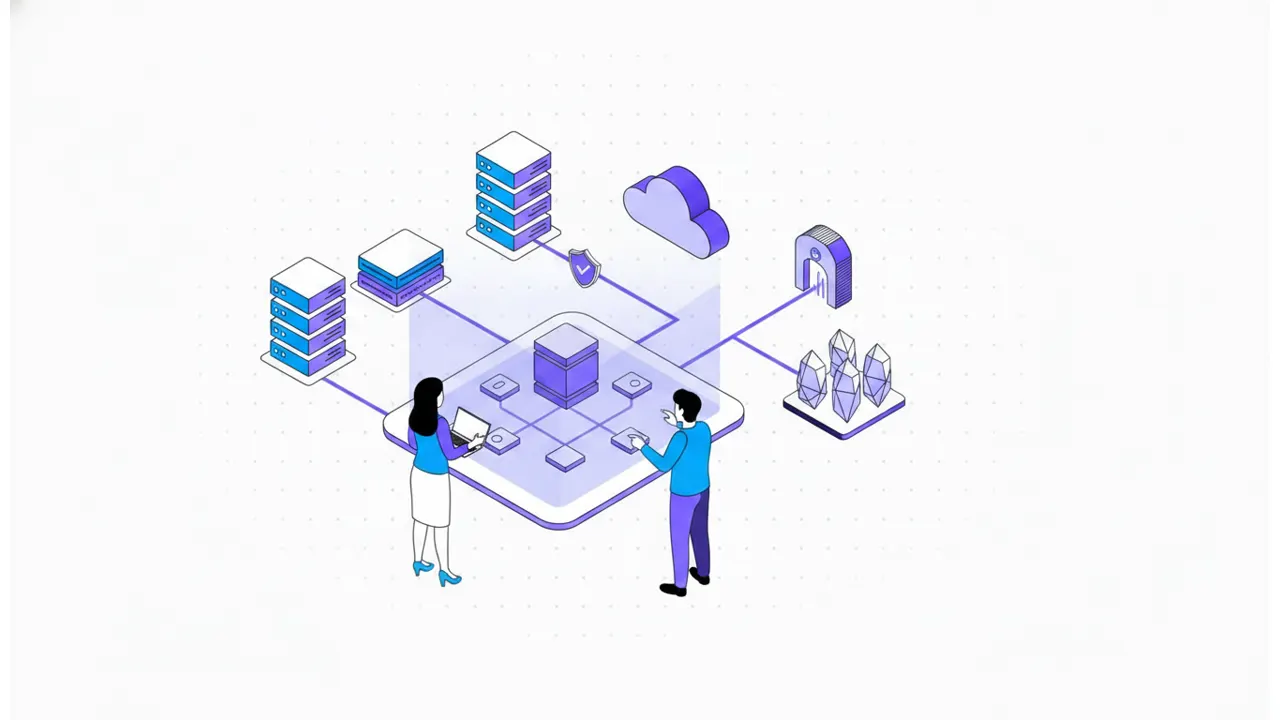
Cloud security posture management gives security teams a way to see how cloud environments are configured, identify deviations from secure baselines, and move the most important findings toward remediation. The difficult part is not collecting more alerts. It is turning a changing mix of AWS, Azure, GCP, and hybrid assets into a risk picture that engineers can act on and security leaders can defend.
Want evidence that a cloud exposure is reachable and meaningful? Explore Penti's cloud penetration testing to see how continuous testing can complement posture monitoring.
What is cloud security posture management?
Cloud security posture management, or CSPM, is a continuous approach to assessing and improving the security configuration of cloud resources. A CSPM program typically discovers cloud assets, evaluates configuration and policy controls, maps findings to standards, ranks risk, and gives owners a path to fix the issue.
That definition matters because CSPM is broader than a one-time configuration audit. Cloud resources, identities, network paths, permissions, and managed services change whenever a team deploys code, grants access, connects an account, or changes a policy. A point-in-time review can show what was true during the review. CSPM is designed to show what is true now, what changed, and which deviations deserve attention first.
Major cloud providers describe the category in similar terms. AWS describes CSPM as a way to visualize, prioritize, and remediate cloud security. Microsoft documents posture assessment across Azure, AWS, and GCP, while Google Cloud describes security postures as a way to define controls, assess compliance, and monitor drift. The exact features differ by product, but the operating model is consistent: establish a baseline, continuously assess it, and close the gap between intended and observed state.
Why cloud posture is difficult to manage
Cloud risk is distributed across technical layers and ownership boundaries. A storage bucket may be exposed because of an access policy. The impact may depend on an identity that can assume a role, a workload that can reach the bucket, and data that is more sensitive than the asset inventory indicates. Each control can look acceptable in isolation while the combination creates a practical attack path.
- Ephemeral assets: workloads and services can appear, change, and disappear faster than manual inventories are updated.
- Identity sprawl: users, service accounts, roles, keys, and federated identities create permissions that are difficult to review as a whole.
- Multi-cloud differences: AWS, Azure, and GCP use different resource models, policy languages, and security services.
- Shared responsibility: the provider secures the underlying service, while the customer remains responsible for configuration, identities, data, and workload decisions.
- Configuration drift: a secure baseline can degrade after an emergency change, a new integration, or a deployment that bypasses the normal guardrail.
The result is a common failure pattern: a team has more findings than it can remediate, but less confidence than it needs about which findings create the clearest path to business impact.
What does a CSPM program actually do?
An effective program connects five capabilities instead of treating a posture score as the final outcome.
- Posture visibility: build an inventory of accounts, subscriptions, projects, resources, identities, controls, and relationships.
- Misconfiguration discovery: compare observed settings with secure baselines, organizational policies, and relevant compliance controls.
- Exposure validation: determine whether a finding is reachable, exploitable, or connected to a higher-impact asset.
- Risk prioritization: combine technical severity with exposure, asset criticality, identity reach, data sensitivity, and available attack paths.
- Remediation and verification: assign an owner, make a controlled change, and confirm that the risk was reduced without creating a new gap.
Many organizations implement the first two capabilities and call the work complete. That produces a useful inventory, but it can still leave defenders deciding whether a serious-looking configuration issue is actually reachable. CSPM is most valuable when findings become decisions and decisions are closed with evidence.
Step 1: Establish a reliable cloud asset inventory
Start with coverage, not scoring. Connect every relevant cloud account, subscription, project, organization, and region. Include production and non-production environments, disaster recovery resources, shared services, identity systems, managed databases, container platforms, serverless workloads, and externally reachable endpoints.
For each asset, capture enough context to support a decision:
- Cloud provider, account or project, region, environment, and owner
- Resource type, internet exposure, and network relationships
- Data classification or business criticality
- Attached identities, roles, service accounts, and trust relationships
- Deployment source, such as infrastructure as code, a pipeline, or a console change
- Last observed time and whether the resource is temporary or persistent
Inventory quality is a security control. If a disconnected account or unmanaged project is missing, every downstream posture result is incomplete. Set an ownership rule for newly discovered assets, and monitor for accounts or services that appear outside the approved organization structure.
Step 2: Define secure baselines for AWS, Azure, GCP, and hybrid environments
A baseline translates security intent into testable controls. It should cover identity, logging, network access, encryption, secrets, storage, workload configuration, resilience, and change management. Use a combination of internal policy, cloud provider guidance, and applicable standards rather than copying a generic checklist without considering how the business operates.
Separate preventive controls from detective controls. A preventive control might block public access to a storage service or require an approved region. A detective control might identify an unexpected public endpoint or a disabled audit log. Preventive controls reduce the number of new findings; detective controls catch exceptions and drift. Mature programs use both.
Document exceptions as explicitly as the baseline. A public endpoint may be intentional, but the exception should name its owner, business purpose, compensating controls, expiration date, and review cadence. Without that context, a scanner will repeatedly rediscover the same issue and the team will learn to ignore the queue.
For multi-cloud and hybrid estates, normalize the outcome rather than forcing identical implementation. The control objective may be the same while the native setting differs by provider. A useful baseline says what must be true, how it will be measured in each environment, and who approves a deviation.
Step 3: Discover misconfigurations and configuration drift
Once coverage and baselines exist, assess the environment continuously. Look for conditions such as overly broad identity permissions, public storage, missing encryption, unrestricted management ports, disabled audit logging, stale credentials, weak network segmentation, exposed control planes, and resources outside approved regions or accounts.
Do not treat every finding as equally urgent. First remove duplicate findings and group issues that share one root cause. For example, one organization policy may create the same storage exposure across many resources. Fixing the policy can reduce more risk than manually updating each resource.
Then distinguish three states:
- Observed: the setting differs from the expected baseline.
- Exposed: the setting creates a reachable path from an untrusted or overly trusted source.
- Impactful: the path reaches sensitive data, privileged identity, production workload, or another high-value asset.
This distinction keeps posture management from becoming a compliance-only exercise. A baseline deviation is worth correcting, but the urgency should reflect how the deviation changes the real attack surface.
Step 4: Validate whether findings create real exposure
Configuration evidence answers, "What is set?" Exploit validation asks, "What can an attacker do with it?" The two forms of evidence are complementary. A posture tool may identify a permissive role, open security group, or public service. Testing can show whether that condition enables unauthorized access, privilege escalation, lateral movement, data access, or another concrete outcome.
Validation should be safe, scoped, and authorized. The goal is not to create unnecessary disruption. It is to confirm reachability and impact with the least invasive test that resolves the decision. Useful evidence can include a verified attack path, a controlled proof of access, a blocked path that explains why the finding is less urgent, or a manual review that confirms the control is intentionally configured.
This is where attack surface management can add context to posture findings. Asset discovery and relationship mapping help teams understand which resources are exposed and how they connect. Continuous cloud penetration testing adds another layer by testing whether an attacker can chain weaknesses across cloud services, identities, and network boundaries. It does not replace CSPM, and CSPM does not replace adversarial testing. One describes configuration and exposure; the other provides evidence of attacker-relevant behavior.
Keep the distinction clear in reports. A finding can be "misconfigured" without being "exploited." A validated exposure can be higher priority than a more severe issue that is isolated behind effective controls. The report should state which conclusion the evidence supports.
Step 5: Prioritize findings by probable business risk
Severity alone is a weak queue-management strategy. Prioritization should combine at least five signals:
- Reachability: can an untrusted actor or low-trust identity reach the resource?
- Privilege: would exploitation provide access to credentials, control-plane actions, or broader identity scope?
- Asset value: does the path reach production, sensitive data, revenue systems, or critical operations?
- Exploit evidence: has the condition been validated, observed in attack telemetry, or connected to an active threat?
- Remediation confidence: can the team fix the issue quickly and verify the result?
Use a simple decision model if the organization is starting from scratch. Critical findings combine a reachable path, meaningful privilege or sensitive assets, and credible evidence of impact. High findings may have strong exposure or asset value but require one more validation step. Medium findings should have an owner and due date. Low findings can be bundled into baseline improvement work.
Do not hide uncertainty behind a single score. Record why a finding moved up or down the queue, which evidence is missing, and what test would change the decision. This makes risk acceptance more defensible and helps engineering teams understand the action required.
Need to test whether posture findings become attacker paths? See how Penti approaches continuous cloud testing as an evidence layer alongside configuration monitoring.
Step 6: Turn prioritization into remediation work
Remediation fails when a finding is sent to a shared queue without ownership or context. Route each prioritized item to the team that can change the underlying condition. Include the affected resource, control or policy, business impact, evidence, recommended fix, exception status, and verification method.
Prefer durable fixes over local cleanup. If ten resources are public because of one infrastructure template, update the template and add a guardrail that prevents recurrence. If permissions are broad because of an access model, define a least-privilege role pattern rather than editing individual statements indefinitely. If a drift event came from an emergency change, improve the change path as well as restoring the setting.
Use automation carefully. Automatic remediation is appropriate for reversible, well-understood changes with low blast radius and a tested rollback path. It is not appropriate when a change could interrupt production, remove required access, or alter a customer-facing service without owner review.
Every remediation should end with verification. Reassess the resource, confirm the expected configuration, test that the original path is closed, and check that logging, monitoring, and dependent services still work. Close the finding only when the evidence supports closure.
How to operationalize CSPM across a security program
A tool will not create an operating model by itself. Establish a repeatable cadence with clear owners:
- Daily: triage new critical findings, monitor coverage failures, and review identity or network changes that affect high-value assets.
- Weekly: review the top risk queue, aging findings, exceptions nearing expiration, and repeated drift by team or control.
- Monthly: measure coverage, remediation time, recurrence, validated exposure, and the percentage of critical assets with current owners.
- Quarterly: test the baseline against new architecture, review accepted risks, validate selected attack paths, and update policy with lessons from incidents and exercises.
Track outcomes, not just the number of findings. Useful measures include time to remediate validated high-risk exposure, percentage of cloud assets inventoried, percentage of critical assets with owners, number of recurring findings, exception age, and the ratio of posture findings that receive validation. A lower finding count is not automatically better if coverage also fell or teams began suppressing alerts.
What CSPM does not replace
CSPM is one layer of cloud defense. It does not replace secure architecture, identity governance, vulnerability management, application security, runtime detection, incident response, or authorized penetration testing. It also cannot decide business impact without asset and ownership context.
A practical control stack might look like this:
- CSPM: identify configuration drift and control gaps.
- Cloud asset and attack surface management: discover exposed assets and relationships.
- Vulnerability and workload security: identify weaknesses in images, hosts, dependencies, and services.
- Continuous adversarial testing: validate whether weaknesses can be chained into meaningful attack paths.
- Detection and response: identify and contain suspicious activity when prevention fails.
- Governance: document ownership, exceptions, risk acceptance, and evidence for audits.
For a broader introduction to cloud risks and controls, see Penti's cloud security guide. Teams building distributed workloads can also use the cloud native security guide to connect posture work with application, identity, and runtime decisions.
Common implementation questions
Is CSPM only for multi-cloud environments?
No. CSPM can improve a single-cloud environment by creating consistent visibility, baselines, ownership, and drift detection. Multi-cloud and hybrid environments make normalization more important because each provider exposes different controls and resource models.
Does a posture score prove that a cloud environment is secure?
No. A score summarizes the controls that a particular tool can observe and the weights it applies. It may not reflect business criticality, undocumented assets, attack-path context, or a control that is technically present but ineffective. Use the score as a starting signal, then validate the highest-impact paths.
How often should cloud posture be assessed?
Assessment should be continuous or frequent enough to catch meaningful drift soon after it occurs. The right cadence depends on change volume, risk, and the control, but a quarterly snapshot alone is a poor fit for rapidly changing cloud environments.
When should a team add continuous cloud penetration testing?
Add testing when the team needs evidence about reachability, exploitability, attack chaining, or the effectiveness of controls around high-value cloud assets. Testing is especially useful when a posture queue is too large to prioritize confidently or when architecture changes create new trust relationships.
Operational checklist
Use this checklist to turn the concept into an operating plan:
- Connect every cloud account, subscription, project, and relevant hybrid environment.
- Assign owners and business criticality to discovered assets.
- Define provider-aware baselines for identity, network, logging, data, and workload controls.
- Document approved exceptions with an owner and expiration date.
- Detect drift and group findings by root cause.
- Validate the most consequential paths with safe, authorized testing.
- Prioritize using reachability, privilege, asset value, evidence, and remediation confidence.
- Fix root causes in infrastructure as code, policy, or deployment workflows where possible.
- Reassess after remediation and record evidence that the risk was reduced.
- Review coverage, recurrence, exceptions, and validated exposure on a defined cadence.
Cloud security posture management becomes operational when it connects visibility to a decision, a decision to an owner, and a remediation to evidence. The goal is not to produce the largest finding queue or the highest score. It is to continuously understand what is exposed, prove which paths matter, and reduce risk before a real attacker does.
Ready to connect posture visibility with continuous validation? Learn more about Penti's cloud penetration testing and explore how a testing layer can support your cloud security program.
