

ISO 27001 Penetration Testing: Scope, Evidence, and Planning
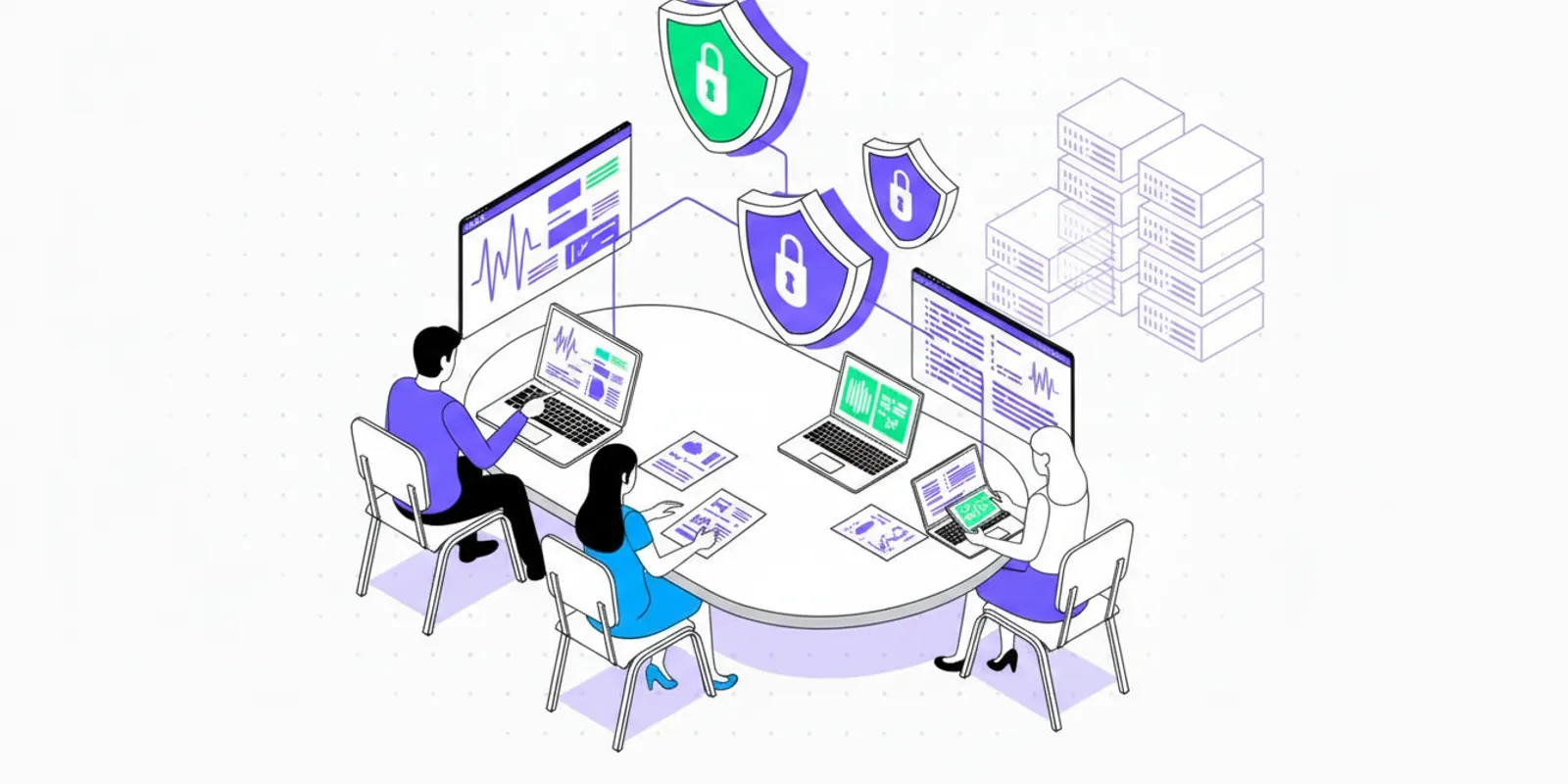
ISO 27001 penetration testing can help an organization gather evidence about whether selected security controls work as intended. But using ISO/IEC 27001 does not automatically mean every organization must perform the same test on the same schedule. The useful question is how testing supports your information security management system (ISMS), risk treatment, and defined scope.
Discuss your penetration testing needs
What does ISO 27001 require from a penetration test?
ISO/IEC 27001 sets requirements for establishing, implementing, maintaining, and continually improving an ISMS. It expects an organization to assess information security risks, decide how to address them, and evaluate the effectiveness of its controls. It does not prescribe one universal penetration testing method, cadence, or scope for every organization.
That distinction matters. A penetration test is a point-in-time assessment that attempts to identify and validate weaknesses in an agreed scope. It can contribute useful evidence for risk decisions, control evaluation, and improvement. It does not, by itself, demonstrate that an ISMS conforms to the standard or prove that an organization is secure.
Testing may be an appropriate risk treatment or assurance activity based on the organization’s context. Relevant considerations can include systems that process sensitive information, significant changes, identified risks, contractual obligations, regulatory expectations, and customer requirements. Document why you selected the activity and how it relates to risk treatment and control objectives.
The standard’s risk-based approach is consistent with the public explanation of scoping a penetration test for SOC 2 or ISO 27001. Use this kind of guidance as context, then make and document decisions for your own ISMS rather than treating an example as a universal rule.
For audit context, see this guide to ISO 27001 internal and external audits. A test report can support an audit conversation, but it is not a substitute for broader ISMS records and audit evidence.
How should teams connect testing to risk?
Start with the ISMS scope and risk assessment, not a generic tool list. Identify the information, business processes, technologies, and dependencies that matter to your security objectives. Then decide whether a test would produce relevant information about the risks or controls in question.
- Identify the decision. Is the purpose to examine a newly released application, validate remediation, understand external exposure, or provide assurance for a defined business process?
- Map it to risk. Record the risk scenario, affected information or service, existing controls, and uncertainty the test could reduce.
- Select a proportionate assessment. Consider whether a web application, API, cloud environment, network, or another component is the right target. A vulnerability scan and a penetration test answer different questions.
- Decide how results will be used. Identify the roles that will review findings, approve changes, accept or treat risk, and verify remediation.
- Record the rationale. Preserve the reason for scope, exclusions, timing, and method, including what the assessment cannot establish.
This approach connects testing to the management system rather than treating the report as an isolated compliance artifact. Teams building a wider program can review common cybersecurity frameworks and their uses.
Which parts of the environment belong in scope?
A clear scope gives the tester permission to assess the right assets while reducing the risk of disruption or misunderstandings. It should be specific enough that the organization and testing provider can tell what is included, what is excluded, and how the work will be conducted.
| Scope element | What to define | Why it matters |
|---|---|---|
| Business purpose | Risk, service, control, or change the test addresses | Connects work to an ISMS decision |
| Assets and boundaries | Domains, applications, APIs, environments, networks, and permitted accounts | Prevents ambiguity about authorized targets |
| Exclusions and dependencies | Third-party systems, production limits, sensitive workflows, and unavailable components | Sets expectations and reduces unintended impact |
| Rules of engagement | Dates, testing windows, permitted techniques, escalation contacts, and stop conditions | Supports safe coordination and response |
| Deliverables | Findings, severity rationale, evidence, limitations, and retest expectations | Helps teams interpret and act on results |
| Owners | Approvers, technical contacts, risk decision-makers, and remediation leads | Gives findings a path to resolution |
Include dependencies when they affect the assessment. An application may rely on identity services, cloud storage, APIs, or a third-party integration. Clarify whether each component is in scope and obtain authorization where needed. Do not assume a vendor’s system can be tested because it connects to yours.
Make scope traceable to risk. For example, if a customer-facing application handles account data, identify the relevant data flows and supporting services. Decide whether authentication, account recovery, administrative functions, and APIs are included. If a payment provider or identity platform is excluded, state why and identify what that exclusion means for conclusions.
A scope should also state the environment and test accounts. Staging may differ from production in configuration, data, or integrations. If the assessment uses test accounts, define their roles and permissions. If production is included, agree on safeguards, timing, and a pause process before work begins.
For teams selecting a technical approach, this overview of web, API, and cloud penetration testing can help frame options. Tailor the scope to your own assets and risks.
How can teams choose scope and method?
Scope is not simply the largest possible asset list. A broad list may appear comprehensive while leaving important questions unanswered. Instead, use the risk scenario to select assets and methods, and record any boundaries that affect interpretation.
Consider a SaaS team preparing a major release that adds a new API and changes login flows. The team could identify the API, authentication path, roles, and supporting services as relevant. It should decide whether the test is intended to find exploitable weaknesses, validate particular controls, or confirm remediation from earlier findings. Those goals can require different access and test conditions.
Now consider a team that has recently fixed a reported access-control issue. A focused retest may answer whether the specific issue remains under the tested conditions. It does not automatically assess other application areas or prove that access control is consistently effective across every workflow. The report should make that boundary clear.
A vulnerability scan can identify potential issues across a set of assets, while a penetration test attempts to validate selected weaknesses in context. They may complement each other, but one should not be described as the other. Choose the activity that fits the decision and describe its limitations plainly.
How should a team authorize and run the assessment?
Planning begins with authorization and coordination. Confirm ownership of each target, document written permission, and agree on rules of engagement. Identify maintenance windows, monitoring contacts, recovery arrangements where appropriate, and a route for reporting urgent findings. Set expectations for handling credentials and sensitive data encountered during testing.
Before work starts, share the information needed for the agreed approach. Testing can use different levels of knowledge about an environment. The choice affects what the assessment can evaluate, so document the approach and its limitations rather than treating one method as universally superior.
During testing, maintain a communication channel between the provider and designated internal contacts. Explain how to raise an urgent concern and request a pause. If the system changes materially during the engagement, decide whether the test remains representative or needs adjustment.
Operational safeguards should be practical. Identify who can authorize a pause, who will evaluate a service alert, and how the provider should respond if testing reaches sensitive data or unexpected access. If a third party operates an in-scope dependency, get the necessary permission before any testing involving it.
After testing, review the report with technical and risk stakeholders. Confirm that findings are understandable, supported by evidence, and relevant to the agreed scope. Assign owners and target dates according to risk and business context. A finding is an input to risk treatment, not an automatic decision to accept or reject a risk.
What evidence should an organization retain?
Evidence should let an informed reviewer understand the purpose and outcome of the activity and how the organization responded. Keep records that fit your ISMS and document-control practices. A practical evidence set may include:
- The approved objective, scope, boundaries, exclusions, and rationale.
- Authorization, rules of engagement, schedule, and named internal contacts.
- The provider’s report, including assessment dates, methods at a useful level, limitations, and findings.
- Risk review and decisions about treatment, acceptance, or further investigation.
- Remediation tickets, ownership, completion evidence, and retest results where performed.
- Relevant risk register updates or management review records under the organization’s process.
Protect reports and supporting evidence according to their sensitivity. They may contain technical details that could aid an attacker if shared too broadly. Control access, use approved storage, and share only with people who need the information. Preserve enough detail for traceability while avoiding unnecessary copies of sensitive data.
A concise evidence record can make the reasoning clear: what prompted the test, why the assets were selected, what the test could and could not establish, what risks were identified, and what actions followed. This supports a more meaningful discussion than presenting a report as proof of compliance.
Example: documenting a targeted test
Suppose a team tests a customer portal after changing its authentication flow. Its record could identify the change as the trigger, explain which routes and user roles were included, list any excluded integrations, and state who authorized production activity. It could then link the report’s findings to risk decisions and remediation records. If the team later retests a fix, it should preserve the retest result with the original finding rather than implying that the retest covered the whole portal.
How should teams handle findings and retesting?
Use a consistent process to triage findings. Consider evidence quality, exploitability in the tested context, affected assets, potential impact, and existing safeguards. Ask the provider to clarify uncertain findings. A severity label is not a complete business-risk analysis; apply your own risk criteria and environment.
For each accepted finding, assign an owner and decide on a treatment path. That may mean remediation, additional investigation, a documented risk decision, or another appropriate response. Record the rationale and any approval required by the organization’s process. A finding without an owner or decision can remain unresolved even when the test itself is complete.
Retesting can help confirm whether a particular fix addressed a reported issue. Define what will be retested and what evidence is expected. A successful retest is evidence about the tested finding and conditions; it does not establish that all related weaknesses or other risks are absent.
Where changes are frequent, consider how testing fits into release and risk-review routines. See continuous versus periodic penetration testing for a discussion of cadence. The right schedule depends on context, risk, and purpose, not a universal interval.
What mistakes can weaken the value of testing?
- Equating testing with certification. A penetration test is one possible source of security evidence, not a complete ISO 27001 assessment.
- Using a vague scope. Naming only a company or product can leave uncertainty about domains, environments, integrations, and exclusions.
- Treating a scan as a full test. Automated checks can be useful, but conclusions depend on scope and method.
- Ignoring findings after delivery. Without ownership, risk decisions, and follow-through, a report has limited operational value.
- Promising zero risk. Testing is bounded by time, access, methods, and scope. It cannot show that a system will never be compromised.
- Testing third-party assets without permission. Confirm ownership and authorization before including shared or vendor-operated systems.
- Using the report as a substitute for ISMS records. Keep the assessment in context with risk decisions, corrective actions, and other relevant records.
Organizations may have contractual, regulatory, or customer expectations beyond the standard. Review those obligations separately and confirm which apply to the service or data involved. For broader documentation context, see the SOC 2 compliance and audit guide; the frameworks differ, but careful evidence management is useful across security programs.
What should a team ask before approving a test?
Before agreeing to an engagement, ask the provider and internal owners practical questions:
- Which risk, system, or business decision does the test address?
- What exactly is included, and what is excluded?
- Who has authority to approve the targets and testing methods?
- What safeguards and escalation contacts are in place?
- How will urgent findings or service concerns be communicated?
- What report detail supports technical triage and risk review?
- Who will own remediation, approve risk decisions, and arrange any retest?
- How will sensitive evidence be protected and retained?
If you are considering a human-led assessment, explore manual penetration testing options and align the requested scope with your risk and evidence needs.
Talk through your assessment scope
Frequently Asked Questions
Does ISO 27001 require an annual penetration test?
The standard does not set one universal annual penetration testing interval for every organization. Determine appropriate assessment activities and timing through your context, risks, control evaluation, and applicable external obligations.
Does a penetration test prove ISO 27001 compliance?
No. A test can contribute evidence about selected systems and controls, but an ISMS includes much more, including risk management, documented processes, responsibilities, and continual improvement.
Should the test cover every system in the ISMS scope?
Not automatically. Select targets based on the assessment purpose and relevant risks. Document why the selected assets are appropriate and explain material exclusions.
What should happen after the report arrives?
Review findings, assess them under your risk process, assign owners, decide on treatment, and retain records of actions and retesting. Protect the report according to its sensitivity.
Plan testing as part of the ISMS
ISO 27001 penetration testing is most useful when it answers a defined risk or assurance question and leads to clear decisions. Set a defensible scope, authorize the work, retain proportionate evidence, and connect findings to your organization’s risk treatment process.
