-White.avif)
-Color.avif)
Manual Compliance Evidence for SOC 2 and HIPAA
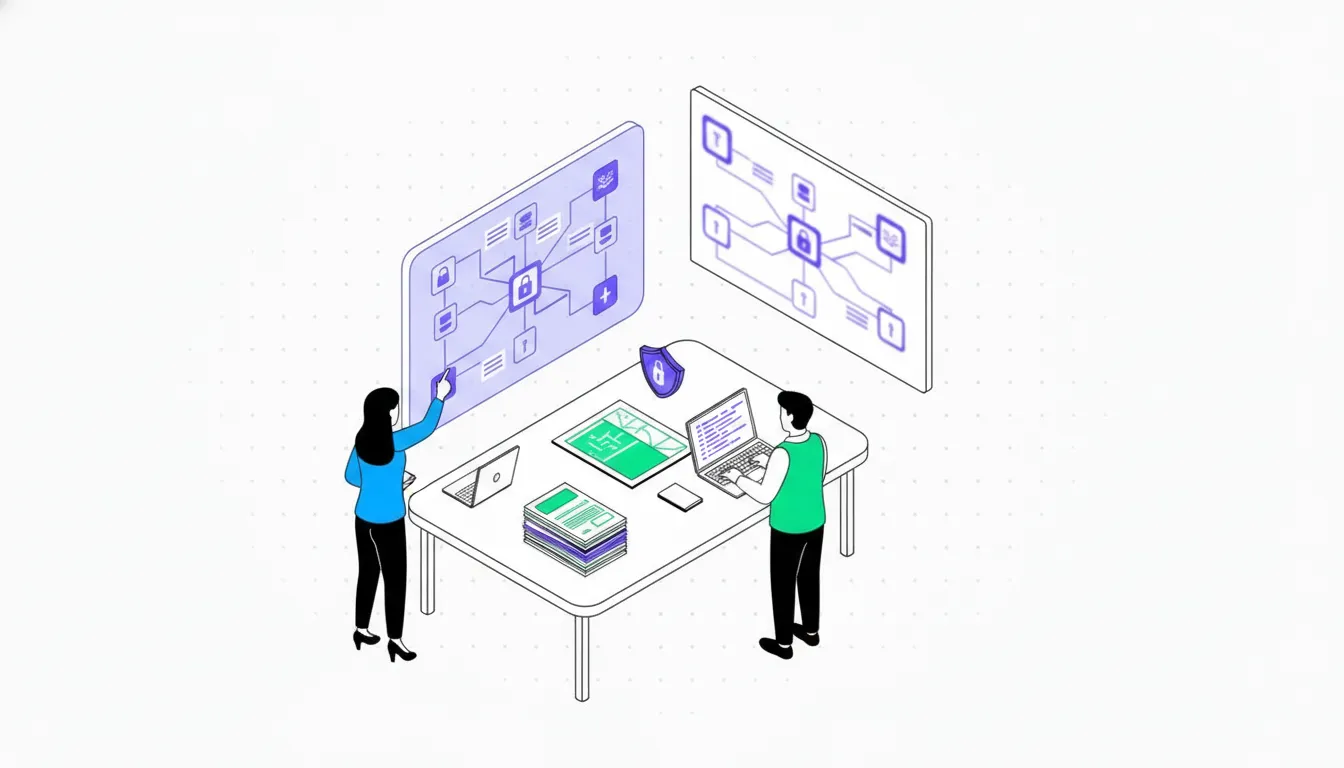
A penetration test can produce useful findings, but an auditor usually needs more than a polished report. The evidence has to show what was in scope, how the work was performed, when systems were tested, what the testers verified, and what happened after issues were found.
Need a clearer path to audit-ready testing evidence? Review Penti's SOC 2 penetration testing approach.
For SOC 2 or HIPAA reviews, manual compliance evidence collection penetration testing means preserving a traceable package of scope, methodology, assets, timestamps, findings, validation, remediation, and retesting. The exact package depends on the applicable controls, systems, auditor, and organizational role, but it should let a reviewer connect each conclusion to documented work.
This distinction matters for lean security and compliance teams. A scan result may identify a possible weakness, while manual testing can help establish whether it is exploitable and relevant to the tested environment. Start by building the evidence chain from the engagement rules through final status, so the documentation explains not only what was found, but how the team knows it.
How Manual Compliance Evidence Collection Supports a Penetration Testing Audit
Manual compliance evidence collection in penetration testing preserves context about what was tested, how it was tested, what the tester proved, and what happened afterward. For teams preparing penetration testing for SOC 2 or a HIPAA-related review, the goal is not to present a pentest as a compliance certificate. It is to provide a traceable record that an auditor can evaluate against the applicable scope and control expectations.
Start with an authorized scope
The chain begins with the statement of work, systems in scope, exclusions, contacts, testing window, and rules of engagement. Record the applications, APIs, cloud assets, environments, domains, user roles, and data boundaries that the tester was allowed to assess. Include the approval date and the exact test start and end times. This prevents a later reviewer from confusing an asset that was tested with one that was merely listed, or treating an unauthorized action as evidence.
Connect method to observed evidence
Next, document the methodology and testing activities. NIST Special Publication 800-115, Technical Guide to Information Security Testing and Assessment, explains that technical security testing supports planning and conducting tests, analyzing findings, developing mitigation strategies, and verifying policies or other requirements. A useful package therefore records the techniques used, assets touched, requests or actions performed, and timestamps for material events.
Manual testing adds judgment to that record. A tester can follow a scanner lead, construct a custom attack chain, and validate exploitability with proof-of-concept evidence. That proof should be safe, reproducible, and limited to what is needed to demonstrate impact. It may show how separate weaknesses combine, how a defense can be bypassed, or why a theoretical issue is not exploitable in the tested context.
Close the loop after findings
Each finding should include affected assets, evidence, business or technical impact, severity rationale, and recommended remediation. Once the team addresses it, preserve the remediation reference, the retest scope, retest date, tester result, and final status. Open, accepted, mitigated, and retested findings should be distinguishable, with risk acceptance documented where applicable. This creates the evidence chain an auditor can follow from authorized scope through human validation and corrective action. NIST's guidance also recommends maintaining technical testing processes and procedures, so the package should be organized consistently rather than assembled as an unexplained screenshot folder.
What Manual and Automated Testing Each Contributes to the Evidence Package
A useful package shows coverage, validated findings, and risk response. Manual and automated testing supply different evidence. Penti combines automated scans, human validation, and continuous retesting. The mix depends on scope, systems, controls, and reviewer expectations.
Automation builds breadth, speed, and repeatability
Automated testing can examine broad portions of an environment quickly and repeat the same checks as systems change. A vulnerability scanner may identify potential issues from software-version fingerprinting and CVE data, while attack simulation can exercise known patterns at machine speed. That makes automation useful for coverage, freshness, and trend comparison across repeated runs. It also creates a consistent record of what was checked and when.
| Dimension | Automated | Manual |
|---|---|---|
| Speed | Broad and repeatable. | Deliberate and targeted. |
| Validation | Flags possible risk. | Tests impact. |
| Business logic | May miss workflows. | Reviews misuse and bypass. |
| Audit value | Shows recurring coverage. | Adds judgment and proof. |
Manual testing adds judgment and business context
Automation is not the same as validation. Human experts can investigate whether a flagged condition is exploitable, construct an appropriate attack path, and explain practical impact. They can also examine business-logic risks such as workflow bypasses, request forgery, process timing, misuse defenses, and payment functionality that may not match known signatures. This depth helps distinguish a theoretical scanner result from a finding supported by evidence.
For audit use, the strongest package connects both layers: automated records establish breadth, timing, and repeatability; manual work records reasoning, exploitability, business impact, and corrective action. Penti describes continuous retesting as distinct from signature-based scanning, so a refreshed package can show what changed and whether remediation held. Preserve the scope, methods, dates, findings, validation notes, and retest status together. That context is more useful than presenting either a scan export or a manual report in isolation.
What a SOC 2 Type II Auditor Needs to See in Pentest Documentation
SOC 2 Type II evidence should show what was tested, when, how, what was found, and how the organization responded. It supports review of control operation over a defined period. It is not a compliance certificate, and the provider is not the SOC 2 auditor.
Scope, period, and methodology
Start with a clear scope statement. Identify the applications, APIs, cloud services, environments, and assets included or excluded. Record the rules of engagement, testing limitations, roles used, and test dates. The period matters because a report from before a major architecture or release change may not describe the environment under review.
Describe the methodology well enough to show that the work was more than a generic scan. Include reconnaissance, authentication and authorization checks, business-logic testing, exploitation, and validation when in scope. NIST describes technical testing as a process for planning tests, analyzing findings, developing mitigation strategies, and verifying requirements.
Results, risk decisions, and retesting
For each material finding, preserve the affected asset, reproduction steps or proof, business impact, severity rationale, and tester evidence. Connect it to a disposition: remediation, compensating measure, accepted risk, or an open item with an owner and due date. Risk acceptance should identify the decision maker and rationale, not imply that the weakness disappeared.
When fixes are made, retain the retest scope, date, tester conclusion, and updated status. A clean retest can show that a specific issue was addressed at that time, but it does not certify the entire control environment or guarantee future security.
Linking evidence to controls
Add an evidence map connecting test objectives and results to the relevant SOC 2 control, policy, or Trust Services Criteria area. Testing may support evidence that a process operated as designed, while other artifacts may be needed to evaluate the broader control. For context, review SOC 2 audit requirements and controls and Penti's SOC 2 penetration testing approach.
Q: What do auditors need from a manual penetration test?
A: They may request a dated report defining scope and methodology, tested assets, findings, remediation or accepted risk, retest results, and control linkage. The request depends on the audit scope and auditor.
Which HIPAA Security Rule Evidence Should a Pentest Team Preserve?
A pentest evidence package for HIPAA should show how the test fits the organization's risk analysis, what was in scope, what the testers observed, and how the team responded. It is not a generic compliance binder or a promise that a test alone satisfies the Security Rule. HHS describes risk analysis as the first step in identifying appropriate safeguards, and says the approach is not a one-size-fits-all blueprint. Start with the covered entity or business associate's environment, risk profile, and documented objectives.
Risk and e-PHI boundaries: Preserve the risk-analysis rationale for testing, the systems and data flows considered, and the boundary around electronic protected health information (e-PHI). Note whether production, staging, APIs, cloud services, endpoints, administrative interfaces, or third-party connections were included or excluded. HHS describes safeguards as administrative, physical, and technical measures that protect e-PHI confidentiality, integrity, and availability. A pentest should make clear which technical safeguards and threat scenarios it could evaluate.
Systems and workforce scope: Keep the rules of engagement, asset inventory, dates, permissions, tester identity, and contact points. Scope can include applications, infrastructure, communications, data, and people-related processes. HHS audit materials define information systems broadly and recognize workforce members such as employees, on-site contractors, students, and volunteers. Requests are specified, so do not assume every system or workforce group belongs in every test.
Findings and corrective action: Preserve the methodology, evidence of validation, affected asset, severity rationale, reproduction or proof details, business impact, and recommended corrective action. Add ownership, remediation status, risk acceptance where applicable, and retest results. Keep the original report alongside dated updates so reviewers can distinguish an observed finding from a later control change.
Version and date control: Record the report version, testing window, system version, policy references, and remediation dates. The HHS audit protocol says requests generally concern versions in use on the notification and document-request dates. It also says entities should provide specified documents, not an undifferentiated policy compilation. If an item does not exist, document that fact rather than substituting an unsupported artifact.
Q: Is there one HIPAA pentest evidence checklist for every organization?
A: No. Scope, systems, e-PHI exposure, safeguards, audit requests, and available remediation records vary. Confirm the applicable request with your auditor or compliance lead, then preserve evidence that accurately reflects the tested environment.
For a focused overview of HIPAA security testing, review the relevant testing approach and map it to your own documented scope. This educational guidance does not provide a legal guarantee or determine compliance.
How to Organize and Store Pentest Evidence for Multi-Year Audits
Multi-year audit readiness depends less on keeping every security file and more on preserving the context that makes each pentest result usable. Build an evidence trail that connects the tested scope, methods, findings, remediation, and retest status. The applicable auditor, control set, and organization determine what must be retained.
Start with a precise evidence index
Use a consistent record for each engagement. Capture the assessment date, testing window, in-scope assets, exclusions, methodology, report version, finding identifiers, severity rationale, and final status. NIST recommends designing, implementing, and maintaining technical security testing processes and procedures, which supports treating this index as an operating record rather than an informal folder note.
Preserve originals and control access
Store the signed or final report and supporting artifacts as immutable originals. Keep working drafts and redacted copies separate. Restrict access to authorized security, compliance, and audit personnel, and record who accessed or exported sensitive evidence. Protect proof-of-concept details, credentials, and data samples according to their sensitivity. A structured penetration test report can make the core evidence easier to catalog and retrieve.
Maintain the remediation and retest chain
- Index the engagement. Assign a stable identifier and link the scope, rules of engagement, report, and evidence files.
- Freeze the originals. Preserve the final report and source artifacts without overwriting them, while labeling approved redactions.
- Track scope and versions. Record the system, environment, application release, and policies in effect when testing occurred.
- Log each finding. Connect the finding to its evidence, risk decision, owner, remediation ticket, and closure date.
- Document changes. Keep the remediation trail, including accepted-risk decisions and explanations for unresolved items.
- Record the retest. Link retest evidence to the original finding and state whether the fix was validated, partially effective, or still open.
- Test retrieval. Practice producing the exact requested artifacts, their context, and any permitted redactions without searching an undifferentiated archive.
HHS audit guidance says entities generally provide specified documents rather than a compilation of every policy, and auditors will not search a compilation for relevant material. When a request specifies submission formats, HHS says selected entities generally submit through its secure portal in PDF, Word, or Excel, unless instructed otherwise.
- Preserve version history. Requests normally concern versions in use at the notification and document-request dates, unless otherwise specified. Keep enough history to identify the requested state.
- Document unavailable records. If a requested record does not exist, state that directly. HHS guidance may contemplate equivalent prior-period instances in some sampling situations, but do not substitute an unsupported artifact.
- Confirm the request. Do not assume a universal retention period or submission format. Confirm the applicable request and permitted materials with your auditor.
How Continuous Assurance Platforms Automate Evidence Packaging
Annual testing can age as environments change, while security reviewers need current, credible penetration-testing evidence. Continuous assurance platforms help teams collect it throughout an assessment cycle instead of rebuilding packages from scattered exports.
Fresh evidence follows the system, not just the calendar
Continuous retesting is more than running a signature-based vulnerability scan on a schedule. Penti describes AI-assisted attack simulation and continuous retesting as distinct from signature-based scanning. A platform can rerun defined attack paths after relevant changes, preserve test context, and associate results with earlier scope. This records what was tested, when, and whether a condition remains reproducible.
Packaging turns test activity into reviewable records
Automation can organize scope, timestamps, test runs, findings, evidence files, remediation notes, and retest outcomes into structured report exports. Those exports may help a security or compliance team retrieve the right version for an enterprise review. They do not replace a team's responsibility to confirm that the scope matches the requested system, period, control context, and applicable review process.
A useful package makes the evidence chain readable: it identifies scope, explains findings, records remediation, and distinguishes an open issue from a retested result. Automation reduces collation, not judgment.
What automation can and cannot prove
Penti says its approach combines automated scans with manual penetration testing by a certified pentester. Human experts validate findings, check exploitability, and address complex business-logic flaws that automation may miss. Automation can provide repeatable coverage, preserve test history, and surface changes for review. It cannot prove that no vulnerabilities exist, establish compliance by itself, or guarantee that an auditor will accept a particular artifact. Human review remains necessary to interpret results, assess limitations, and decide what the evidence supports.
Q: Does continuous evidence packaging eliminate manual penetration testing?
A: No. It can support fresh, organized evidence and continuous retesting, but qualified human review is still needed to validate findings, understand context, and assess what the package can support.
Ready to strengthen your audit evidence? Learn more about AI penetration testing and human validation at Penti.
Frequently Asked Questions
What do auditors actually need as evidence from a manual penetration test for SOC 2 or HIPAA?
They may ask for a clearly defined scope, systems and dates tested, methodology, testing limitations, findings, severity rationale, supporting proof, remediation status, and retest results. The package should explain what the test covered and how each issue was validated. Exact requests depend on the applicable control set, engagement scope, and auditor.
What is manual penetration testing, and how does it support compliance evidence collection?
Manual penetration testing uses human expertise to investigate how an attacker could chain weaknesses, misuse business logic, or reach sensitive functionality. Its evidence can show the test conditions, attack path, impact, and validation steps, giving reviewers more context than an isolated scanner result. It supports an audit record, but it does not itself establish compliance.
Is automated scanning enough, or do SOC 2 and HIPAA require manual penetration testing?
Neither framework should be reduced to a universal testing-method rule. Automated scanning can provide breadth, speed, and repeatable checks, while manual work adds contextual validation and deeper testing. Whether a particular package is sufficient depends on the organization's risks, scope, controls, covered systems, and auditor or assessor expectations.
How should penetration test findings be documented for an audit?
Document each finding with the affected asset or function, evidence of validation, business or security impact, severity reasoning, recommended action, owner, status, and relevant dates. Preserve the original finding and any remediation decision, including risk acceptance where applicable. A retest should record what changed and whether the issue was resolved, partially resolved, or still open.
What should a penetration test report include to demonstrate compliance?
A useful report connects the engagement scope and methodology to observed results. It should identify the testing period, assets and exclusions, limitations, findings, evidence, remediation trail, and final retest status. Organize it with version and access controls so the reviewer can retrieve the right evidence without treating the report as a compliance certificate.
Learn about Penti's SOC 2 and HIPAA penetration-testing approach and how human validation can support evidence collection.
