

OWASP IoT Top 10: Risks and Testing Priorities
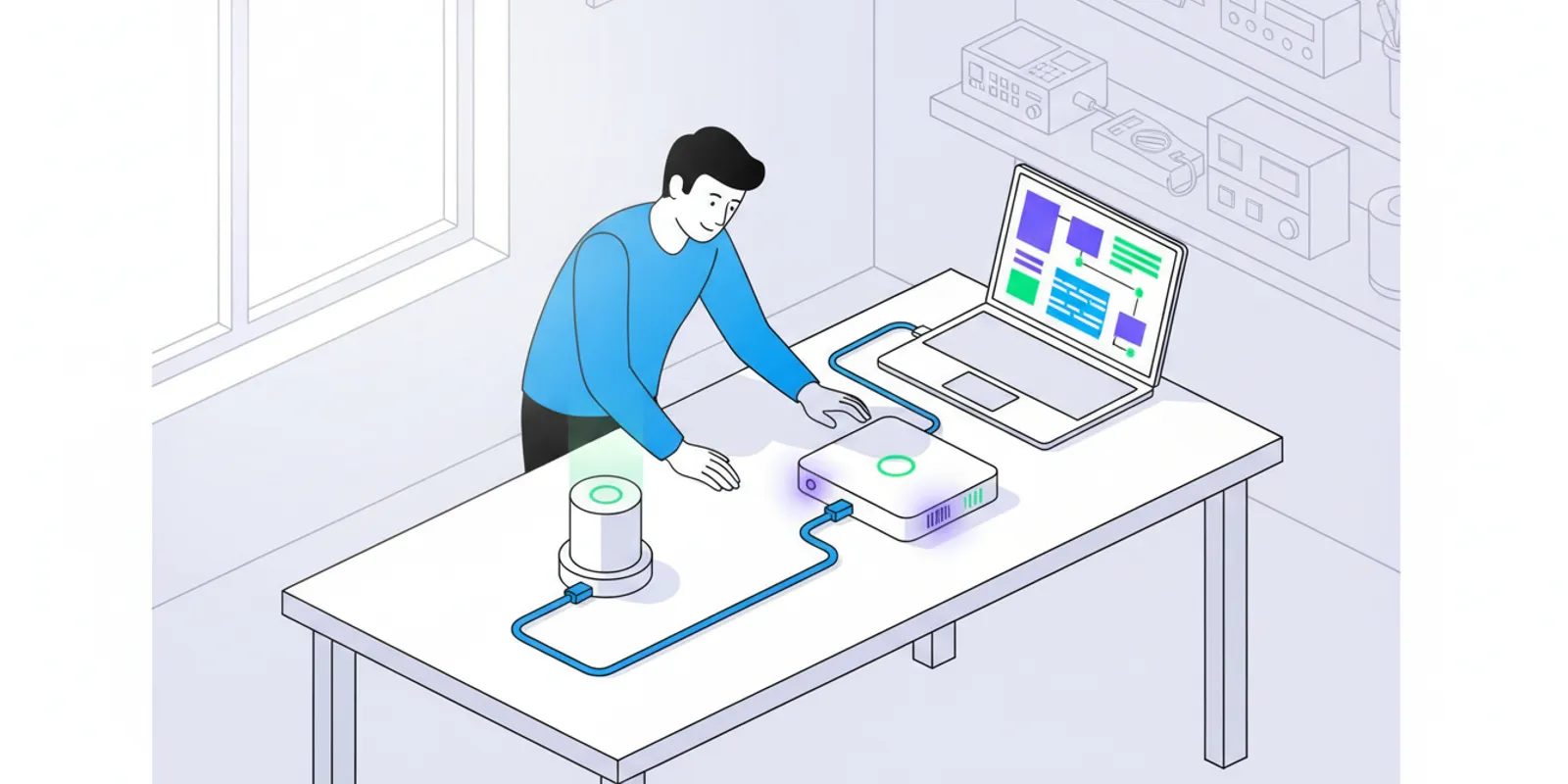
The OWASP IoT Top 10 gives security teams a useful starting point for discussing recurring weaknesses in connected products. The list becomes valuable when it leads to a scoped assessment, evidence about real exposure, and fixes with accountable owners. This guide explains how to use the OWASP IoT Top 10 to prioritize device, firmware, network, application, and cloud questions without treating the list as a certification checklist.
Talk with a security specialist
What does the OWASP IoT Top 10 help teams do?
OWASP publishes security guidance to help teams recognize and discuss common risks. A Top 10 is a prompt for investigation, not an inventory of every possible weakness or proof that a product is secure. Architecture, deployment, users, and data sensitivity all affect what matters most.
For each relevant theme, ask four questions: What component could be affected? What access would an attacker need? What could happen if the weakness were exploited? What evidence would support the conclusion? These questions prevent two frequent errors: treating all categories as equally urgent and assuming a category is covered because someone reviewed its heading.
The OWASP Top 10 project offers context on OWASP's risk guidance. Teams should also consult current IoT-specific material and map its themes to their own architecture. General web application risks can inform the discussion, but they do not replace checks of device interfaces, wireless protocols, firmware, or update mechanisms.
Which parts of an IoT system belong in scope?
A connected product is usually a system of components, identities, and data flows. A device-only review can miss an exposed API or a cloud control that changes device behavior. Define the scope as both a component inventory and a map of how those components communicate.
- Device: local interfaces, ports, storage, debug access, credentials, configuration, and physical-access assumptions.
- Firmware: boot behavior, update logic, dependencies, embedded secrets, and controls that operate locally.
- Communications: protocols, encryption, identities, authorization for messages, and protection against replay or tampering.
- Applications and APIs: enrollment, authentication, account roles, tenant separation, device ownership, and data handling.
- Cloud and operations: administrative access, monitoring, configuration, update distribution, and recovery processes.
- Supply chain: third-party components, build and release steps, signing, and the path by which updates reach deployed devices.
Before testing, sketch a data-flow diagram. Mark where data is created, transmitted, stored, and accessed. Add trust boundaries, external providers, device ownership changes, and roles that can issue commands. Then label each connection with its protocol and identity assumptions. A diagram need not be elaborate: it needs to help the team see paths that component scans may overlook.
For a device-to-service view, read Penti's guide to IoT penetration testing across devices, firmware, and cloud. It is also useful to understand how penetration testing approaches differ, because a web-only test may not cover local interfaces or radio protocols.
How should teams translate the Top 10 into test priorities?
Begin with the product's purpose and realistic misuse cases. A connected monitor, industrial sensor, and consumer camera may share technical patterns, but compromise can have different consequences. Consider the sensitivity of data, control over physical functions, number of affected devices, and access an attacker would need.
- Identify critical assets. Include sensitive data, safety-relevant functions, privileged accounts, and services needed for operation.
- Map attack paths. Trace how a remote or local actor could reach each asset through a device, app, API, or cloud control plane.
- Turn themes into test questions. For example: can an untrusted account issue commands, can a device enroll as another user's device, or can an update be altered?
- Set safe boundaries. Record authorized targets, test accounts, permitted techniques, production constraints, and stop-test contacts.
- Collect proportionate proof. Note component, conditions, reproducible steps, and impact without collecting unnecessary personal or customer data.
- Assign remediation. Give confirmed issues an owner, severity rationale, target date, and retest condition.
Prioritization requires context, not just a label. A shared management credential could expose a fleet and merit prompt action. A flaw requiring physical access is not automatically negligible: consider where devices are installed and who can reach them. A remote weakness may also be limited if it affects a noncritical function and strong compensating controls exist. Write down the reasoning so product, security, and engineering teams can make consistent decisions.
Build test cases that answer a decision
A useful case states the control, the expected result, the method, and the evidence to retain. For example, test whether a status-only account can issue a configuration command. The expected result is denial, not merely absence of a button in the interface. Use an authorized test account and a representative device, record the request and response, and avoid changing production settings.
Another case can examine update integrity. Identify the official update path, the device's checks before installation, and its behavior when presented with an invalid or unsuitable package in a safe environment. The objective is to establish whether the device accepts only trusted updates and whether recovery behaves as intended. Do not experiment on deployed devices unless the authorization and safeguards explicitly cover that activity.
How do common IoT risk areas differ?
Exact categories and wording can vary by guidance version. This table groups practical assessment questions by control area. Use it to plan inquiry, then confirm the current OWASP IoT materials and organizational requirements before calling the work complete.
| Risk area | Questions to test | Useful evidence | Typical next step |
|---|---|---|---|
| Identity and access | Are devices, users, and services uniquely identified? Are shared or default credentials present? | Enrollment flow, roles, credential handling, and authorization results | Remove shared secrets, strengthen enrollment, and limit privileges |
| Interfaces and services | Are exposed ports, APIs, and local interfaces necessary and protected? | Service inventory, access checks, and responses to invalid input | Disable unnecessary services and enforce authorization at boundaries |
| Data protection | Is sensitive data protected in transit and at rest? How are keys used? | Protocol configuration, storage review, and key-use observations | Reduce collection and address transport, storage, or key-management gaps |
| Updates and integrity | Does the device verify update origin and integrity? Can unsafe rollback occur? | Update workflow, validation behavior, rollback and recovery tests | Protect the update chain and document recovery behavior |
| Resilience and monitoring | Can abuse disrupt essential functions? Can operators detect and recover? | Safe rate-limit tests, logs, alert paths, recovery exercises | Set resource limits and improve detection and recovery procedures |
| Lifecycle and dependencies | Are components maintained and support status known? | Dependency inventory, support policy, vulnerability response process | Track dependencies and plan support through product retirement |
What does a useful IoT security test look like?
A useful test is reproducible, bounded, and tied to a decision. Before work starts, document authorization and scope. Identify test devices and environments, state whether physical access is included, and agree how to handle sensitive data or unexpected impact. If a live service or safety-critical function is involved, establish monitoring, stop conditions, and escalation contacts first.
Methods can include configuration review, manual exploration, automated checks, and controlled attempts to validate suspected weaknesses. No single method covers every layer. Device inspection may reveal a local issue, while API testing may uncover an authorization flaw that appears only across account boundaries. Firmware review can identify potentially risky components, but findings still need context about reachability and deployment.
Separate confirmed vulnerabilities from observations and hardening suggestions. A clear finding states the affected asset, preconditions, method, result, practical impact, and recommended correction. Include proof only when it helps the owner reproduce the issue safely. State uncertainty rather than presenting a possibility as a demonstrated exploit.
For repeatable work, connect testing to a continuous security testing process and a broader application security program. These practices help keep ownership and retesting visible as systems change.
Make the test safe and reproducible
Write down the exact target identifiers and test accounts before activity begins. Record which device model and firmware version were used, the environment, date, and relevant configuration. This detail matters because the same product may behave differently across versions or deployment settings.
Agree on data handling in advance. Use synthetic or test data where possible, keep evidence limited to what is necessary, and specify where evidence will be stored and who can access it. If a test unexpectedly exposes real user information, stop the relevant activity and follow the agreed escalation process rather than expanding collection.
Define a rollback or recovery plan for tests that change state. This can include a known-good device image, a safe test tenant, backup configuration, and a named operator who can restore normal operation. A plan does not make every test safe, but it makes the conditions and response explicit.
How should teams prioritize and fix findings?
Combine technical severity with product context. Consider exploitability, access required, scope of affected devices, exposure of data or control functions, and consequences of disruption. Record why a finding received its priority. This makes decisions understandable when engineering, security, product, and compliance teams review the same evidence.
- Address systemic issues early. A shared credential or flawed update path may affect many devices and services.
- Reduce exposure while preparing a full fix. Where safe, disable an unnecessary interface, narrow network access, or limit a vulnerable function.
- Specify a verifiable correction. Replace “improve security” with a code or configuration change and an acceptance test.
- Retest the original path. Confirm the demonstrated issue is closed and expected operation still works.
- Check related instances. If one model or service is affected, look for the same design pattern elsewhere.
Consider an assessment that finds a status-only account can send a management command. A useful report identifies the account role, command, response, affected endpoint, and operational impact. Hiding the control in the interface would not address a server-side authorization gap. A stronger correction checks the role at the command endpoint. Retesting should show that the restricted account is denied and an authorized operator can still perform the intended action.
Use a finding record that supports ownership
A compact record can include a unique reference, affected product and version, risk statement, evidence, severity reasoning, owner, target date, mitigation, and retest result. Keep the proof concise enough that the owner can reproduce it, but specific enough to distinguish the issue from a general concern.
Track accepted risks separately from unresolved findings. An acceptance should state the accountable decision-maker, reason, compensating controls, affected scope, and review date. Revisit it when exposure changes, a fix becomes feasible, or new evidence changes the impact. Acceptance is a managed decision, not a claim that the risk has disappeared.
How can teams keep the assessment current?
An assessment can become stale when firmware, cloud configuration, mobile applications, dependencies, or deployment assumptions change. Define review triggers such as a new device model, major release, changed trust boundary, new external provider, or important vulnerability disclosure. The right cadence depends on product risk and release activity; a calendar alone can miss meaningful changes.
Track practical process measures: assets with a named owner, time from confirmation to remediation, fixes retested, unresolved high-impact findings, and coverage of critical data flows. These measures do not prove that a product is secure. They help teams identify where ownership or follow-through needs attention. Pair counts with context, such as affected versions and the age of open issues.
Use changes to update the scope, not just the report. If a new cloud service is added, revise the data-flow diagram and check the new trust boundary. If a firmware update changes enrollment, retest the identity path. If a component reaches the end of support, record the replacement or isolation plan. A short change review can help decide whether a focused retest is enough or whether broader assessment is needed.
A security frameworks guide can help teams place technical testing alongside governance activities. For vulnerability ownership across vendors and dependencies, see this third-party risk management framework.
What should the first assessment cycle produce?
A first cycle should leave the team with more than a list of weaknesses. It should create a usable baseline that supports a decision about what to fix, what to test again, and what remains outside scope. The artifacts can be concise; their value comes from being accurate and maintained.
- Scope statement: covered device models, firmware versions, applications, APIs, cloud services, environments, exclusions, and authorization.
- Architecture view: component inventory, data flows, trust boundaries, identities, and key external dependencies.
- Test plan: prioritized risk questions, methods, test accounts, safety constraints, and evidence approach.
- Findings register: confirmed issues and observations, impact rationale, owners, target dates, and retest conditions.
- Decision log: accepted risks, temporary mitigations, unresolved assumptions, and review triggers.
- Follow-up plan: changes that require focused retesting and the person responsible for confirming closure.
For a small team, these can be simple documents or tracked tickets rather than a new process platform. The important part is that a second person can understand what was assessed, what was not assessed, and why each priority was chosen. That makes future review more efficient and reduces dependence on one individual's memory.
Frequently Asked Questions
Is the OWASP IoT Top 10 a certification checklist?
No. It is guidance for discussing risk areas, not proof that a product is secure or certified. Define scope, test relevant controls, document evidence, and consider product-specific risks.
Does reviewing every category mean an IoT product has been tested?
No. Reviewing a category is not the same as testing a control. A test identifies the component and conditions, attempts a defined action within authorized boundaries, and records evidence that supports its conclusion.
Should teams test devices in production?
Only when the scope and safeguards explicitly allow it. Testing can disrupt services or affect real data. Prefer a representative environment where possible, and agree on monitoring, stop conditions, and escalation steps before production activity.
How often should an IoT product be tested?
Set a risk-based cadence and reassess after material changes, such as new firmware, changed APIs, a new deployment model, or significant vulnerability disclosures. The interval should reflect product change and the impact of compromise.
How should teams handle an issue that cannot be fixed immediately?
Record the risk, accountable owner, reason for delay, affected scope, temporary safeguards, and review date. Revisit the decision when exposure changes or a permanent correction becomes practical.
Explore IoT assessment coverage
The OWASP IoT Top 10 is most useful when it leads to specific, authorized tests and accountable fixes. Map its themes to your system, verify what is exposed, and revisit the assessment as the product evolves.
