

AI Security Governance: A Framework for Responsible Security Programs
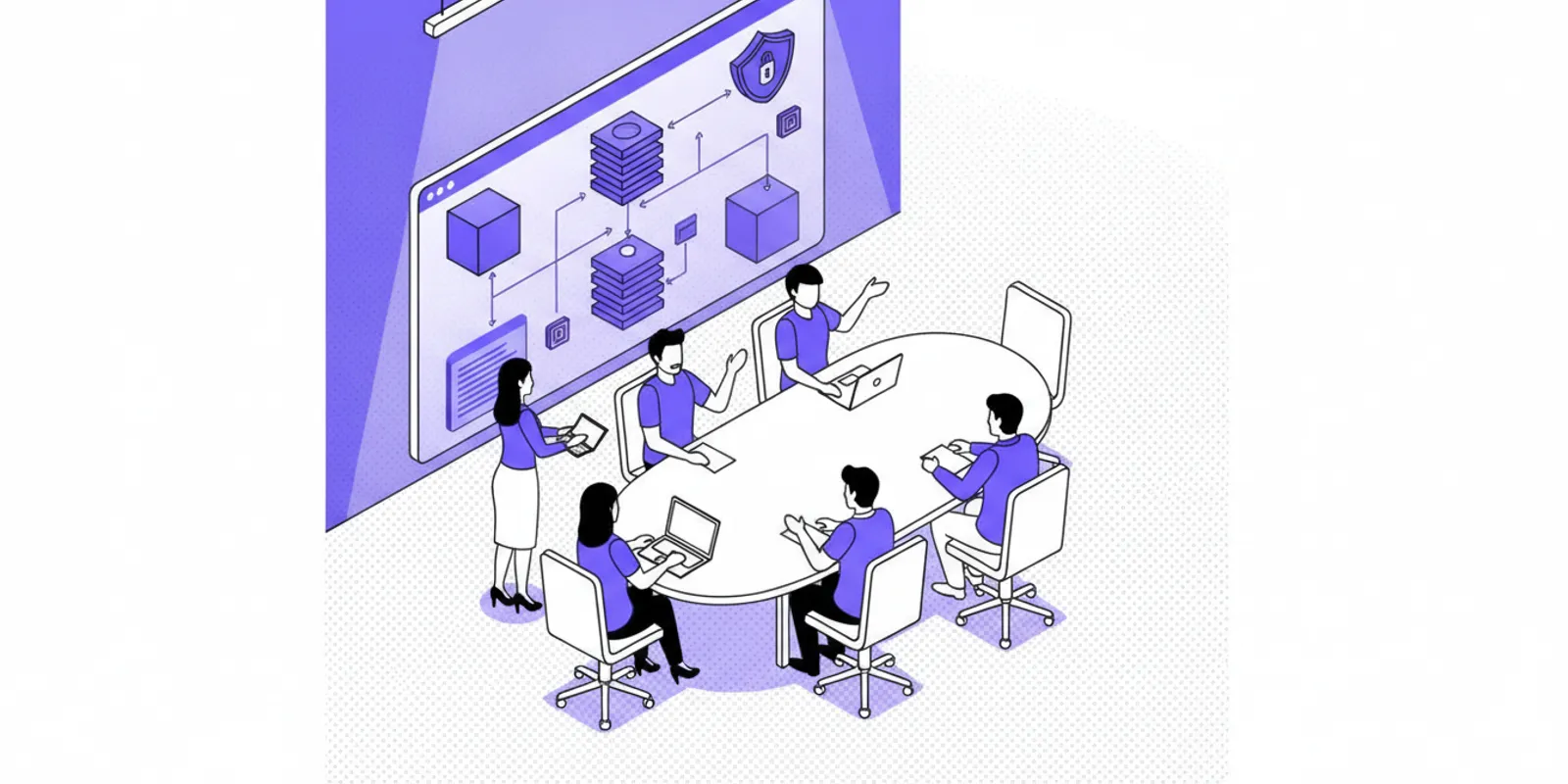
AI security governance gives security, product, engineering, and compliance leaders a shared way to decide how AI systems are approved, tested, monitored, and improved. A useful framework is practical rather than ceremonial: it identifies who owns each decision, what evidence is needed, how risk changes are reviewed, and when an issue must be escalated.
Explore AI penetration testing
What does AI security governance cover?
AI security governance is the set of roles, decision rules, review processes, and evidence used to manage security risks across the AI lifecycle. It applies to more than a model in isolation. A production AI feature can include user interfaces, APIs, data stores, model providers, retrieval systems, plugins, identity controls, and human workflows. A governance process should make these dependencies visible.
The scope depends on how an organization uses AI. A team using an external assistant for internal drafting faces different exposure than a team embedding a model in a customer-facing product or using it to trigger operational actions. Governance should scale with the system's access, data sensitivity, autonomy, and potential impact.
Governance is not a promise that a system is risk-free, nor does a policy alone establish that an organization meets a legal or certification requirement. It is a repeatable way to make informed decisions, assign accountability, preserve evidence, and respond when assumptions change. A review of responsible AI governance research describes governance as a set of practices organizations should implement across AI design and use. That research review can help leaders understand why governance needs to span the system lifecycle. For security-specific governance, RAND's overview of governance approaches for advanced AI security describes approaches informed by sector-specific regimes, a useful reminder to adapt governance to the organization's setting rather than copy one model unchanged.
Who should own the decisions?
AI security governance works best when decision rights are explicit. A cross-functional group can set policy and resolve material risk questions, but day-to-day responsibility should remain close to the people building and operating the system. Avoid assigning vague shared ownership that leaves no one accountable for action.
- Executive sponsor: Sets the organization's risk tolerance, ensures teams have resources, and resolves decisions that exceed delegated authority.
- Security lead: Defines security review expectations, advises on threat scenarios, validates controls, and coordinates incident escalation.
- Product owner: Documents intended use, user impact, external dependencies, and product changes that could alter risk.
- Engineering or platform owner: Maintains architecture, access controls, deployment protections, logging, and remediation work.
- Data owner: Identifies sensitive data, approves permitted uses, and helps assess data flows, retention, and access.
- Legal, privacy, or compliance partner: Advises on obligations and evidence needs for the specific context. This role does not replace technical risk review.
- Operations or incident lead: Owns monitoring and coordinates containment, investigation, communication, and recovery when an event occurs.
Small organizations may assign several roles to one person. The important part is to state the capacity in which that person is acting, identify who can approve exceptions, and name a backup for time-sensitive decisions. Separate approval from implementation where practical, especially for high-impact systems or access to sensitive information.
A governance charter can be short. Record the systems in scope, decision owners, review triggers, risk acceptance authority, exception process, and escalation contact. Review it when teams, products, or business uses change. For a broader foundation, teams can compare their existing practices with common cybersecurity frameworks, while keeping the AI-specific inventory and risks visible.
How should a team inventory AI systems?
Risk decisions are only as useful as the inventory behind them. Begin with a register of AI use cases, including systems built by the organization and third-party AI services used in business workflows. The register does not need to catalogue every experiment forever. It should identify active or planned uses that handle organizational data, connect to production systems, or influence customer or employee outcomes.
For each use case, capture a concise set of facts:
- Business purpose, owner, users, and deployment status.
- Model or service provider, version where known, and material supporting components.
- Data categories entering the system and where outputs or logs are stored.
- Connected applications, APIs, tools, accounts, and permissions.
- Whether outputs are reviewed by a person before consequential actions.
- Known limitations, intended-use boundaries, and relevant security assumptions.
- Risk tier, review date, open issues, and the owner responsible for the next action.
Ask teams to report systems through a lightweight intake process, but do not rely on self-reporting alone. Procurement reviews, architecture changes, cloud inventories, application registers, and identity or API access reviews can reveal additional dependencies. Make the reporting path clear enough that a team can register a prototype before it receives production data or permissions.
Classify uses in a way that directs attention rather than creating false precision. A simple tiering scheme might distinguish low exposure, elevated exposure, and high-impact or sensitive use. Define the criteria for each tier. For example, a system that can access customer records, execute actions, or influence a consequential decision may need stronger review than an isolated internal summarization tool. Record the rationale so another reviewer can understand the classification later.
How can teams conduct a useful AI risk review?
A review should start with the system's real workflow, not with a generic list of AI risks. Map where instructions, data, model outputs, and actions move. Then ask how an attacker, a mistaken user, or an unexpected system behavior could cross a trust boundary or undermine the intended purpose.
- Set the boundary. Identify the application, models, data, identities, integrations, users, and operational processes included in the review. Note excluded components and the assumptions behind excluding them.
- Describe assets and consequences. Identify sensitive information, business functions, customer commitments, and infrastructure that could be affected.
- Explore abuse cases. Consider unauthorized access, data exposure, prompt or input manipulation, unsafe tool use, weak authentication, insecure integrations, and misuse of outputs. Select scenarios that fit the architecture rather than copying a generic checklist.
- Assess existing controls. Review access restrictions, data handling, validation, monitoring, human approval, supplier controls, and recovery procedures. Distinguish controls that are documented from those that have been tested.
- Rate and assign risks. Record impact, likelihood or plausibility, existing mitigations, residual concern, accountable owner, and a target action date.
- Decide and document. Approve the use, require changes, limit deployment, defer it, or decline it. State any conditions and who has authority to accept remaining risk.
Threat modeling should include the full application context. For example, a support assistant that can retrieve account information and open tickets has risks beyond inaccurate answers. Review who can query it, what data retrieval is authorized, whether a response could expose another customer's information, and what actions the assistant can initiate. A team's existing API security practices and cloud-native security controls can inform the review of interfaces and deployment dependencies.
Document uncertainty instead of hiding it. If a vendor does not disclose a detail, note what is unknown, why it matters, what compensating measure is available, and who will revisit the decision. Governance records are decision aids, not proof that every possible threat has been eliminated.
What evidence should governance retain?
Evidence should let a reviewer reconstruct what was approved, what was tested, what changed, and how open issues were handled. Keep records proportionate to risk. A small internal experiment may need a concise intake and owner, while a customer-facing system with sensitive data or meaningful permissions may need a fuller review trail.
| Governance area | Useful evidence | Review question |
|---|---|---|
| Ownership and purpose | System inventory, business owner, intended use, approval record | Who is accountable, and what is the system permitted to do? |
| Architecture and data | Data-flow diagram, dependency list, access and retention decisions | What information and systems can the workflow reach? |
| Risk assessment | Threat scenarios, risk ratings, control decisions, accepted exceptions | Which realistic failure or abuse cases were considered? |
| Testing and remediation | Test scope, findings, severity rationale, fixes, retest notes | Were meaningful weaknesses addressed and checked again? |
| Operations and change | Monitoring plan, incident contacts, change log, review dates | What triggers a new review or escalation? |
Keep a clear link between a finding and its disposition. A record should show the issue, affected component, severity reasoning, remediation owner, due date, status, and evidence of retesting when appropriate. For audit preparation, separate operational security evidence from claims about a particular certification or regulatory status. A guide to SOC reports and risk assessments may help teams understand related assurance concepts, but the applicable requirements depend on the organization and its context.
How should AI systems be tested?
Testing should reflect the threat model, system boundary, and intended use. A review might combine architecture inspection, access-control checks, data-flow validation, adversarial scenarios, dependency review, and testing of the surrounding application. The right scope depends on what the system can access and what impact a failure could have.
Do not treat a model-level check as a substitute for testing the application that contains it. An apparently reasonable answer can still be unsafe if the application grants excessive permissions, exposes private records, accepts untrusted instructions, or fails to enforce authorization outside the model. Include connected APIs, identity controls, logging, and any actions triggered by model output.
Set test criteria before testing begins. Define assets and components in scope, allowed test methods, environments, data handling rules, exclusions, expected evidence, and who can authorize remediation or retesting. For production systems, coordinate testing to reduce the chance of disruption. Record limitations so that stakeholders do not mistake a bounded test for exhaustive assurance.
Use findings to improve controls, then verify important fixes. A vulnerability list without ownership and retesting does not create a reliable remediation cycle. Teams can consider how continuous security testing fits their release cadence, and how AI penetration testing and exploit validation relate to broader application review. Testing should support governance decisions, not replace them.
How often should reviews happen?
Use both scheduled reviews and event-based triggers. A calendar review is useful, but a fixed annual interval can miss a major change made the next day. Set a review cadence based on risk tier, system change rate, exposure, and business impact. High-impact systems and those with significant access generally warrant closer attention than isolated experiments.
Reopen the risk review when a material change could invalidate its assumptions. Examples include a new model or provider, new data categories, expanded permissions, new integrations, a move from internal use to customer-facing use, a change in user population, an incident, or a substantial change in the system's behavior or operating environment.
Connect reviews to existing engineering processes. A change request, release gate, supplier review, or security design review can prompt an update to the AI inventory. The goal is not to create a separate approval for every minor code change. It is to ensure changes that affect trust boundaries, data, access, or impact reach the right reviewer before deployment where feasible.
For each review, capture what changed since the last assessment, which risks remain open, whether controls still work as intended, and who owns the next action. If nothing material changed, record that conclusion and the basis for it. This makes a lightweight check useful without repeating a full assessment unnecessarily.
What should trigger escalation?
Escalation rules should be written before a difficult incident occurs. State who must be notified, how quickly, and who can pause access, disable an integration, or restrict a system while the issue is investigated. Adapt the response to the organization's incident process and the system's actual impact.
- Possible exposure of confidential, personal, or regulated information.
- Unexpected access to an application, account, or action beyond approved permissions.
- Evidence that a control is bypassed or a serious finding remains unresolved.
- Material divergence from the approved purpose, data flow, or user group.
- Repeated unsafe outputs or behavior that could cause meaningful harm.
- A supplier, model, or integration change that invalidates a key security assumption.
Define a safe response path, including preserving relevant logs, limiting further exposure, notifying the appropriate owners, and documenting decisions. Do not rely on a model or automated workflow to decide whether it should report its own failure. People accountable for the system need a channel to investigate and make operational decisions.
How can a growing organization put the framework into practice?
Start with a small operating loop, then expand it as systems and risks grow. Trying to create a comprehensive policy library before identifying actual AI uses can consume time without improving decisions. A first version can be effective if it establishes an inventory, an owner, a review path, and a way to track actions.
- Choose a clear scope. Begin with production or planned systems that handle sensitive data, connect to important applications, or affect customers or employees.
- Name accountable owners. Identify a business owner, technical owner, security reviewer, and decision-maker for exceptions.
- Use a consistent intake. Ask what the system does, who uses it, what it can access, which providers or integrations it depends on, and what happens when it fails.
- Apply proportionate review. Use defined risk tiers to determine the depth of architecture review, testing, approval, and evidence retention.
- Track findings to closure. Assign an owner and due date, document accepted residual risk, and verify important fixes.
- Revisit after change. Tie review triggers to releases, new data access, new integrations, incidents, and supplier or model changes.
- Improve the process. After a review or incident, note where ownership, evidence, or escalation was unclear and update the framework.
Use existing security and engineering routines where possible. Teams with established DevSecOps practices can connect AI intake and review to design and release workflows. Teams defining the application boundary can also refer to different types of penetration testing to identify which components may need focused assessment. The aim is a reliable decision process, not a new committee for every change.
Learn how AI penetration testing can support security reviews
Frequently Asked Questions
Is AI security governance only for companies building AI models?
No. Organizations also need to govern third-party AI services and AI features embedded in products or business workflows. A system can create security exposure through its data, permissions, integrations, or downstream actions even when the organization did not build the underlying model.
Does an AI security policy prove compliance?
No. A policy documents expectations, but it does not by itself establish that an organization meets a law, regulation, certification, or contractual requirement. Confirm applicable obligations with qualified advisors and retain evidence that matches the relevant scope.
Should every AI use case receive the same level of review?
No. Review depth should be proportionate to exposure and impact. Consider data sensitivity, access, autonomy, user population, deployment context, and the consequences of misuse or failure. Define tier criteria so teams apply them consistently.
When should a team repeat an AI security review?
Repeat or update the review on a risk-based schedule and when material changes occur. New data, permissions, integrations, providers, users, deployment contexts, or incidents can invalidate the assumptions behind an earlier decision.
Build a governance process that keeps pace with change
Effective AI security governance connects clear ownership with a current system inventory, contextual risk reviews, meaningful testing, evidence, and usable escalation paths. Start with the AI uses that matter most, make decisions and remaining risks visible, and revisit the assessment when the system or its environment changes. That gives leaders a practical foundation for improving oversight without claiming that any framework can remove all risk.
