-White.avif)
-Color.avif)
What Is DevSecOps? Principles, Workflow, and Security Testing
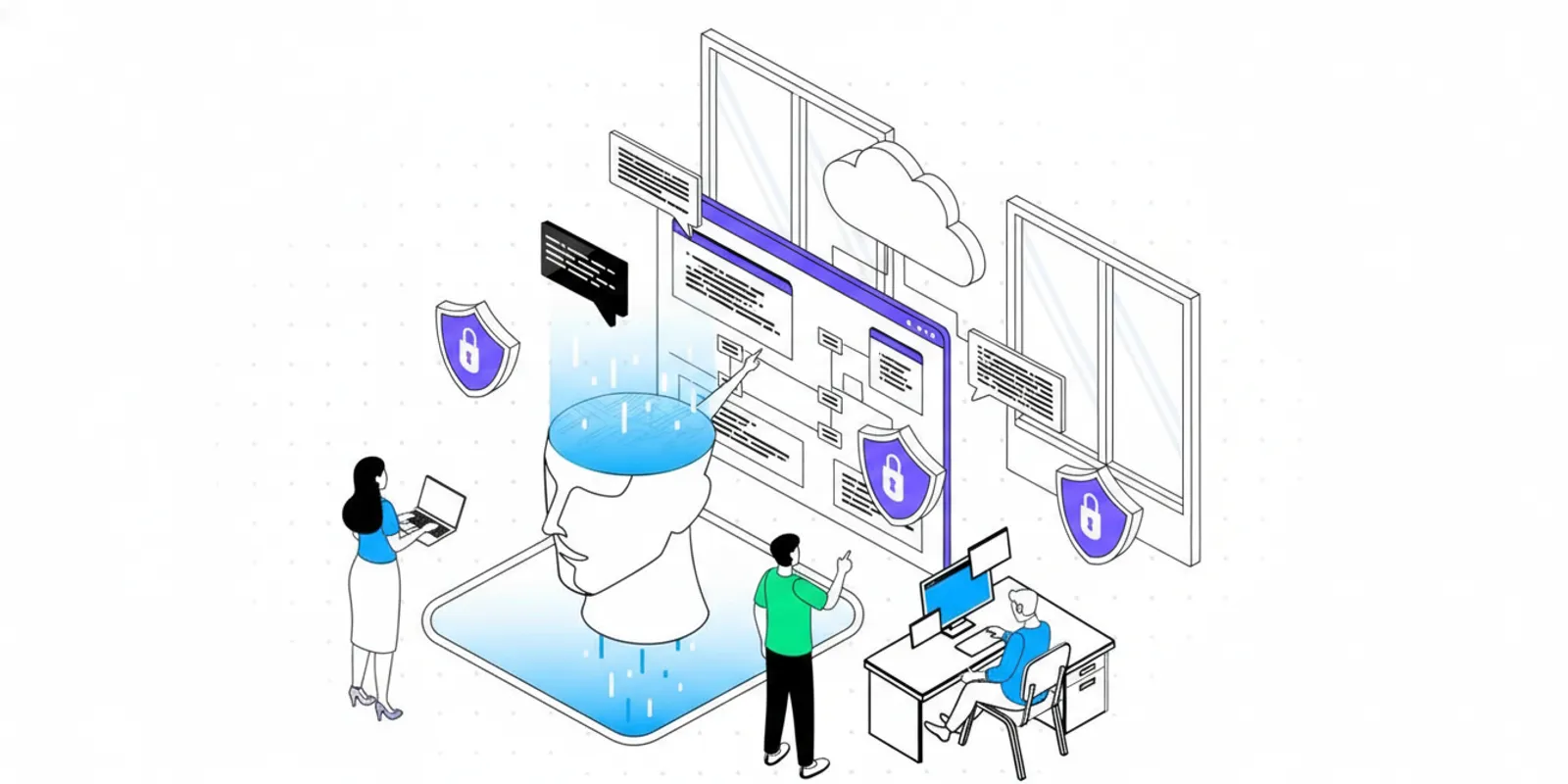
What is DevSecOps? It is an approach to software delivery that builds security into planning, development, testing, release, and operations instead of treating it as a final review. Development, security, and operations teams share responsibility for identifying and reducing risk throughout the delivery lifecycle. The goal is not to slow every release with a manual gate. It is to make security work repeatable, visible, and timely enough to support how software is actually built.
Talk with Penti about security testing
What does DevSecOps mean in practice?
DevSecOps combines development, security, and operations practices. The term describes an operating model, not a single product or scanner. Security requirements are considered as software is designed, written, built, deployed, and maintained. Teams use automation where it can provide consistent feedback, and people apply context, judgment, and expertise where a tool cannot decide what matters.
In a DevSecOps model, developers do not simply hand code to a security team at the end. Security specialists help teams understand risks and define useful controls. Operations and platform teams contribute knowledge about runtime environments, deployment pipelines, identity, and infrastructure. Product and engineering leaders make tradeoffs visible and assign owners for remediation.
A useful way to describe the practice is continuous validation: checks happen at appropriate points, findings reach the people who can act on them, and teams learn from results. A DevSecOps glossary entry describes DevSecOps as embedding security into software delivery so code, infrastructure, and identities are validated continuously. Read the DevSecOps definition.
DevSecOps does not mean that every test must run on every commit, or that a pipeline can make all security decisions. It means teams deliberately choose security activities based on risk, automate repeatable checks, and give findings a path to resolution. Strong practice also includes a way to handle exceptions, verify fixes, and revisit assumptions when a system changes.
What principles make a DevSecOps program effective?
The details differ by organization, but effective programs usually share several principles:
- Shared ownership: Security is a responsibility across product, engineering, security, and operations. Specialists enable teams with standards and guidance rather than becoming the only people accountable for outcomes.
- Early and repeated feedback: Identify issues as near as practical to the change that introduced them, then check again after deployment and as the attack surface evolves.
- Risk-based controls: Match checks to the system, data, exposure, and likely impact. A public application that handles sensitive information may need different safeguards from an internal utility.
- Automation with human judgment: Automate consistent, well-understood checks. Review uncertain or high-impact findings in context and make sure a person can challenge, prioritize, and act on them.
- Actionable results: Findings should include enough context for the appropriate owner to understand the risk, reproduce or verify it where appropriate, and plan a fix.
- Learning and improvement: Use recurring issues, incidents, testing outcomes, and delivery friction to improve controls and workflows instead of only counting alerts.
These principles are more useful than an arbitrary tool count. A team can have many scanners and still lack a reliable way to prioritize findings or confirm fixes. Conversely, a smaller set of controls can create meaningful coverage when it is consistently applied and connected to ownership.
How does security fit into a DevSecOps workflow?
Security should follow the software lifecycle, with checks and decisions placed where they can influence the outcome. The following sequence is a practical starting point. It is not a requirement to buy or deploy a particular tool at every stage.
- Plan: Identify the data, users, trust boundaries, external dependencies, and important business functions. Define security expectations and decide which changes need additional review.
- Design: Review architecture and likely abuse cases before implementation. Record important assumptions, such as who can access a function or what happens if an integration is compromised.
- Develop: Use secure coding guidance, peer review, dependency management, and developer feedback. Make it straightforward to report a suspected exposure without hiding it in a long queue.
- Build and test: Run suitable automated checks in development and CI. Examples include reviewing code changes, dependencies, configuration, and tests for expected security behavior. Set thresholds that distinguish urgent issues from items that need investigation.
- Release: Confirm that the release meets defined criteria, that changes with meaningful risk have an accountable reviewer, and that unresolved exceptions have a rationale and owner.
- Operate: Monitor relevant events, manage access, track changes to the environment, and make sure incident response responsibilities are understood.
- Reassess: Test important assumptions and exposed functionality, prioritize remediation, and verify that fixes address the underlying issue.
The workflow should match the team's architecture. For a cloud-native service, infrastructure definitions, containers, identities, and deployment configuration may be part of the security review. For an application with a public API, authorization behavior and abuse cases need attention alongside code and dependencies. Penti's cloud-native security guide offers related context for distributed application environments.
Teams can also map recurring work to their existing processes. For example, a code review can include a short risk checklist, a pipeline can flag specified classes of issue, and a release review can confirm that higher-risk findings have an owner. These practices are useful only if teams know what a result means and what to do next.
Which security checks belong in the delivery pipeline?
There is no universal set of checks for every pipeline. Select them according to the application's design, exposure, and failure modes. Typical activities include code analysis, dependency review, configuration checks, secret detection, and tests of application behavior. Infrastructure and identity controls may be relevant when the pipeline provisions or changes cloud resources.
Pipeline checks are especially useful when they produce fast, repeatable feedback. A high-confidence issue in a changed component may justify stopping a release, while a lower-confidence alert may be better routed for review. Teams should set explicit thresholds and escalation paths rather than treating every warning as equally urgent.
Do not confuse automated coverage with proof that an application is secure. A scan evaluates what its rules and access allow it to see. It may miss business logic flaws, chained weaknesses, authorization mistakes, or risks that only become clear when a tester follows a real user journey. That is why pipeline checks are one layer in a broader program, not the whole program.
Practical scope matters, too. Start with the most important services and make the results usable before expanding coverage. If a team receives a flood of duplicate or context-free alerts, it may learn to ignore them. Tune checks, assign an owner, and use a defined process to assess false positives and accepted risks.
Where does penetration testing fit in DevSecOps?
Penetration testing adds a different kind of evidence from routine pipeline checks. A tester examines an authorized target for weaknesses and attempts to establish whether selected issues can be exploited in the agreed scope. The assessment can reveal how separate flaws combine, whether controls work as intended, and which findings matter in the context of the application.
A penetration test is not a substitute for secure design, code review, vulnerability management, or operational controls. Nor does one test establish that an application has no vulnerabilities. Its value comes from scoped testing, clear evidence, a useful report, and a process for deciding what to fix and confirming remediation.
For teams that ship frequently, testing can be scheduled around meaningful changes, business risk, and customer or audit expectations. A major architecture change, a new public-facing feature, or a material change to authentication may warrant a focused assessment. Periodic testing can also help teams inspect what routine automated checks do not cover. Learn more about common types of penetration testing and how scope can vary by application or environment.
Penetration testing as a service and agentic approaches can be considered as part of this broader plan, but teams should evaluate scope, validation, evidence, and reporting rather than rely on a label. Penti explains its approach on its pages about AI penetration testing and agentic AI penetration testing. For a comparison of how approaches can differ, see Penti's guide to manual and agentic penetration testing.
Whatever the method, keep authorization and scope explicit. Identify approved assets, testing windows, points of contact, and any systems that must be excluded. Agree how a critical discovery should be communicated. After testing, assign findings, track remediation, and retest relevant fixes. Penti's guide to penetration test reports discusses the role of clear, usable results.
How can teams connect secure delivery with continuous assurance?
Continuous assurance is an ongoing effort to check whether important security expectations remain true as software and its environment change. It does not mean that one test runs constantly or that every change receives a full penetration test. Instead, teams combine appropriate checks, evidence, follow-up, and periodic reassessment so that confidence is refreshed over time.
A practical approach is to define a small set of questions for each important service:
- What data and business functions would create the greatest impact if exposed or disrupted?
- Which changes could alter the service's access controls, trust boundaries, or external exposure?
- Which checks run automatically, and what risks do they not cover?
- Who reviews and owns findings, and how is remediation prioritized?
- What evidence shows that a fix worked or that an accepted risk is being revisited?
Use these answers to connect engineering tasks with security work. Findings should be traceable to the affected service and owner. Remediation should be prioritized by plausible impact and context, not only by a severity label. Rechecking a fix matters because a closed ticket is not proof that the underlying issue is resolved.
It also helps to review coverage after significant changes. A new integration, deployment model, identity provider, or major feature can invalidate earlier assumptions. Teams can schedule reassessment based on change and risk, while maintaining regular checks for controls that need ongoing attention. Penti's overview of continuous security testing for SaaS and its article on security assurance verification explore related ideas.
For companies preparing for customer reviews or a formal audit, organize evidence around the control or risk being addressed. A penetration test report may be one piece of evidence, but it does not by itself prove that every related control is effective or that an organization meets a particular standard. Requirements vary by framework, scope, and assessment. For background, see Penti's SOC 2 audit guide. Avoid promising an audit outcome based on any single test or report.
How do DevSecOps and traditional security approaches compare?
The distinction is less about abandoning security reviews and more about when and how teams use them. A traditional late-stage model may concentrate specialist review near release. A DevSecOps model distributes appropriate checks through delivery and operations, while retaining expert assessment for questions that require deeper context.
| Area | Late-stage approach | DevSecOps approach |
|---|---|---|
| When security is considered | Often concentrated near release or during periodic review | Considered during planning, development, testing, release, and operation |
| Feedback | May arrive after substantial implementation work | Designed to reach teams closer to the change, with additional review as needed |
| Ownership | Security specialists may become the main queue for decisions | Engineering, security, and operations share responsibilities with clear owners |
| Automation | May be limited to a late scan or final checklist | Repeatable checks are integrated where they provide useful, timely feedback |
| Penetration testing | May be treated as a one-time sign-off | Used as one source of evidence within a broader, risk-based testing plan |
| Remediation | Findings can be handed off without a clear path to confirmation | Findings have an owner, priority, resolution path, and appropriate follow-up |
This comparison describes tendencies, not fixed categories. Many organizations use a mix of practices. The important question is whether teams have enough feedback to make informed decisions without assuming that either automation or a point-in-time assessment provides complete assurance.
How should a growing SaaS company get started?
Begin with a representative service rather than trying to redesign every process at once. Choose an application that matters to customers or the business, document its important data and trust boundaries, and identify the people responsible for development, operation, and security. Then map the checks already in place and note where results are not reaching the right owner.
A measured first iteration could include these steps:
- Agree on scope: Select the service, environments, and types of change the initial effort will cover.
- Set expectations: Define what findings should block release, what requires human review, and how exceptions are recorded.
- Improve feedback: Choose a small number of checks that teams can understand and act on. Explain who owns each alert.
- Connect testing: Decide when a deeper assessment is appropriate, how it will be authorized, and how findings will enter normal remediation work.
- Review outcomes: Look at actionable findings, time to ownership, repeat issues, and whether fixes are verified. Adjust the workflow before expanding it.
Measures should guide improvement, not reward superficial activity. Counting scans or tickets can be useful operational information, but it does not show on its own whether risk is decreasing. Look for signs that important issues are found with useful context, handled by the right teams, and less likely to recur.
When a team works in a cloud-native environment, consider whether the delivery process accounts for application code as well as configuration, identities, and connected services. When customer or regulatory expectations matter, map testing and evidence to the actual request instead of making broad claims. Penti's business security frameworks guide can help readers explore that context.
Explore Penti's agentic AI penetration testing
Frequently Asked Questions
Is DevSecOps a tool or a team?
Neither by itself. DevSecOps is an operating approach that connects development, security, and operations work. Tools can automate selected checks, and teams may define roles or practices to support it, but tools alone do not create shared ownership or a reliable remediation process.
Does DevSecOps mean every vulnerability blocks a release?
No. Teams should establish risk-based thresholds and distinguish urgent, high-confidence issues from findings that need investigation. A release decision should consider evidence, exposure, impact, compensating controls, and accountable ownership. Exceptions should have a rationale and a path for review.
Does automated testing replace penetration testing?
No. Automated checks can provide repeatable feedback for the cases they are designed to evaluate. Penetration testing can examine application behavior and interactions in a defined scope, including questions that may need context and human judgment. They serve complementary purposes.
How often should a team conduct a penetration test?
There is no single schedule that fits every application. Consider the system's risk, how often meaningful changes occur, customer or assessment expectations, and what existing checks cover. A team can use significant changes and periodic review as opportunities to reassess scope, then track and retest relevant fixes.
Does DevSecOps guarantee that software is secure?
No. No development model or individual assessment can establish that software will never be compromised. DevSecOps helps teams make security work more continuous and actionable, but risk changes as systems, dependencies, and threats change. Ongoing review and improvement remain necessary.
DevSecOps works best when security fits the pace of delivery and teams can act on what their checks reveal. Start with clear ownership, risk-based feedback, and a practical path from finding to verified remediation, then expand the approach as the workflow matures.
