

Penetration Testing for Logistics: Practical Security Guidance
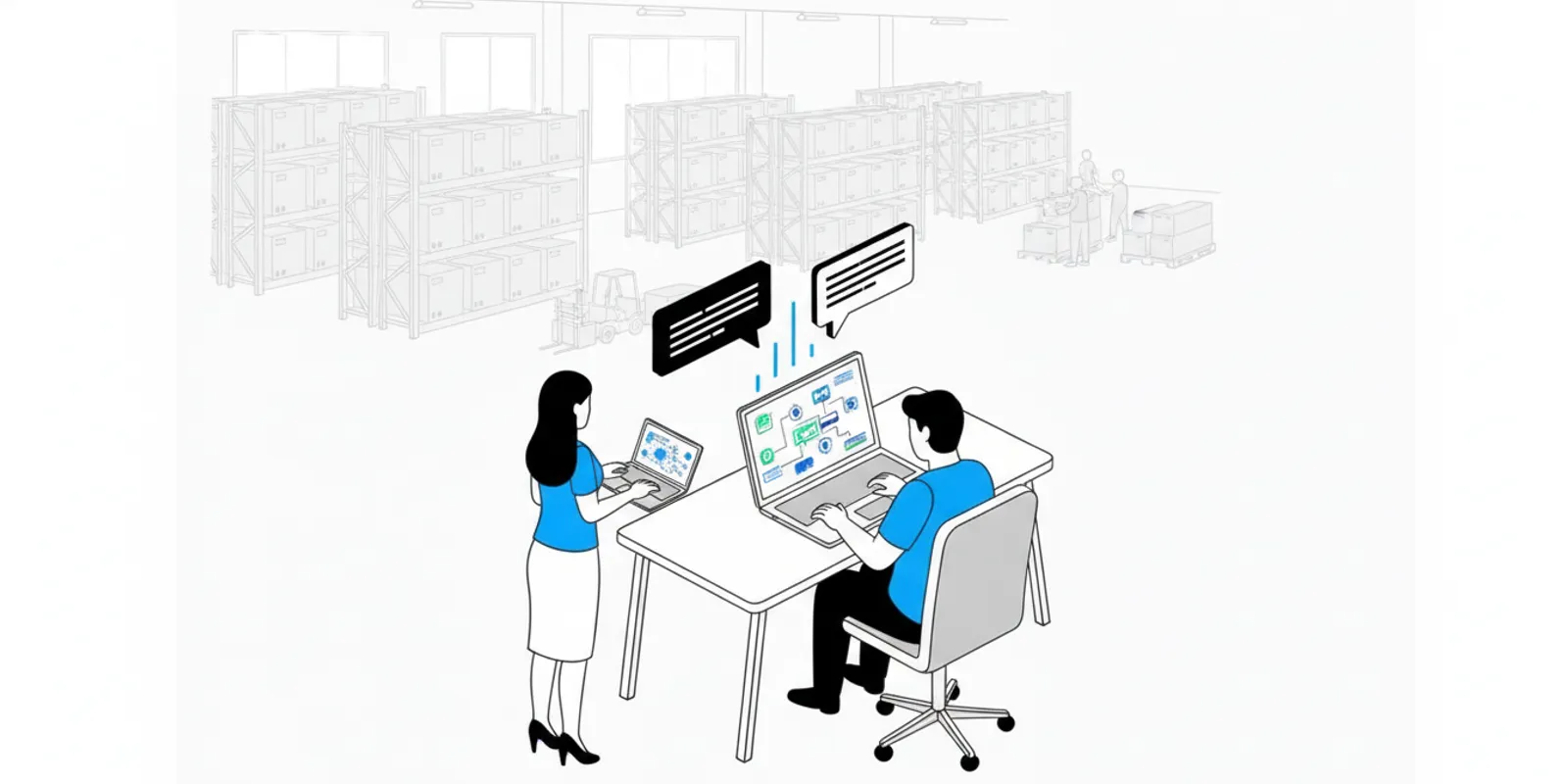
Penetration testing for logistics helps security teams understand how a weakness could affect the systems that coordinate orders, inventory, warehouses, transportation, and delivery. The right assessment begins with a practical question: which connected workflows matter most, and how can they be tested without creating unnecessary operational risk?
Call Penti to discuss your testing needs
What makes logistics penetration testing different?
Logistics is not one application or one network. A shipment may pass through a customer portal, an order management platform, warehouse software, handheld scanners, a transportation management system, carrier services, and a customer tracking page. Identity systems and cloud services may connect those components. A weakness in one place can matter because it gives access to another system or interrupts a time-sensitive workflow.
That does not mean every system should be tested in the same way. A public tracking portal and a conveyor control system have different exposure, impact, and safety considerations. The purpose is to select scope and methods that answer a defined security question, then explain what the evidence means for business operations.
For teams tying a test to assurance work, Penti's ISO 27001 penetration testing overview offers relevant context on scoping and evidence. The assessment itself should still be shaped around the organization's actual systems and objectives, rather than assuming that one test proves every control or removes every risk.
Logistics security also connects to broader topics such as cloud security, API security testing, and connected device risks. Those areas can help teams prepare to discuss the technologies in their own environment.
Which workflows should the scope follow?
Start by describing a business process from beginning to end. For example, trace an order from customer submission through validation, inventory reservation, picking, packing, dispatch, tracking, and delivery confirmation. For each step, list the application, identity, data, and external party involved. This gives testers and operations staff a shared picture of what the systems do and where access crosses a boundary.
Then ask where a failure would matter. Could an unauthorized user view another customer's shipment details? Could a compromised account change a delivery instruction? Could a partner integration submit more data or perform more actions than it needs? Could a service disruption prevent staff from processing orders? These questions help turn an asset inventory into a risk-based scope.
- Order intake: Identify public forms, customer accounts, authentication flows, and the data accepted from users.
- Warehouse execution: Map the software and accounts used to pick, pack, scan, and update inventory.
- Transportation and dispatch: Record routing platforms, dispatch interfaces, carrier connections, and privileged roles.
- Tracking and customer support: Note which shipment data is available to customers, partners, and support staff.
- Business administration: Include relevant identity providers, cloud consoles, remote access, and reporting systems.
Map information as well as systems. Shipment identifiers, customer contact details, delivery instructions, inventory records, and credentials may have different handling requirements. The team should know which data is necessary to verify a finding and which data should never be copied into test evidence.
How should a team choose systems to test first?
Prioritization is a judgment about business impact, access, exposure, and change. A public portal may deserve early attention because it can be reached from outside the organization. A warehouse application may be equally important because it supports a high-value operational step, even if access is restricted. Consider both the likelihood of reaching a weakness and the consequences if it were misused.
| System or connection | Example question | Scope and safety focus |
|---|---|---|
| Customer and partner portals | Can an account see or change another party's shipment? | Review identity, authorization, session handling, and data exposure. |
| APIs and integrations | Can a token perform actions beyond its intended role? | Map endpoints, service identities, partner boundaries, and permitted actions. |
| Cloud and identity services | Can access expand from a standard account to sensitive administration? | Agree on accounts and role paths, and avoid unapproved configuration changes. |
| Warehouse applications and devices | Could a test affect inventory, scanning, automation, or staff workflows? | Coordinate with operations and use specifically approved techniques. |
| Carrier or supplier connections | Does each party receive only the information and access it needs? | Confirm written authorization and exclude third-party assets without consent. |
The table is a starting point, not a universal ranking. A company with a newly deployed carrier API may choose to test that integration first. Another may begin with remote access after a change in identity configuration. Record why the team chose its first targets so the decision remains understandable when systems or priorities change.
For a connected-device assessment, consider the device's relationship to its application and cloud service, not only its network address. Penti's guide to IoT penetration testing across devices, firmware, and cloud discusses that wider view. A test plan should identify which elements are approved and which are deliberately excluded.
How do you set boundaries for a safe test?
Write down authorization before testing begins. The scope should name the approved domains, applications, APIs, networks, cloud accounts, devices, and environments. It should also state the test period, permitted methods, prohibited actions, emergency contacts, and how to pause work. If a supplier or carrier owns a system, confirm permission from the owner instead of treating a business relationship as authorization to test.
Logistics operations may run beyond standard office hours. A low-traffic time for one team could be the busiest dispatch window for another. Ask operations staff when systems are most sensitive, what maintenance windows exist, and which processes must remain available. Consider whether a staging environment can answer the question without contacting production services.
- Set production limits: Define whether testing may create accounts, submit transactions, alter records, or trigger notifications. Prefer controlled test records and accounts.
- Exclude disruptive methods: State whether denial-of-service activity, destructive changes, uncontrolled scanning, or equipment actions are prohibited.
- Agree on stop conditions: Identify signs of unexpected impact, who can stop the test, and how the testing team will confirm the halt.
- Coordinate monitoring: Tell the appropriate operations and security contacts when activity will occur, while protecting sensitive details.
- Plan for recovery: Establish who can restore approved test changes and how the team will verify that normal operation has resumed.
These safeguards should be specific. “Be careful” does not define an acceptable test. For instance, if a test may validate whether an API can change a delivery address, specify a test account and record, the allowed action, and the person who will confirm the outcome. If the same action against live customer data is not allowed, state that plainly.
Operational technology needs special consideration. A network device may appear to be an ordinary host but support a scanner, conveyor, gate, or other business process. Confirm technical ownership and operational consequences before selecting a method. Testing should provide useful evidence without taking control of equipment or creating an avoidable interruption.
What should the assessment cover in applications and APIs?
For customer-facing applications, a useful test considers whether authentication works as intended and whether each user can access only permitted records and actions. Test representative roles such as a customer, support user, warehouse operator, and administrator where those roles exist. Look at account recovery, session management, input handling, and whether error responses disclose information that should remain private.
For an API, document its business purpose, endpoints, authentication method, calling applications, and the data or actions each caller requires. A practical test can check whether identifiers are validated against the user's permissions, whether a service token is over-privileged, and whether a change to one field can trigger an unintended workflow. Use approved test data and avoid sending requests that could generate real shipments, fees, or external notifications.
Integrations merit attention because they bridge organizational boundaries. A carrier may need tracking details but not broad access to internal records. A supplier may submit inventory updates but should not gain administrative access to the warehouse environment. Document how credentials are issued, where they are stored, how they are revoked, and what happens when a partner relationship ends. Penti's third-party risk management guide can support that discussion.
Cloud and identity scope should follow approved access paths. If the test includes role escalation or configuration review, identify which account is provided, which roles may be exercised, and which changes are off limits. For more background, see Penti's cloud-native security guide. A test should not make changes to a live environment unless those actions are explicitly authorized and safely bounded.
What evidence makes a finding useful?
A report should make it possible for a system owner to understand and verify a finding. Include the affected asset, the condition observed, the access or assumptions required, the potential impact, and a safe way to reproduce the issue. Distinguish a confirmed weakness from a possible concern that needs more investigation. Explain which parts of the workflow are affected, rather than leaving operations teams to infer the consequence from a technical label.
Evidence should be enough to support the conclusion, but no more than necessary. A screenshot, redacted request, or test record may demonstrate an access-control issue without collecting a large set of customer shipment records. Remove or mask secrets and personal information from report attachments. Note when evidence comes from a staging environment or a test account so readers do not mistake it for an observed production event.
A useful finding might say that a partner-scoped test account could retrieve a second test shipment record by changing an identifier, then explain the authorization check that should prevent this. The report should state the exact conditions and the safe validation performed. It should not imply that all shipment records were exposed if only two controlled records were used to confirm the issue.
Connect technical evidence to the relevant business decision. Does the issue affect customer confidentiality, the integrity of shipment instructions, inventory accuracy, or availability of a workflow? Does another safeguard reduce the likely impact? Keep severity grounded in the evidence, access needed, and realistic consequence. Penti's guide to reviewing penetration test reports provides additional context on report usefulness.
For general cybersecurity resources, the Cybersecurity and Infrastructure Security Agency is a government reference point. Use its materials as broader context, while basing the assessment scope and conclusions on the systems and evidence actually reviewed.
How should teams turn findings into fixes?
Start with containment when a confirmed issue creates an immediate exposure and a safe temporary control is available. That might mean narrowing access, disabling an unnecessary integration, or rotating a credential. Coordinate each action with the owner of the affected workflow. A quick change that blocks a legitimate carrier or halts order processing can create a different operational problem.
- Assign an owner: Name the team responsible for the application, integration, identity, or device.
- Address the root cause: Correct the authorization rule, role assignment, configuration, or code rather than only hiding the visible symptom.
- Look for the same pattern: Check comparable APIs, accounts, environments, and partner connections for related weaknesses.
- Choose a validation method: Decide whether a focused retest, code review, configuration check, or other evidence will show that the fix works.
- Record remaining risk: Document any accepted limitation, the reason for the decision, and when it should be reviewed again.
For example, if an API allows access across shipment records because it checks sign-in but not record ownership, fixing one endpoint may not be enough. Review other endpoints that accept similar identifiers. Then retest representative allowed and denied cases: the customer can access their own test shipment, while another account cannot access it. Keep the retest narrow enough to avoid modifying real orders.
Prioritize with both urgency and dependency in mind. A weakness that exposes many workflows through a privileged account may require prompt action. A lower-impact finding may be fixed with a planned software release, provided temporary controls and residual risk are understood. Do not treat a closed ticket as proof of remediation; retain validation evidence and note any scope limits.
When should testing be repeated?
Use both planned assessments and changes in the environment to reconsider scope. A new warehouse platform, major application release, new carrier integration, expanded remote access, cloud migration, or acquisition can change the pathways and assumptions that were tested previously. A material change is a reason to ask whether earlier evidence still represents the current system.
Set a periodic review that fits the sensitivity and rate of change of the environment, but do not rely on a calendar alone. Between tests, teams still need secure development practices, vulnerability management, access reviews, monitoring, and operational change control. Testing gives a point-in-time view of defined targets and methods; it does not continuously observe every system or replace those activities.
Keep a simple scope history: what was tested, when, by whom, what was excluded, which systems changed, and which findings remain open. That history helps teams avoid retesting a static low-priority area while a new public interface or partner path has appeared. It also gives a future assessor enough context to understand the limits of the previous work.
What should you ask before selecting a testing approach?
Ask how the provider will translate business workflows into a written scope, what production safeguards it uses, and how it will handle urgent findings. Clarify whether the assessment includes applications, APIs, cloud identities, operational technology, or only some of them. Confirm how third-party services are treated and who is responsible for obtaining authorization.
- Can the team describe the planned coverage in terms of logistics workflows and business impact?
- Which accounts, environments, and test data will be used, and what is explicitly out of scope?
- How will testing avoid unintended orders, shipment changes, equipment actions, or service interruptions?
- How are confirmed findings separated from unverified observations?
- What evidence will the report provide, and how will sensitive data be limited or redacted?
- How are urgent issues communicated, and who can pause the engagement?
- What retest or other validation will be available after remediation?
A focused assessment can be more useful than a broad list of targets if it answers the question that matters now. For example, a team preparing to launch a carrier integration may first need evidence about the permissions and data boundaries around that connection. Another team may need to test how a customer portal protects shipment records. The choice should follow the current architecture, operational constraints, and risk priorities.
Frequently asked questions
Does penetration testing for logistics require downtime?
Not necessarily. Scope, timing, and methods can be selected to reduce disruption, but production work still carries risk. Agree on prohibited actions, contacts, monitoring, and stop conditions before testing begins.
Should a logistics company test warehouse equipment?
Only when the equipment is relevant, explicitly authorized, and covered by a safety plan informed by its operational role. A team should not assume a device is safe to test merely because it is reachable on a network.
Can one test cover every logistics system?
A test covers only its approved scope, methods, and time period. Teams should document exclusions and decide whether separate work is needed for areas such as cloud identity, partner APIs, applications, or operational technology.
Does a penetration test prove compliance?
No. A penetration test can provide evidence about defined systems and observed conditions, but it does not establish that every requirement is met or every risk is addressed. Use it alongside the broader compliance program and its other evidence.
Choose a scope that protects the workflow
For a useful next step, write down one important logistics workflow, the systems and partners it depends on, the data it handles, and the operational limits a test must respect. That short map can help the security, engineering, and operations teams decide what to authorize first and what evidence they need.
Call Penti at +1 (855) 577-3684 to discuss a logistics test
A well-scoped assessment gives logistics teams practical evidence about defined risks and a safer basis for deciding what to fix next.
